Articles
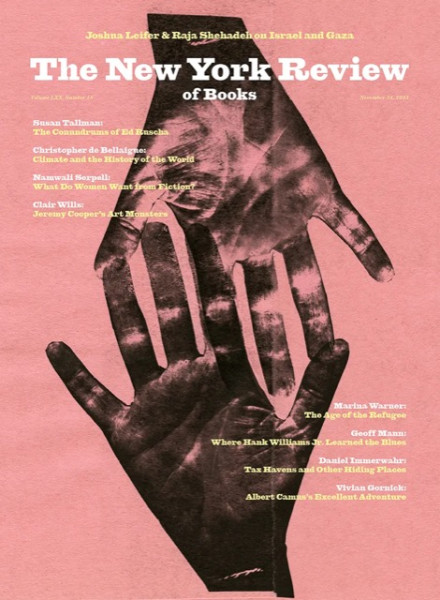
What do women want from fiction? The New York Review
The New York Review / Namwali Serpell / November 23, 2023 issue
A spate of fiction about young women besting their older, powerful male lovers aims to remix and take revenge on that stately master narrative we call The Novel.
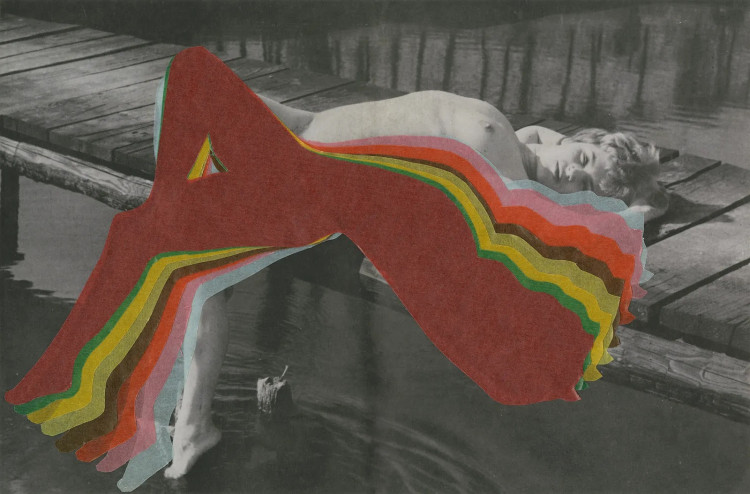
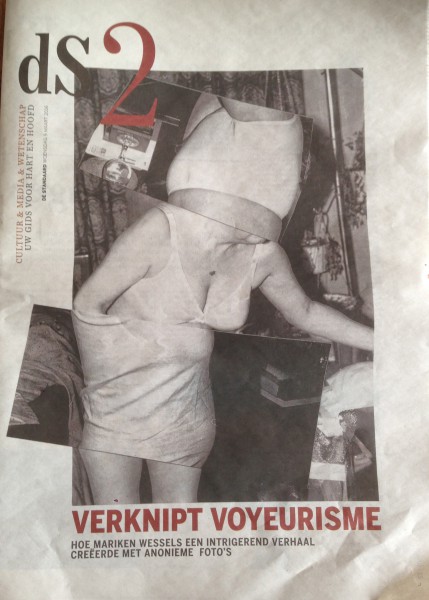
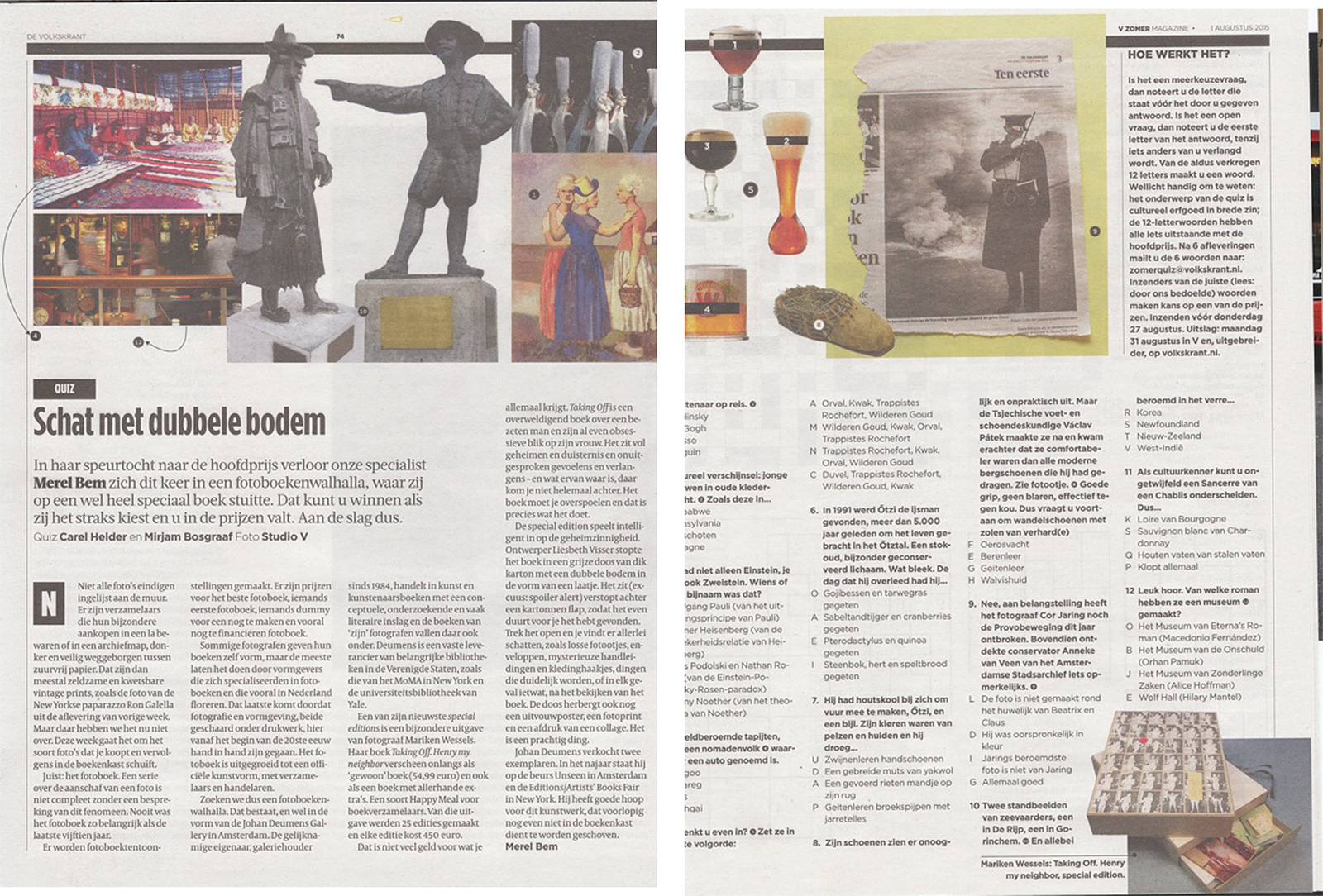
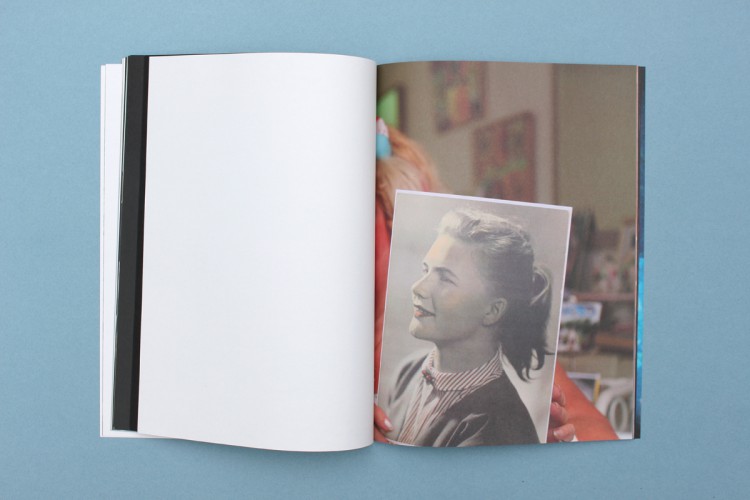
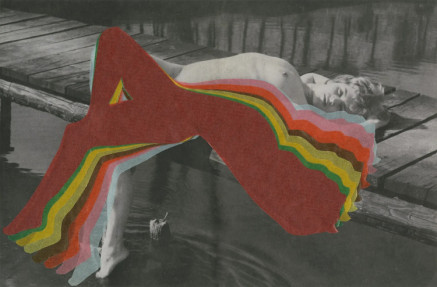
Includes the collage Femina Ludens XIII, from the series ‘Femina Ludens,’ M. Wessels 2020.
Fruits of Labor: Een dubbelinterview met Mariken Wessels en Ruth van Beek Gallery Viewer
Gallery Viewer / Wouter van de Eijkel / 09 maart 2023
Ze mocht er gerust over nadenken, maar toen ze de vraag kreeg, wist Mariken Wessels meteen met wie ze de stand op Art Rotterdam wilde delen: Ruth van Beek. Iemand die net als zijzelf met archiefmaterialen werkt. Dat de verwantschappen gaan verder dan dat, is vanaf dit weekend te zien bij The Ravestijn Gallery waar de nieuwe sculpturen van Wessels een dialoog aangaan met de collages van Van Beek.
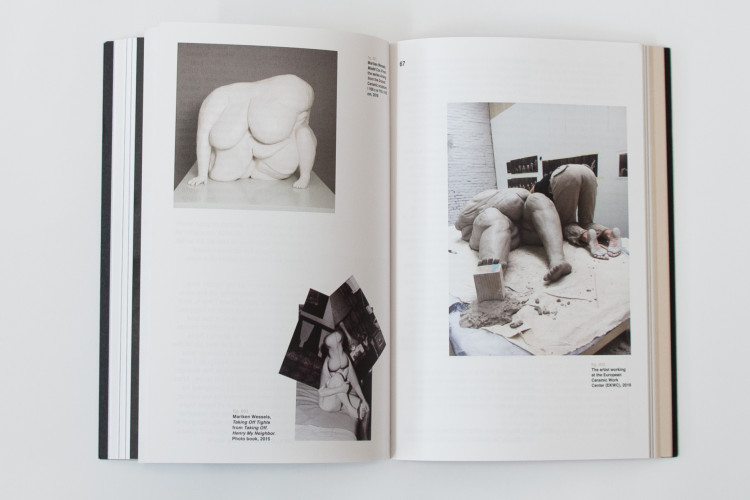
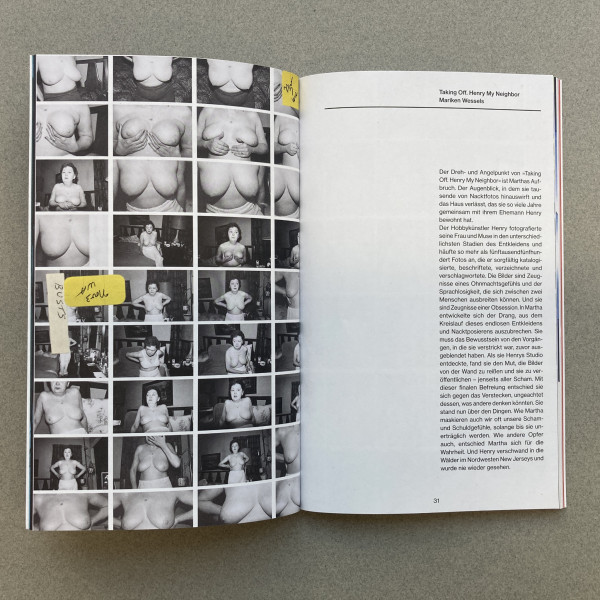
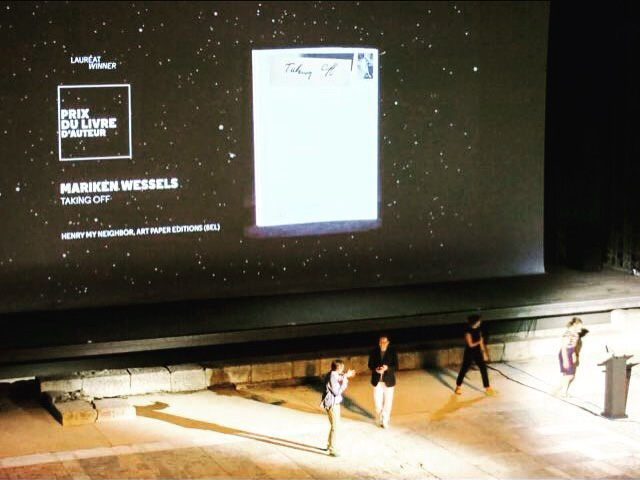
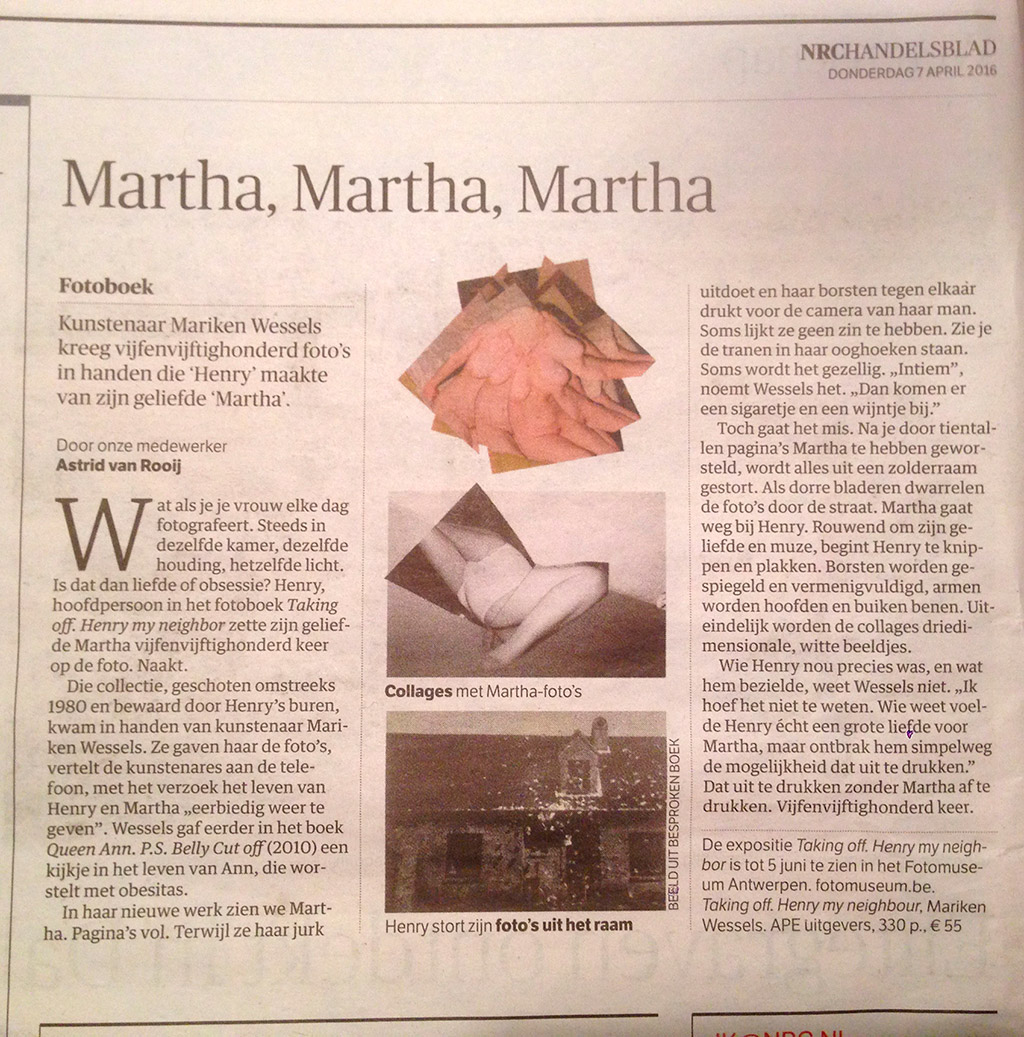
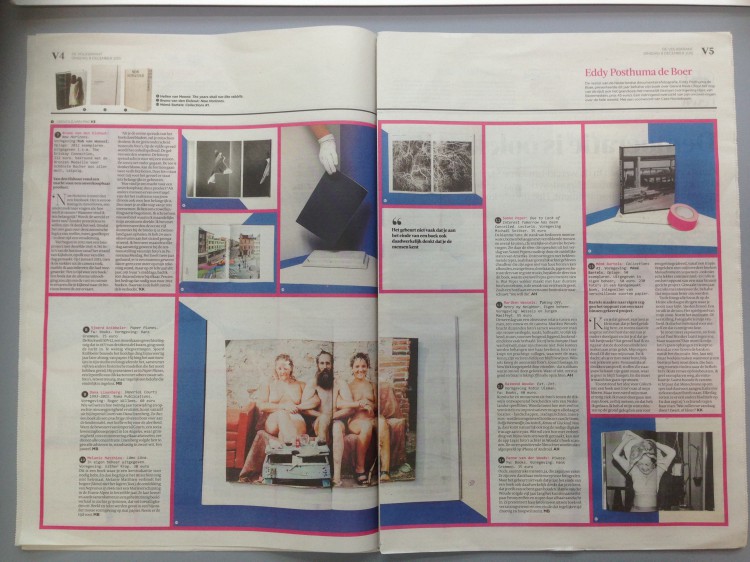
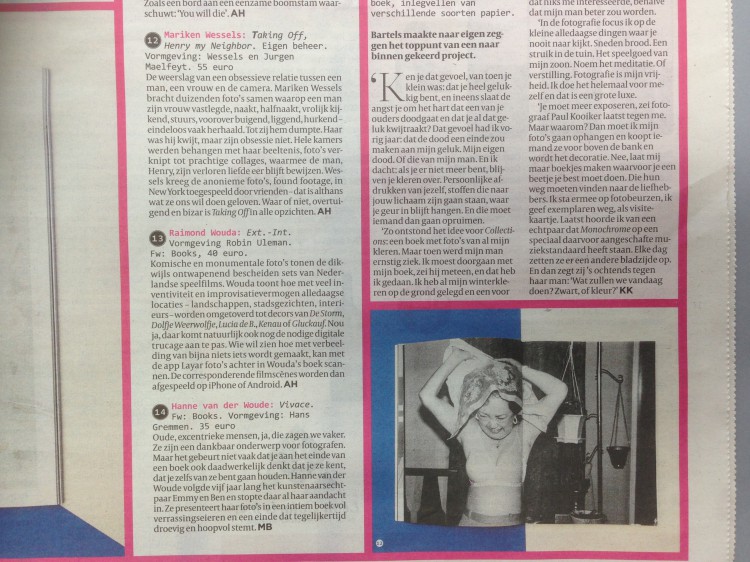
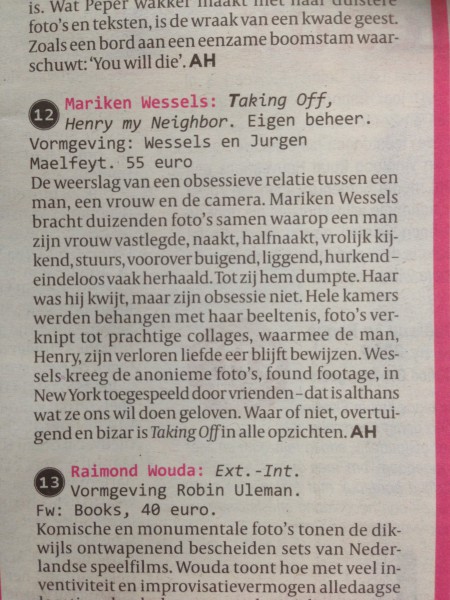
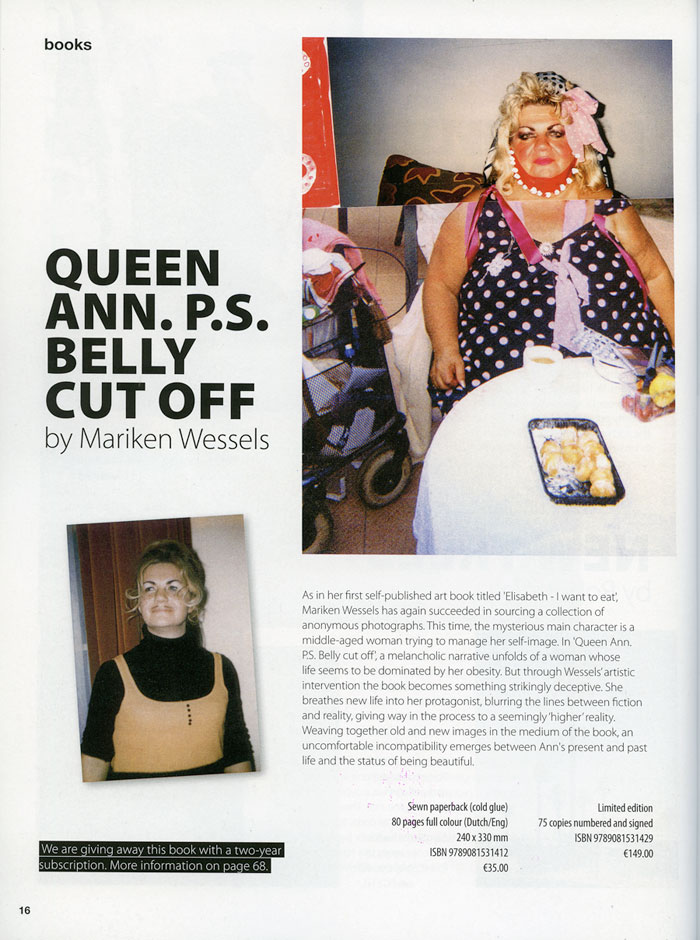
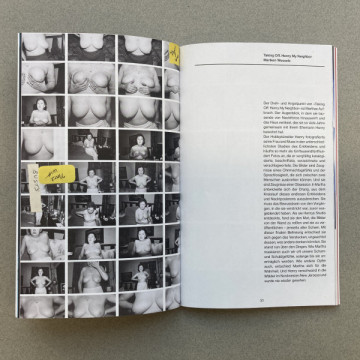
Voordat ze de Rietveld Academie bezocht, was Mariken Wessels ruim tien jaar lang actrice. Die achtergrond zie je terug in haar fotografische werk. Vrijwel alle foto’s in haar boeken komen uit afgedankte fotoalbums en privé-archieven. Door ze te bewerken creëert Wessels personages en verhalen. Ongemakkelijke verhalen met steevast een vrouwelijk hoofdpersonage. Aan de hand van haar personages stelt Wessels de maatschappelijke conventies rond het vrouwelijk lichaam ter discussie. Zo worstelt de vrouw in Queen Ann. P.S. belly cut off (2010) zo met haar zwaarlijvigheid en zelfbeeld dat ze besluit haar beeltenis met een schaar te bewerken. In Wessels’ bekendste boek, het beklemmende Taking Off. Henry My Neighbor uit 2015, maken we kennis met Henry en Martha. De eerste is zo geobsedeerd met het naakte lichaam van zijn vrouw Martha, dat hij haar obsessief en in vrijwel iedere pose fotografeert. Het boek leverde Wessels in 2016 de prestigieuze Author Book Award op het fotofestival Rencontres d’Arles op.
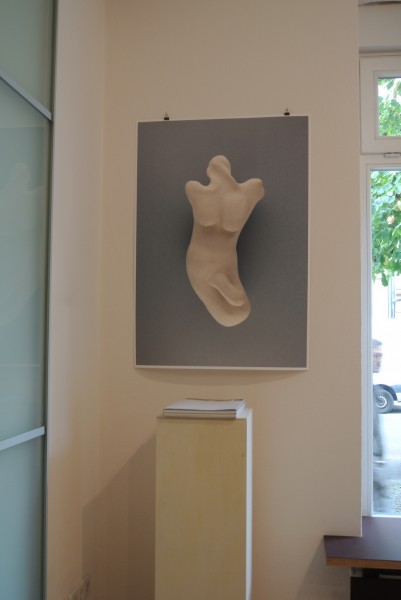
Ook Wessels’ sculpturen gaan over het vrouwelijk lichaam. In haar vorige serie, Miss Cox (Nude – Arising from the Ground) uit 2020, liet ze de onderbelichte schoonheid van zwaarlijvigheid zien. In haar nieuwe serie Mama plaatst Wessels zich aan het einde van een lange lijn van mannelijke kunstenaars die eeuwenlang geseksualiseerde voorstellingen maakten van het vrouwelijk lichaam. Wessels’ interpretatie daarvan is abstract. Zodoende plaatst ze het vrouwelijk lichaam in een andere context dan de tot dusver dominante mannelijke blik.
In de tentoonstelling gaat jullie werk een dialoog aan. Hoe kwam deze tentoonstelling tot stand?
MW: Mijn werk zou op Art Rotterdam worden getoond door The Ravestijn Gallery en Jasper vroeg mij met wie ik de stand zou willen delen. Ik mocht erover nadenken zei hij, maar ik zei meteen: Ruth van Beek. Dat was zeer intuïtief. Ik zag het meteen voor me. Ruths werk spreekt me aan, omdat ze net als ik niet helemaal in de fotografiehoek zit en ze eveneens met archiefmateriaal werkt. Ook vanwege de vormen en de kleurkeuze, maar vooral omdat er altijd iets verstopt lijkt in Ruths werk.
Mariken is in haar fotografie en sculpturen ook al jaren met lichamelijkheid bezig. Haar werk gaat er niet alleen over, maar is het ook. Bij Mariken is een foto niet een gegeven, maar ook iets dat je kan bewerken, dat meer betekenis kan krijgen als je erin snijdt of knipt.
Ook qua vormen is er een verwantschap tussen onze series. De keramiek en de collages vormen als het ware een familie. In het boekje (Fruits of Labor) zie je dat goed. Als de keramiek weer fotografie wordt, dan zie je de overeenkomsten in de vormentaal.
Een van de overeenkomsten werd net al benoemd: jullie werken allebei met archiefmateriaal. Waar halen jullie dat materiaal vandaan?
MW: Ik struin zelf markten af en mijn zoon komt regelmatig met dingen aan, maar ik heb ook een vriendin in Rotterdam die iedere zaterdag naar de markt gaat, waar ze goed contact onderhoudt met marktkoopman Frans. Hij geeft haar dozen vol boedelspullen. Hij is eigenlijk mijn grootste dealer. Als bedankje maak ik ieder jaar een kerstpakket voor hem. Ik heb geen goed gecategoriseerd archief. Dat werkt ook niet bij mij. Soms krijg ik een idee en dan moet ik eindeloos zoeken naar een bepaalde foto. Dat is misschien omslachtig, maar anders mis ik het voortraject, want tijdens het zoeken kom ik weer andere beelden tegen.
Ik neem aan dat je wel een vooropgezet plan hebt. Hoe ging dat bijvoorbeeld bij The Sculptor, je nieuwe serie die ook in de tentoonstelling te zien is?
MW: Ja, ik heb wel een eigen kader. Bij The Sculptor was het voor het eerst dat ik wist naar welk soort beelden ik op zoek was: die uit de pornoboekjes van de jaren ’70 en ’80. Ik wilde een vrolijk beeld en een interieur dat eruit springt. Een goed decor en een beetje soft nog. Ik ben niet geïnteresseerd in de handelingen op zich, maar het decor van een halve eeuw geleden waartegen ze afspelen. De verrassende combinatie van fotografie en keramiek kan een humoristisch effect sorteren, naast het impliciete commentaar op de afgebeelde situaties.
The Sculptor gaat onder andere over de rol van de vrouw in de kunstgeschiedenis. Kan je het verband uitleggen tussen dit type beeld en de kunstgeschiedenis? En hoe kwam je op dit thema?
MW: Ik had al een aantal pornoboekjes en die had ik groot uitgeprint. Vaak sneed ik dan als eerste de vrouw weg uit de scene, omdat ik het heel moeilijk vind hoe vrouwen worden afgedrukt. Zelfs in een reclame voor een bril draagt iemand nog een hoge string. De volgende vraag was: wat komt er voor haar in de plaats? In die tijd las ik een essay van Jeannette Winterson uit haar bundel 12 Bytes over plastic seksrobots die in Azië populair zijn. Winterson stelt daarbij vragen als: wat zegt dit over eenzaamheid en waar gaat het heen met het vrouwbeeld? Vervolgens zag ik een film van een Duitse kunstenaar op de Biënnale van Venetië die zich afspeelde in een bordeel waar alleen maar van die robots werkten. De robots waren in trek, want de eigenaresse had het druk.
Het kwam allemaal bij elkaar toen ik in mijn huis in Frankrijk een aantal jaargangen van Kunstbeeld uit de jaren ‘80 en vroege jaren ‘90 doorbladerde. Allemaal mannen. De kunstenaar, het scheppende genie, was per definitie een man. Die opvatting vind je al terug in het scheppingsverhaal in Genesis waarin god Eva schept uit een rib van Adam. Dus als mannen zich verlekkeren aan een pop, dan maakt het ze helemaal niets uit en is er weinig veranderd. Ik generaliseer nu, maar vandaar dat je een man ziet klaarkomen in een stuk klei, die ondertussen, dankzij zijn seksuele driften, ook nog iets creëert.
Naast The Sculptor is je nieuwe serie sculpturen te zien. Hoe verhoudt de nieuwe serie Mama zich tot de beelden uit je vorige serie Miss Cox (Arising from the Ground), die over zwaarlijvigheid en de schoonheid daarvan ging?
MW: Het komt er wel uit voort. Ik vond het vrouwelijk lichaam heel mooi om te maken. Van de vorige serie van vier beelden waren er drie figuratief, zonder hoofd weliswaar, maar bij één beeld was geen duidelijk mensfiguur zichtbaar. Daar ben ik op doorgegaan. The Chosen One is non-figuratief. Ik wilde uitzoeken hoe ik iets amorfs kan maken, iets vormloos dat tegelijkertijd iets lichamelijks heeft. Daar ben ik iedere seconde mee bezig geweest. Voor mijn gevoel zitten er allemaal lichamen in.
De kunstwereld van Koos Breukel Parool
Parool / Koos Breukel / 09-02-2023
Fotograaf Koos Breukel portretteert kopstukken uit de kunstwereld.
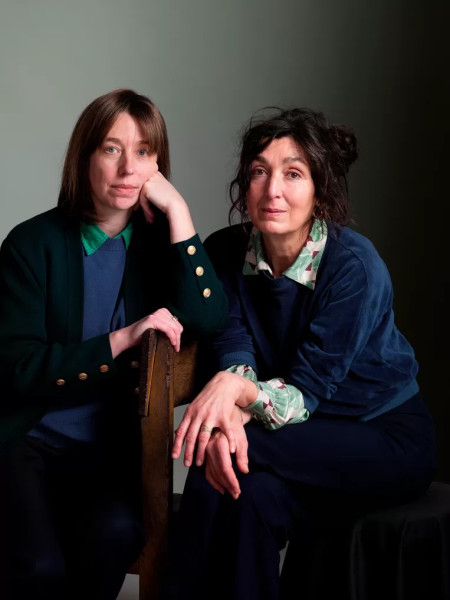
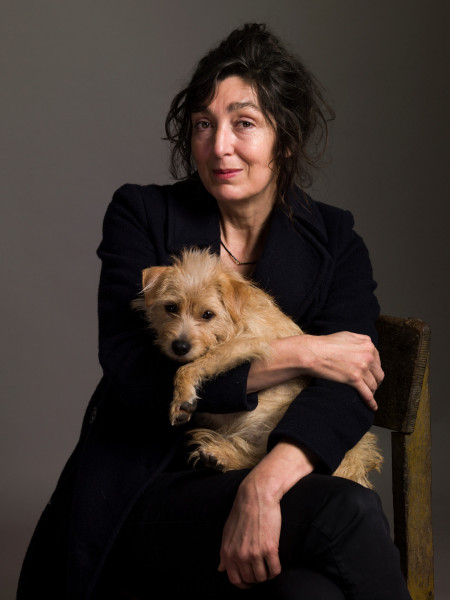
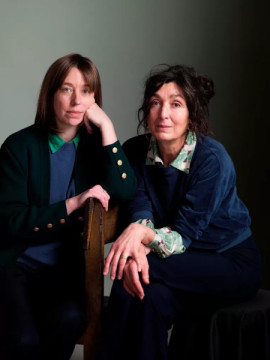
Ruth van Beek (Zaandam, 1977) en Mariken Wessels (Vlaardingen, 1963) zijn beeldend kunstenaar. Onder de noemer 'Fruits of Labor' brengt The Ravestijn Gallery tot en met 22 april hun visies met elkaar in dialoog: hun muzen, hun wederzijdse interesse in het verkennen van de scheppingsdaad en reflectie op wat het is om een vrouwelijke kunstenaar te zijn. BEELD KOOS BREUKEL
Elisabeth - I want to eat - and Queen Ann P.S. Belly cut off are part of the MACBA collection
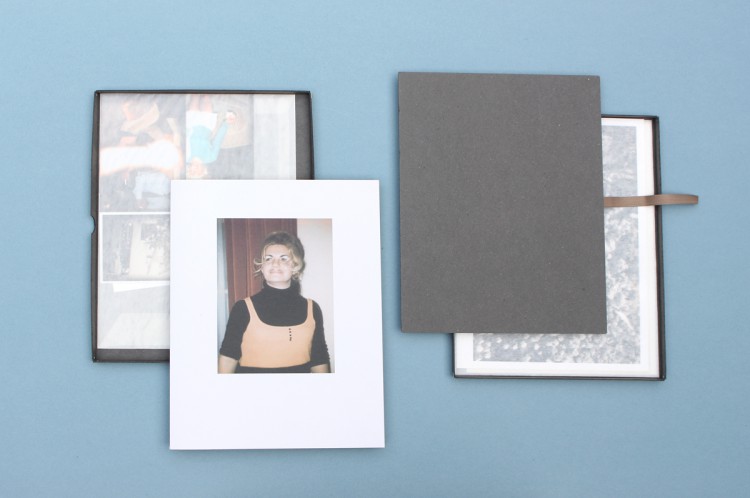
Queen Ann. P.S. Belly cut off (2010) and Elisabeth - I Want To Eat - (2010) are now part of the MACBA Museu d'Art Contemporani de Barcelona collection.
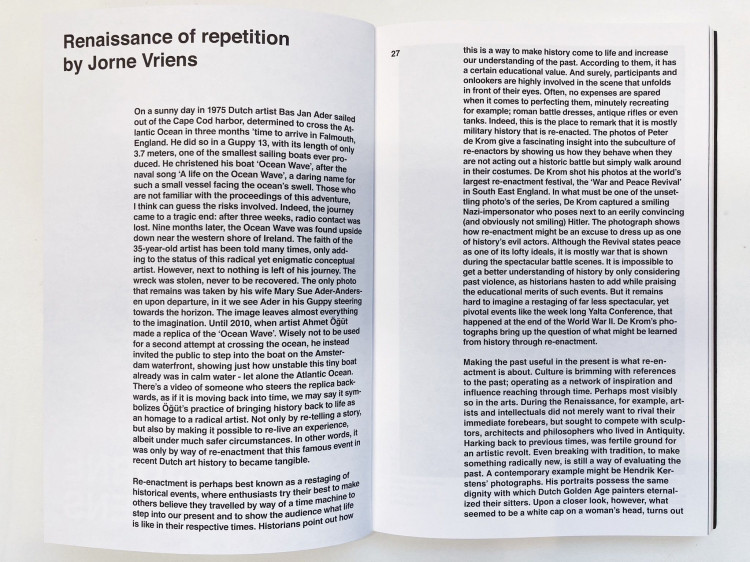
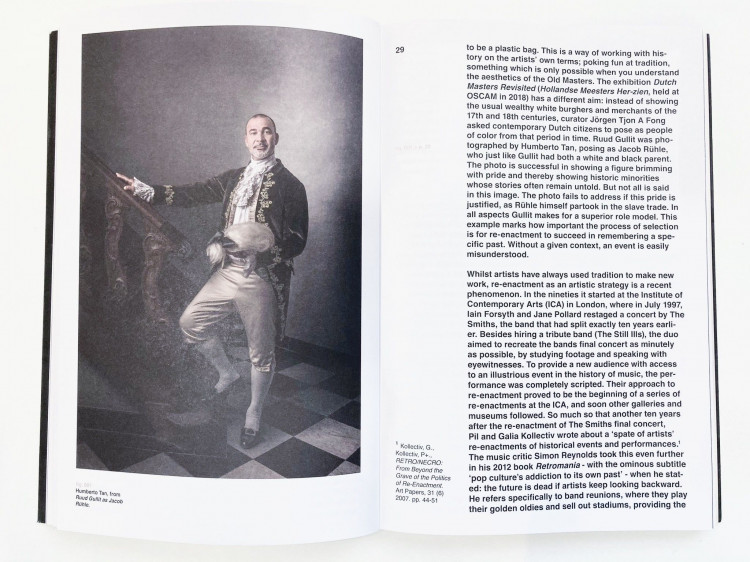
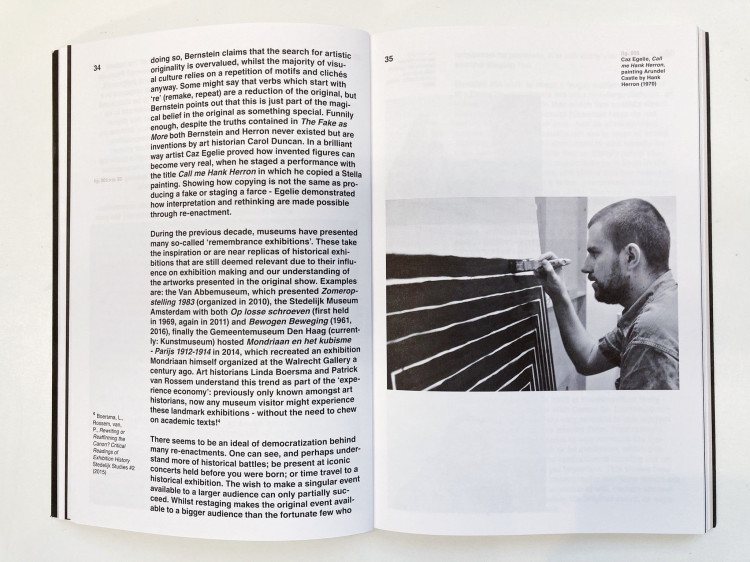
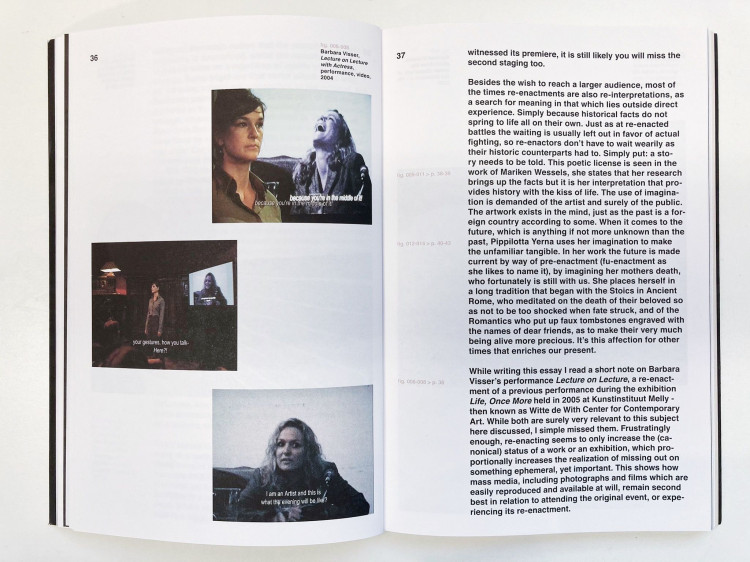
Renaissance of repetition Jorne Vriens
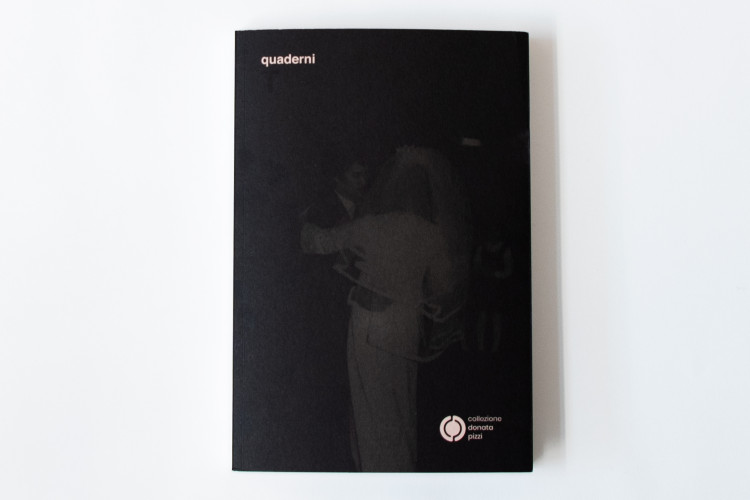
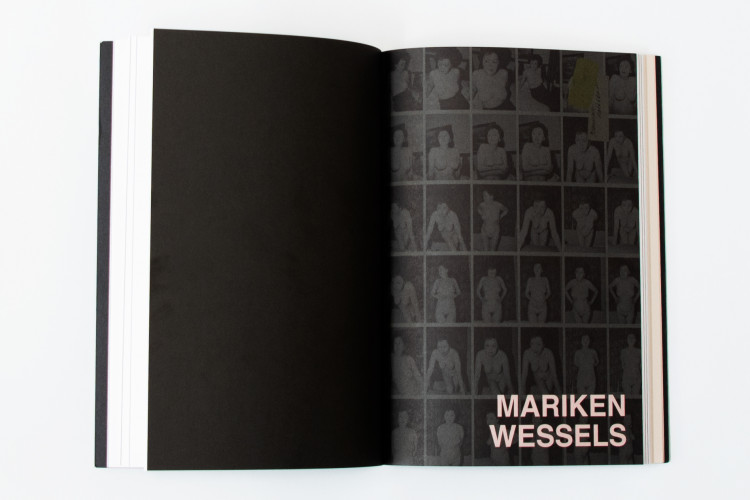
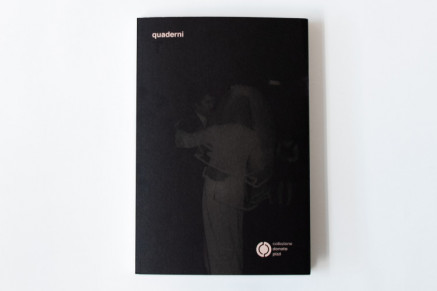
Renaissance of repetition, by art historian Jorne Vriens. One of the essays featured in the first issue of Quaderni series by Concept Associazione Collezione Donata Pizzi in collaboration with Fotodok Utrecht.
The essay discusses the book's theme ‘re-enactment’, where Jorne Vriens elaborates on the theme and the work of the selected artists among which Mariken Wessels.


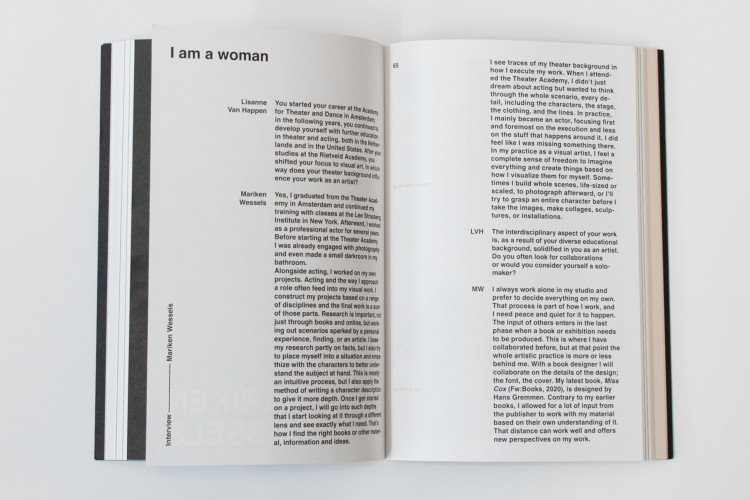
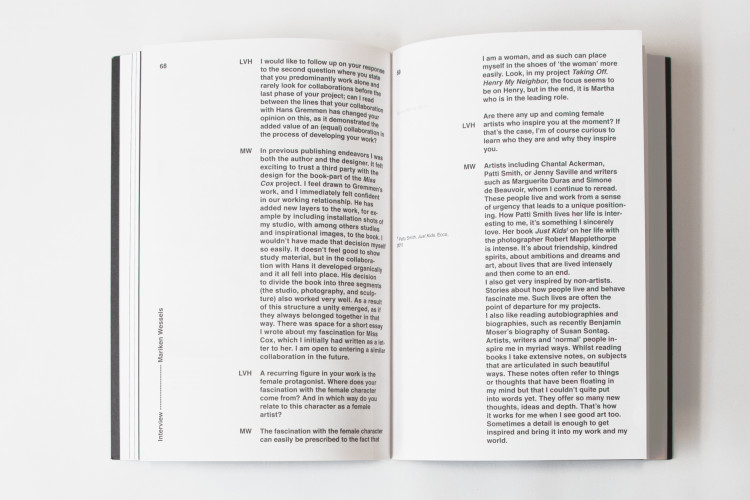
I am a woman interview Collezione Donata Pizzi
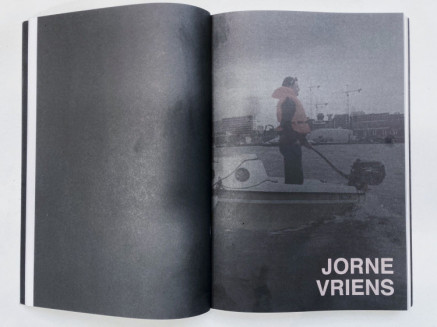
I am a woman interview as part of the Quaderni publication by Associazione Collezione Donata Pizzi.
Design Steve Bisson, Interview Lisanne van Happen
Concept Associazione Collezione Donata Pizzi, Rome
In partnership with Fotodok Utrechtfull interview / Italian translation / link


All published books part of the KB, nationale bibliotheek collection
All 7 published books, Miss Cox (2020), Taking off. Henry my neighbor (2015), He was there (2012), Don't forget (2012), Who (2012), Queen Ann. P.S. Belly cut off (2010) and Elisabeth - I Want To Eat - (2010) are now part of the KB, nationale bibliotheek collection.
Unseen: The Best Photo Books from Amsterdam’s Spectacular Photography Fair AnOther
AnOther / Alex Merola / Septermber, 2022
Amsterdam’s avant-garde photography fair Unseen has returned to the industrial grounds of Westergas for its tenth edition this week. As its name suggests, Unseen is a look forward because it invites galleries to showcase up-and-coming image-makers, tipped to become household names of the future. But it’s also, for the same reason, a throwback, because it encourages viewers to trust their eyes and take a punt. While there is subsequently much to get excited about within the circular Gashouder building, which sees a web of exhibitors making moves at the medium’s cutting edges, the small but beloved Book Market offers a natural extension of the fair’s romantic sensibilities. Publishers, book shops, dealers and universities have congregated in an outdoor pavilion teeming with printed matter, offering a lively snapshot of the state of independent publishing today. Here’s a roundup of our favourite new (and re-) discoveries.
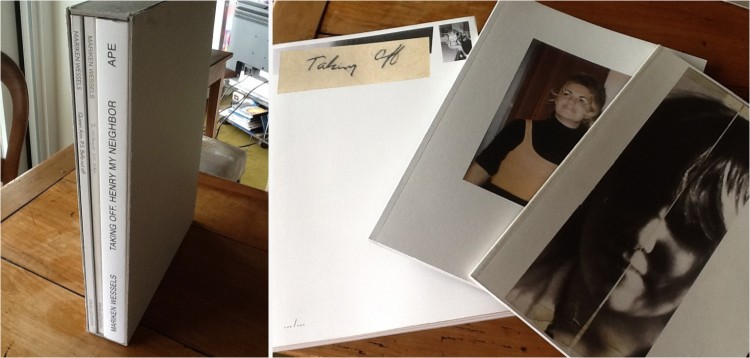
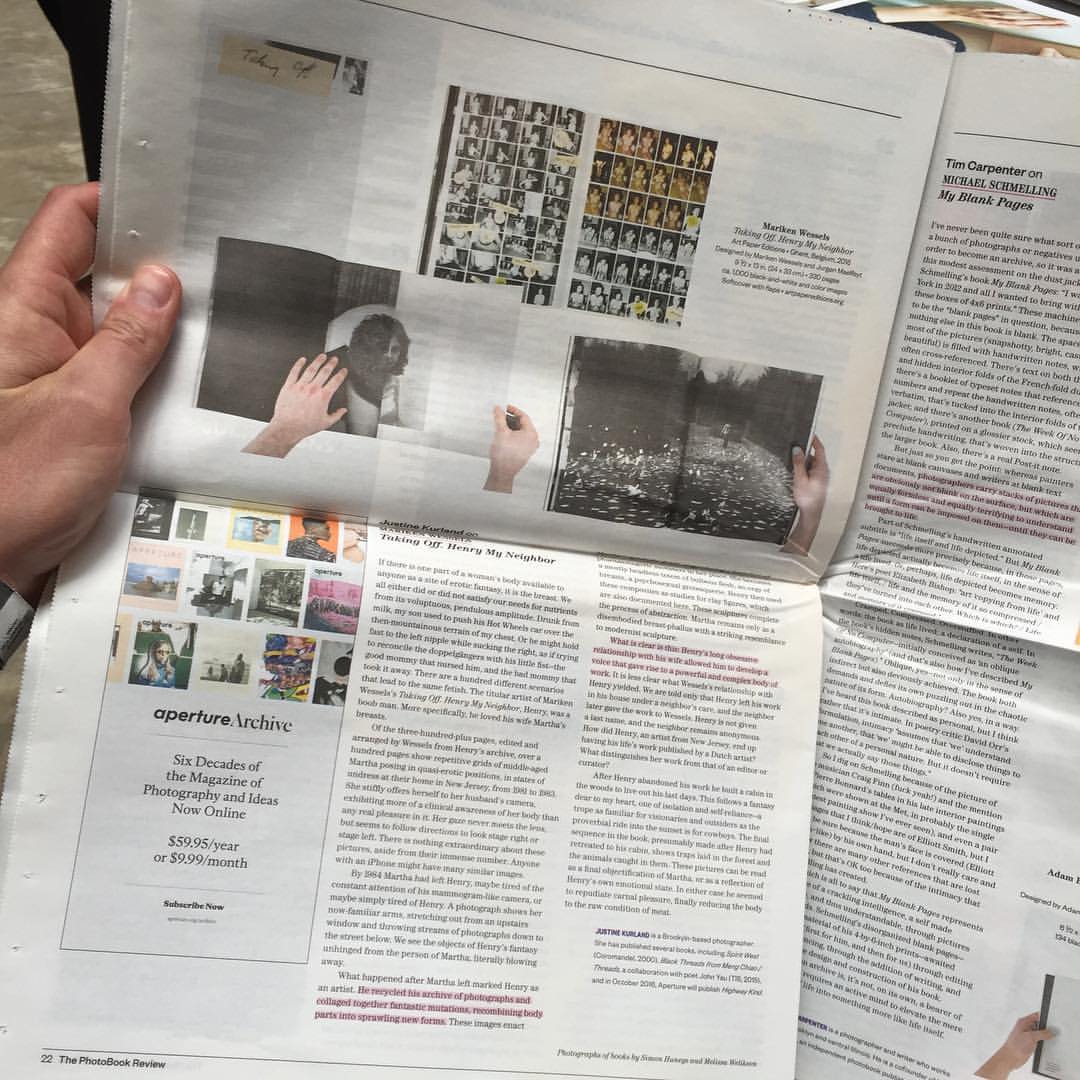
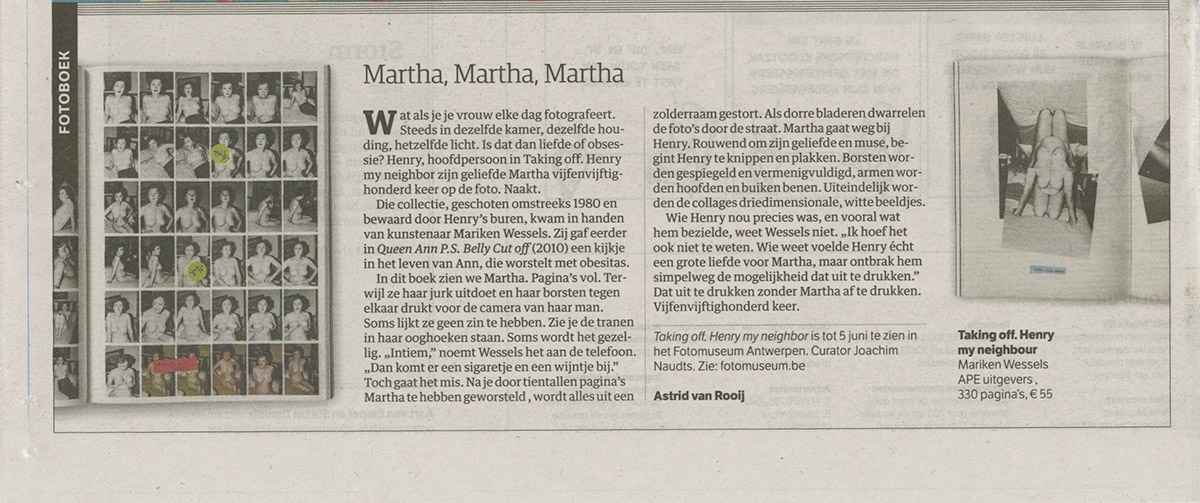
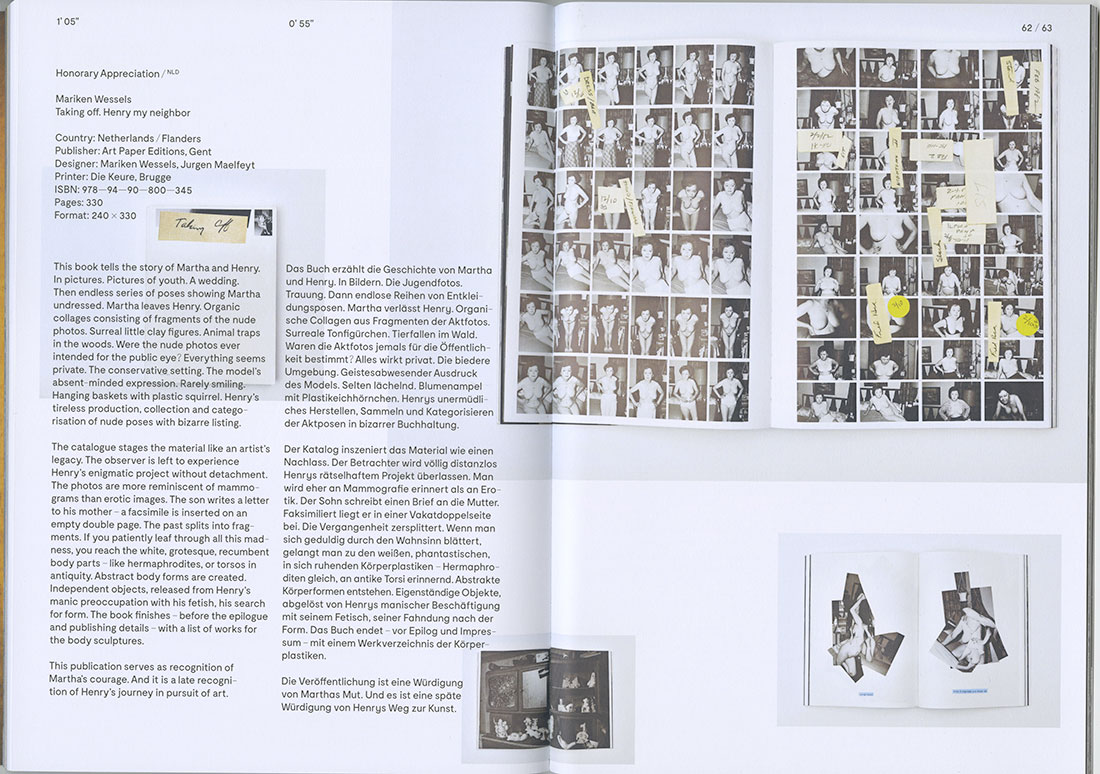
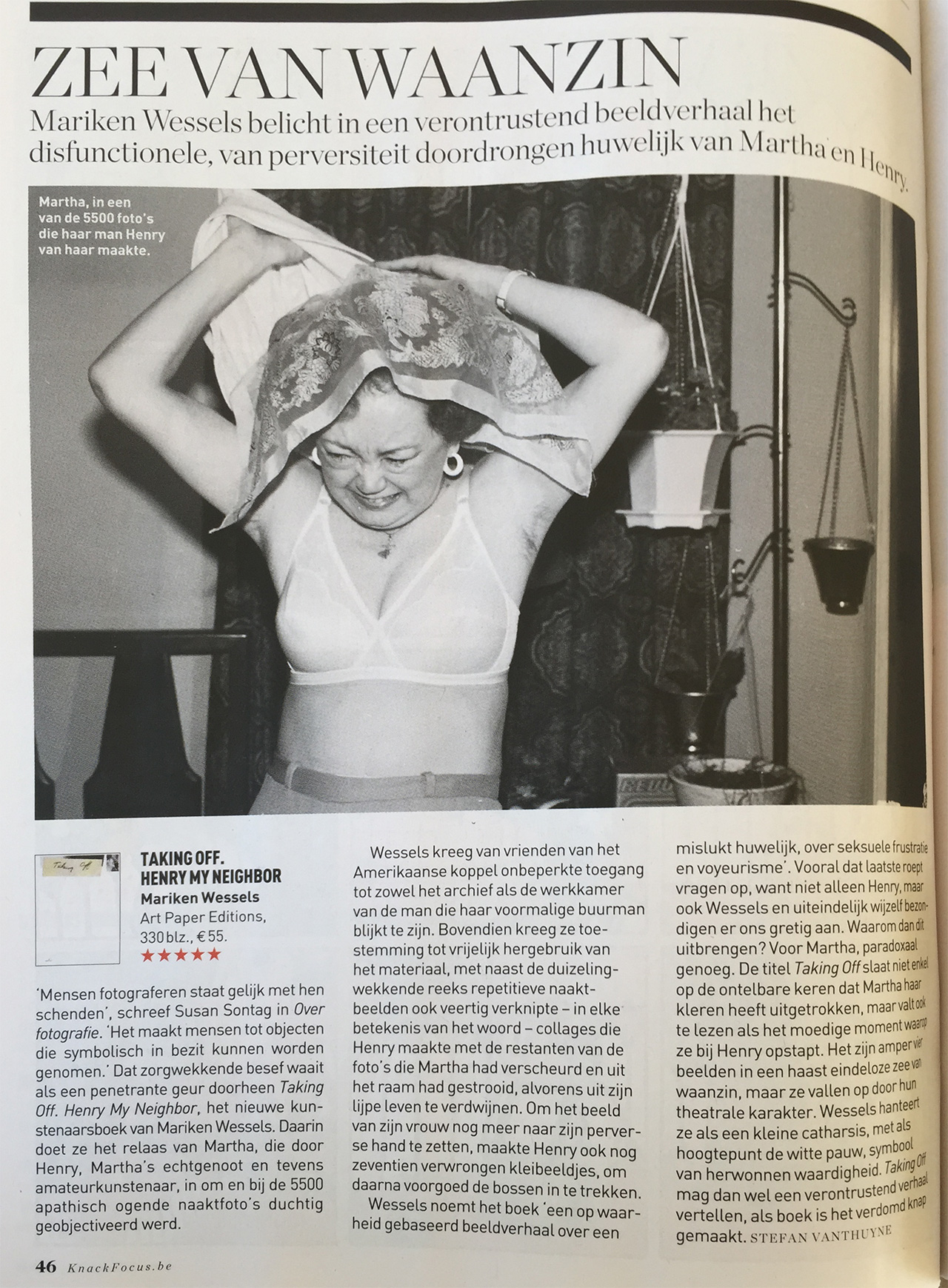
Mariken Wessels’s Taking Off. Henry My Neighbour, published by Art Paper Editions, is not only a Dutch contemporary classic, but a work of amateur nude art without parallel. Through an extraordinary, creepily-categorised corpus of found photographs, collage and sculpture, the artist allows us to enter the lives of Henry and Martha, who embarked on a collaborative and complex photographer-muse project together. It’s by way of Wessels’s scrupulous treatment of the material at hand that she shows us how the private fantasies of Henry – which ultimately led to his self-imposed exile in the woods, where he lived out his final days – become our own too.
ELISABETH. I WANT TO EAT - MARIKEN WESSELS 3x4 = ORAIN
3x4 = ORAIN catalog / San Telmo Museum / July, 2022
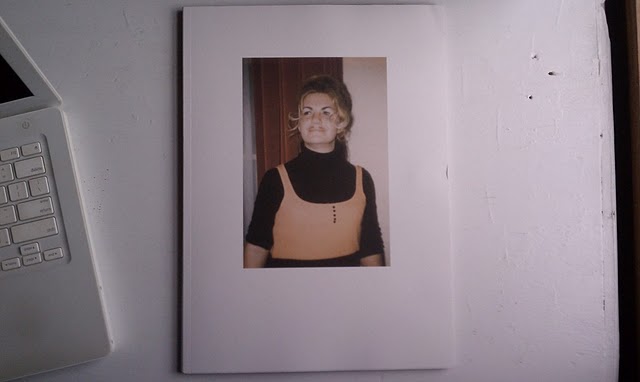
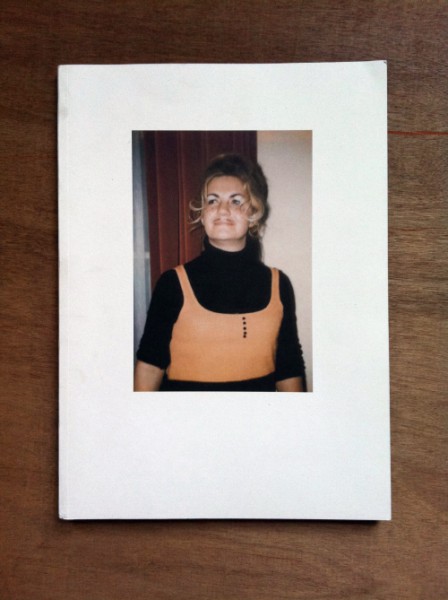
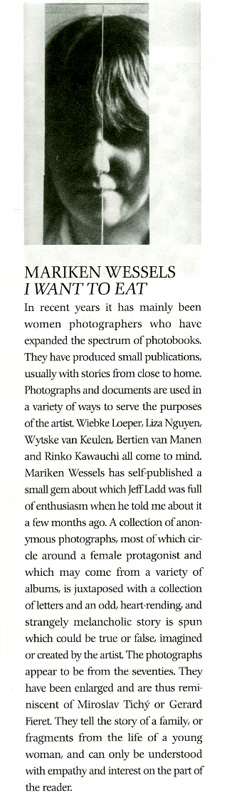
This photobook constructs a free and indefinite narrative based on the appropriation of graphic and written material acquired in a shop in Amsterdam. The worn photographs show a young woman posing defiantly and freely before the camera, while, by means of an arrangement of letters and postcards, the author shows the attempt of a family member to alter her behaviour through appeals to religion, order and discipline.
Everything is subject to interpretation in this series in which image and text collide in a sequence full of contradictory messages granting prominence to uncertainty, alienation and, therefore, imagination.
TAKING OFF. HENRY MY NEIGHBOR (MARIKEN WESSELS) ArteCapital
ArteCapital / Marc Lenot / Original article Le Monde, Lunettes Rouges / 29 April, 2022
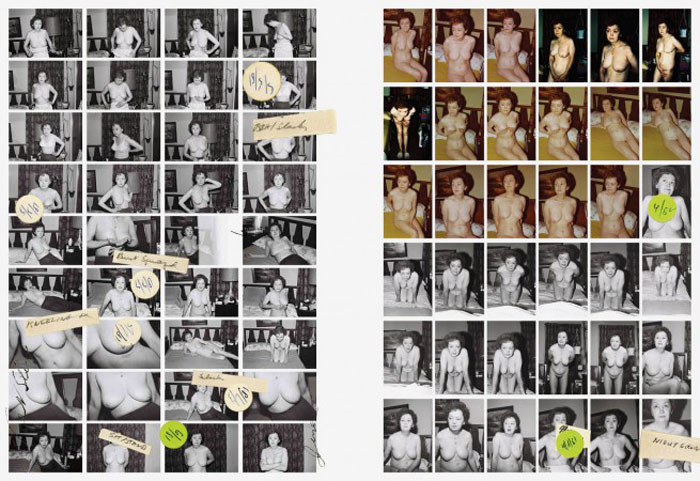
Entre fevereiro de 1981 e dezembro de 1984, em menos de quatro anos, Henry, um habitante de Long Island, depois de Nova Jersey, tirou cerca de 5.500 fotografias da sua esposa Martha, nua ou a despir-se; quatro por dia em média. Nessas imagens, Martha, que aparenta ter aproximadamente 60 anos, está cada vez mais entediada, desapegada, alienada do que está a acontecer com ela, raramente olhando para a objectiva, submissa às diretrizes do seu marido. Este está particularmente interessado no busto da sua mulher, os seus sutiãs, pedindo-lhe para apertar os seios com as mãos; muitas imagens também a representam integralmente nua, em pé ou deitada, um corpo marcado pela idade, mas ainda firme. Outras são close-ups dos seus seios, mamilos e aréolas. Pelo contrário, a púbis e a vulva, assim como as nádegas, nunca aparecem em grande plano. As fotos-mamografias.
Nenhuma ternura nestas fotografias, nenhuma cumplicidade, também nenhum erotismo: apenas um voyeurismo obsessivo do corpo feminino. Estamos muito longe do trabalho amoroso de Eugene von Bruenchenheim, cheio de ternura e respeito por Marie, sempre bela e cúmplice. A palavra que vem à mente aqui é mais taxonomia repetitiva, mesmo se, em várias fotografias, Martha simule uma pose, faça caretas maliciosas ou consternadas, raramente sorri, envolve-se em letargia.
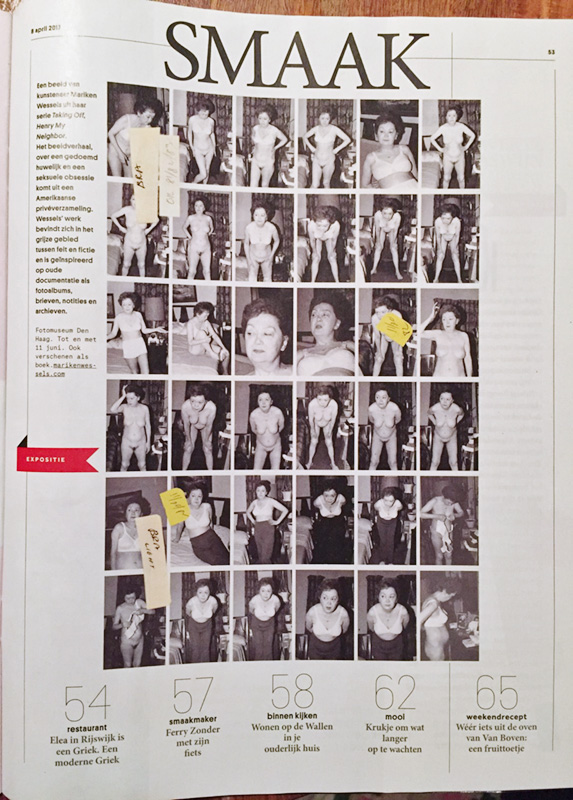
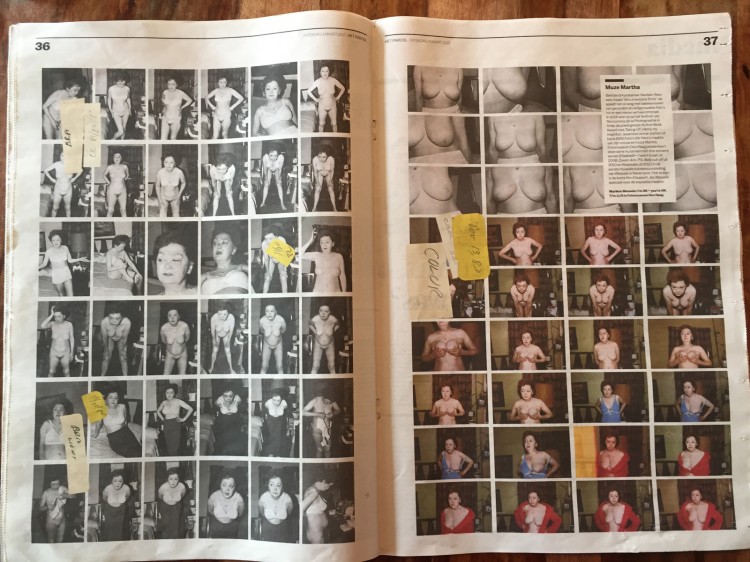
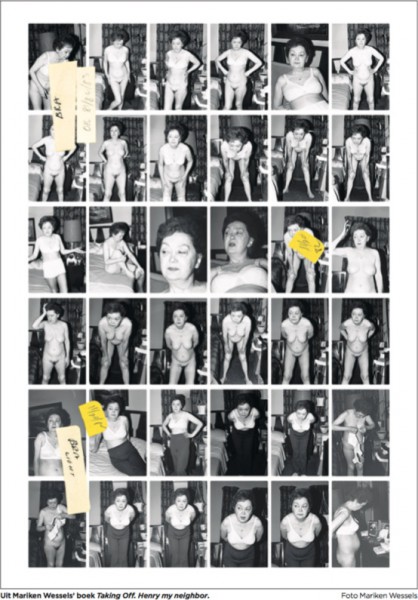
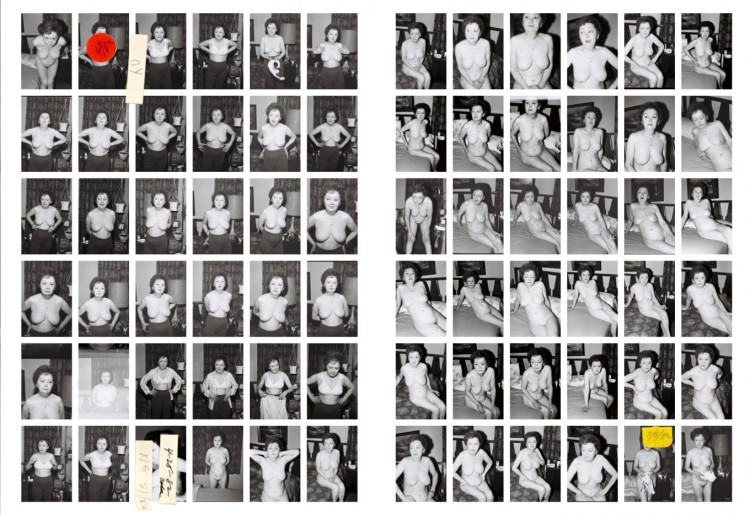
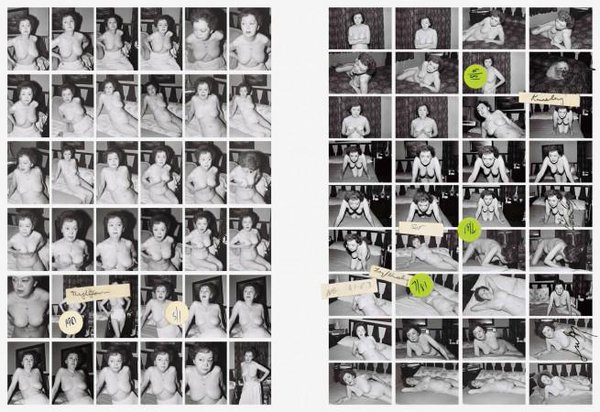
Henry organiza um escritório forrado com essas fotos de Martha nua. A maioria é a preto e branco, as provas de contacto são marcadas com post-its datando-as, mas apontando também os temas (« bent », « squeezing », « rope over bust », « kneeling »). Uma tabela de dupla entrada resume as datas e as características técnicas ou posturais das fotografias, com, num canto, os projetos futuros: no processo de fumar, mãos sobre a nuca, por trás,...
No final de 1984 ou início de 1985, Martha sufoca nesta ménage à trois com o aparelho fotográfico, e deixou o seu marido: ela recusa essa obsessão fotográfica do seu corpo, o casamento é (por esse motivo e sem dúvida por outros) um fracasso. Antes de partir, ela lança as impressões pela janela da sua casa, as fotografias cobrem o jardim e o caminho, voando ao vento.Henry, privado do seu objeto de desejo, não pode mais que desfrutar das fotografias preservadas da sua mulher. É então, parece-me, que, de voyeur obsessivo mas banal, ele torna-se artista em sentido pleno: sublima a frustração da ausência da mulher amada para passar a uma atividade mais criativa do que simplesmente fotografar; ele cria novas formas, fantasmagóricas, a partir das suas formas reais. Martha tornou-se uma abstração, um material artístico. Primeiro concebe cerca de cinquenta colagens, montando este ou aquele detalhe da anatomia de Martha (excepto o seu rosto) para fazer composições eróticas que podemos ligar a certos surrealistas como Georges Hugnet ou Nush Éluard, ou mesmo certas imagens de André Kertesz. Nas provas de contato, destacamos quatro fotografias a cores de abril de 1981 onde, já, Henry, através de exposição múltipla, havia experimentado com a multiplicação mamaria.
Dessas colagens, ele passa para a escultura: múltiplos corpos femininos surpreendentemente doces e ternos, 17 figuras de argila com areia prateada. Sem ter o caráter sistémico de Die Puppe, estamos aqui numa veia semelhante, principalmente se nos lembrarmos que Hans Bellmer realiza essa boneca no momento em que se retirava do mundo, no seu caso face à ascensão do nazismo. Pensamos também em certas esculturas de Victor Brauner ou na Artemisa polimasta de Éfeso. É bastante fascinante ver como Henry desenvolve assim uma forma de criação artística, muito além das suas fotografias obsessivas, que podemos evidentemente classificar na categoria abrangente de arte bruta. Uma vez feito isso, ele parte para viver na floresta, como um caçador, alimentando-se de animais selvagens que captura, e desaparece.
Como sabemos tudo isto? A artista holandesa Mariken Wessels, que já realizou algumas séries em torno de fotografias encontradas, teria obtido essas fotografias, assim como outras imagens do casal, da sua casa e da cabana de Henry na floresta, de dois amigos e vizinhos do casal, que teriam recuperado o conjunto após a partida de Henry, e de quem Mariken Wessels diz ter sido vizinha quando, então atriz, habitou em Nova Iorque em 1996-97. Fez um livro de 330 páginas, com muito pouco texto (2 ou 3 páginas apenas) por ocasião da sua exposição em Haia em 2017; o livro acaba de ser reeditado pela Art Paper Editions. O livro (que ganhou o Prémio do Livro de Autor em Arles em 2016) inclui 147 provas de contato de 36 imagens cada (ou seja, 5292 fotos) em papel brilhante, a reprodução das 50 colagens e de 17 estatuetas, e de outras fotografias da infância deles, do casamento, da casa deles, do escritório de Henry, uma enigmática folha solta de Feliz Natal começando por "There he is, your son, Ma",... O título "Taking Off" pode significar tirar, retirar (o sutiã); pode também significar descolar, partir (como Martha).
É realmente um arquivo de fotografias encontradas de maneira um tanto recambolesca? Ou é inteiramente uma criação ficcional da artista? O único indício que encontrei é o nome dos dois vizinhos que supostamente confiaram o arquivo a Mariken Wessels: Dorothy Bartlett (como ele) e Edward F. Caroll (quase como ele). Além disso o Hackettstown Heritage Center for Arts & Crafts, onde as figuras esculpidas de Henry seriam depositadas, parece não existir. Mas também a sensação de que é muito perfeito, muito bem feito. Quem sabe? Apenas este blog, no meu conhecimento, também expressou uma dúvida sobre a veracidade deste arquivo.
Taking off. Henry my neighbor (Mariken Wessels) Aficionada al Arte
Aficionada al Arte / Original article Le Monde, Lunettes Rouges / Jan 21, 2022
Entre febrero de 1981 y diciembre de 1984, en menos de cuatro años, Henry, un habitante de Long Island y luego de Nueva Jersey, realizó alrededor de 5500 fotografías de su esposa Martha, desnuda o desvistiéndose; en promedio cuatro fotos al día. En esas imágenes, Martha, que parece estar alrededor de los 60, se ve cada vez más aburrida, desprendida, extranjera a lo que pasa, mira rara vez al objetivo, sometida a las directivas de su marido. Él, especialmente interesado por los senos de su mujer y sus brasieres, le pide que se oprima los senos con las manos; muchas imágenes la representan totalmente desnuda, de pie o acostada, el cuerpo marcado por el tiempo pero aún firme. Otras son primeros planos de los senos, de los pezones y las aréolas. En cambio, el pubis y la vulva no aparecen, igual que las nalgas que no se ven en primer plano. Son foto-mamogramas.
No se ve ternura en las fotografías, ni complicidad, ni erotismo tampoco: es apenas un voyerismo obsesivo del cuerpo femenino. Estamos muy lejos del trabajo enamorado de Eugene von Bruenchenheim, lleno de ternura y respeto por Marie, siempre hermosa y cómplice. La palabra en la que se piensa aquí es más bien taxonomía repetitiva, aunque en varias fotos Martha posa y pone caras atrevidas o sorprendidas, rara vez sonríe, en resumen, se compromete.
Henry se instala un despacho tapizado con las fotografías de Martha. La mayoría son en blanco y negro, las copias por contacto llevan notas adhesivas con las fechas y también los temas (« bent », « squeezing », « rope over bust », « kneeling »). Un cuadro recapitula las fechas y las características técnicas o de la postura y también los proyectos futuros: fumando, las manos en la nuca, de espalda, ...
A finales de 1984 o principios de 1985, Martha sofoca en esa relación en la cual son tres con la cámara y se separa de su marido: rechaza la obsesión fotográfica por su cuerpo, el matrimonio es (por esta razón y quizás otras) un fracaso. Antes de irse tira las fotografías por la ventana de la casa, éstas llenan el jardin y el camino y el viento se las lleva
Privado del objeto de su deseo, Henry ya no puede disfrutar de las fotografías que le quedaron de su mujer. Es entonces, parece, que de voyeur obsesivo y banal se vuelve artista en el sentido pleno: sublima la frustración de la ausencia de la mujer amada para pasar a una actividad más creativa que la simple toma. Crea entonces formas nuevas, fantasmagóricas, a partir de formas reales. Martha se convierte en abstracción, en material artístico. Primero hace unos cincuenta collages ensamblando tal o tal detalle de la anatomía de Martha (salvo su cara) y crea composiciones eróticas que podemos relacionar con ciertos surrealistas como por ejemplo Georges Hugnet o Nush Éluard, incluso con algunas imágenes de André Kertesz. En las copias por contacto nos llaman la atención cuatro fotografías en color de abril de 1981 en las cuales ya Henry había experimentado, a través de una exposición múltiple, la multiplicación mamaria (ver más abajo).
De los collages pasa a la escultura: cuerpos femeninos múltiples extrañamente suaves y tiernos, 17 estatuillas de barro con arena plateada. Sin tener el carácter sistemático de Die Puppe, estamos en una línea similar, especialmente si recordamos que Hans Bellmer realizó esta muñeca en el momento en que se retiraba del mundo, en su caso, frente a la subida del nazismo. También pensamos en ciertas esculturas de Victor Brauner o en Artemisa de Éfeso. Es fascinante ver de qué manera Henry desarrolla una forma de creación artística más allá de sus fotografías obsesivas que podemos clasificar en la categoría comodín del arte marginal. Una vez hecho eso se va a vivir en el bosque como un trampero y se alimenta de animales salvajes que caza él mismo y desaparece.
Y ¿cómo sabemos todo eso? La artista neerlandesa Mariken Wessels que ya ha realizado varias series entorno a fotografías encontradas, aparentemente encontró las fotografías de la casa, de la cabaña de Henry en el bosque, y otras imágenes de la pareja a través de vecinos y amigos de la pareja que recogieron todo cuando Henry se fue. Mariken Wessels dice que fue vecina de aquellos vecinos y amigos cuando era actriz y vivió en Nueva York en 1996/97. Con ese material hizo un libro de 330 páginas, con muy poco texto (2 o 3 páginas solamente), al mismo tiempo que una exposición en 2017 en la Haya y el libro acaba de ser reeditado por Art Paper Editions. El libro (que ganó un el Premio - Prix du Livre d'Auteur - en Arles en 2016) tiene 147 planchas por contacto de 36 imágenes cada una (o sea 5292 imágenes) en papel brillante, la reproducción de 50 collages y de 17 figuritas, de otras fotografías de sus infancias, matrimonio, casa, el despacho de Henry, de una enigmática hoja de Feliz Navidad que empieza por « There he is, your son, Ma », ... El título « Taking Off » puede significar quitar (el brasier); puede significar también despegar, partir (como Martha). Libro recibido en servicio de prensa.
¿Será verdaderamente un archivo de fotografías encontradas de manera bastante inverosímil? ¿O será una creación total de ficción por parte de la artista? El único indicio que encontré son los nombres de dos de los vecinos que aparentemente le entregaron el archivo a Mariken Wessels: Dorothy Bartlett (como él) y Edward F. Caroll (casi como él). Además el Hackettstown Heritage Center for Arts & Crafts, en donde estarían las figuritas esculpidas por Henry parece que no existe. También la sensación de que es demasiado perfecto, demasiado bien hecho. ¿Quién sabe? Solamente este blog, que yo sepa, ha expresado una duda sobre la veracidad del archivo.
Taking off. Henry my neighbor (Mariken Wessels) Le Monde
Le Monde / Lunettes Rouges / Jan 21, 2022
Entre Février 1981 et Décembre 1984, en moins de quatre ans, Henry, un habitant de Long Island, puis du New Jersey, a fait environ 5500 photographies de son épouse Martha, nue ou se dénudant; quatre par jour en moyenne. Dans ces images, Martha, qui semble avoir environ 60 ans, est de plus en plus ennuyée, détachée, étrangère à ce qui lui arrive, regardant rarement l’objectif, soumise aux directives de son mari. Celui-ci est particulièrement intéressé par la poitrine de sa femme, ses soutiens-gorge, lui demandant de presser ses seins avec les mains; bien des images la représentent aussi intégralement nue, debout ou couchée, un corps marqué par l’âge, mais encore ferme. D’autres sont des gros plans de ses seins, de ses tétons et aréoles. Par contre, le pubis et la vulve, tout comme les fesses, n’apparaissent jamais en gros plan. Des photos-mammogrammes.
Aucune tendresse dans ces photographies, aucune complicité, aucun érotisme non plus : juste un voyeurisme obsessionnel du corps féminin. On est très loin du travail amoureux d’Eugene von Bruenchenheim, plein de tendresse et de respect pour Marie, toujours belle et complice. Le mot qui vient à l’esprit ici est plutôt taxonomie répétitive, même si, dans plusieurs photographies, Martha prend la pose, fait des mines coquines ou étonnées, rarement sourit, s’engage en somme.
Henry s’organise un bureau tapissé de ces photographies de Martha nue. La plupart sont en noir et blanc, les planches-contact sont marquées de post-its les datant, mais aussi notant les thèmes (« bent », « squeezing », « rope over bust », « kneeling »). Un tableau à double entrée récapitule les dates et les caractéristiques techniques ou posturales des photographies, avec, dans un coin, les projets futurs : en train de fumer, mains sur la nuque, de dos, …
Fin 1984 ou début 1985, Martha suffoque dans ce ménage à trois avec l’appareil photo, et elle quitte son mari : elle refuse cette obsession photographique de son corps, le mariage est (pour cette raison et sans doute d’autres) un échec. Avant de partir, elle jette des tirages par la fenêtre de leur maison, les photographies jonchent le jardin et le chemin, s’envolant à tout vent.
Henry, privé de l’objet de son désir, ne peut plus que jouir des photographies de sa femme préservées. C’est alors, me semble-t-il, que, de voyeur obsessionnel mais banal, il devient artiste au sens plein : il sublime la frustration de l’absence de la femme aimée pour passer à une activité plus créative que la simple prise de vue; il crée des formes nouvelles, fantasmagoriques, à partir de ses formes réelles. Martha est devenue une abstraction, un matériau artistique. Il conçoit d’abord une cinquantaine de collages, assemblant tel ou tel détail de l’anatomie de Martha (sauf son visage) pour en faire des compositions érotiques qu’on peut relier à certains surréalistes comme Georges Hugnet ou Nush Éluard, voire certaines images d’André Kertesz. Dans les planches-contact, on relève quatre photographies en couleur d’Avril 1981 où, déjá, Henry, par le biais de l’exposition multiple, avait expérimenté avec la multiplication mammaire (voir plus bas).
De ces collages, il passe à la sculpture : des corps féminins multiples étonnamment doux et tendres, 17 figurines d’argile avec du sable argenté. Sans avoir le caractère systémique de Die Puppe, on est là dans une veine similaire, surtout si on se souvient que Hans Bellmer réalisa cette poupée au moment où il se retirait du monde, dans son cas face à la montée du nazisme. On pense aussi à certaines sculptures de Victor Brauner ou à l’Artémis polymaste d’Éphèse. Il est assez fascinant de voir comment Henry développe ainsi une forme de création artistique, bien au-delà de ses photographies obsessionnelles, qu’on peut évidemment ranger dans la catégorie fourre-tout de l’art brut. Une fois cela fait, il part vivre dans les bois, comme un trappeur, se nourissant d’animaux sauvages qu’il piège, et disparaît.
Comment savons-nous tout cela ? L’artiste néerlandaise Mariken Wessels, qui a déjà réalisé plusieurs séries autour de photographies trouvées, aurait obtenu ces photographies, ainsi que d’autres images du couple, de leur maison et de la cabane d’Henry dans les bois, auprès de deux amis et voisins du couple, qui auraient récupéré l’ensemble après le départ d’Henry, et dont Mariken Wessels dit avoir été la voisine quand, alors actrice, elle séjourna à New York en 1996-97. Elle en a fait un livre de 330 pages, avec très peu de texte (2 ou 3 pages seulement) à l’occasion de son exposition à La Haye en 2017; le livre vient d’être réédité par Art Paper Editions. Le livre (qui gagna le Prix du Livre d’Auteur à Arles en 2016) comprend 147 planches-contact de 36 images chacune (soit 5292 clichés) sur papier glacé, la reproduction des 50 collages et des 17 figurines, et d’autres photographies de leur enfance, leur mariage, leur maison, le bureau d’Henry, une énigmatique feuille volante de Joyeux Noël commençant par « There he is, your son, Ma », … Le titre « Taking Off » peut signifier enlever, retirer (le soutien-gorge); il peut aussi signifier décoller, partir (comme Martha). Livre reçu en service de presse.
Est-ce réellement une archive de photographies trouvées de manière quelque peu rocambolesque ? Ou est-ce entièrement une création fictionnelle de l’artiste ? Le seul indice que j’ai trouvé est le nom des deux voisins qui auraient confié l’archive à Mariken Wessels : Dorothy Bartlett (comme lui) et Edward F. Caroll (presque comme lui). De plus le Hackettstown Heritage Center for Arts & Crafts, où seraient déposées les figurines sculptées d’Henry ne semble pas exister. Mais aussi le sentiment que c’est trop parfait, trop bien fait. Qui sait ? Seul ce blog, à ma connaissance, a aussi exprimé un doute sur la véracité de cette archive.
Taking Off. Henry My Neighbor Apollon Dossier
Apollon Dossier I / Bayerischen Staatsoper / September 2021
The Bavarian State Opera (Bayerische Staatsoper) featured an article about the project Taking Off. Henry My Neighbor in their Apollon magazine, showing interest in this work beyond the world of photography and the visual arts. Apollon is a thematic quarterly magazine whose themes are derived from the Opera’s programming. This first print issue focuses on human relationships, love, and obsession.
Photobooks Of 2020: Brad Feuerhelm Photobookstore
Photobookstore / Brad Feuerhelm / Dec 02, 2020
This list is incredibly abbreviated. The expanded lists will commence on American Suburb X and Nearest Truth in December. I have taken out previously published material from this list such as Gordon Parks the Atmosphere of Crime, Samuel Fosso’s Autoportrait and Wendy Ewald’s Portraits and Dreams. I have also taken out critical text books such as Imagining Everyday Life Engagements With Vernacular Photography (Walther Collection) and books from Mack’s Discourse Series, which are incredibly important. There is a list of why I didn’t put titles on this list available…
So, in no order and by no means definitive…
Early Sunday Morning by Peter Mitchell, RRB
Astounding use of Mitchell’s archive that exceeds his earlier attempts and gives a generous and rightful tome for his important work. RRB are killing it. I put this title in as I believe it supersedes previously published books about Mitchell’s work, and although older work, this form truly breaks the barrier and should be held as something definitive.
Pleasant Street by Judith Black, Stanley/Barker
I took this book on spec thinking I might find it too sentimental, instead I ended up with something wrenchingly universal. Her conversation with me on Nearest Truth was a highlight.
12hz by Ron Jude, MACK
This is another important Jude title which questions the power and resonance of earth’s natural ability to remind us of our very small place within the universe focused on upheaval and tectonic might. One could argue the images reflect the social moment and yet, there is not a single person in sight. Jude continues to emerge as a strong and varied image-maker.
Constructed Landscapes by Dafna Talmor, FW Books
Dense and full of discovery about the photographic process. This was an early tip for me this year after seeing the pdf and interviewing Dafna whose honesty of process (as seen in the back of the book) is exemplary.
Heaven is a Prison by Mark McKnight, Loose Joints
Another brilliant 2020 offering. Even if you divide the sex from the book, the landscapes and the return to the body ask questions of our environment and how we facilitate closeness on this big spinning rock called earth. If you add the sex, it travels even faster spinning a wider net about identity, orientation and safety.
Ciprian Honey Cathedral by Raymond Meeks, MACK
A poetic and astute observation of domestic worlds, inter-personal relationships and the continuation of Meeks brilliantly poetic lens in book form. Raymond finds a shortcut to emotion and reflection and surgically brings the viewer closer to reckoning with the ever-short moments we inhabit in our lives.
Girl Pictures by Justine Kurland, Aperture
On the note of parallel universes comes Kurland’s ambitious and compelling book in which we are asked to look into a nymphesque world of young women whose universe is recognized by their autonomy and safety. There is something oddly inviting about the work, though it is to be seen and not handled.
Miss Cox by Mariken Wessels, FW Books
A brilliant investigation between archive, sculpture and photography. Wessels continues her investigation into the use of parallel archives and narratives to form a new and fresh dialogue with the history of photography. Employing Muybridge’s Model 20 as a starting point, Wessels investigation is incredibly inspiring.
Fordlandia by JM Ramirez-Suassi, Self-published
Thinking through the history of capitalism through Ford’s Brazilian plant found in decay, Ramirez-Suassi asks the viewer to correlate the relics in front of his camera with the current global moment. That he is a gifted image-maker is apparent.
78 by Issei Suda, Chose Commune
Suda is one of the more important Japanese photographers rightfully claiming his post-humous place in the world of books. Having Chose Commune edit the work and give it a new format as an access point to the West is a great move
Ehime by Gerry Johansson, T&M Projects
A much needed second Japanese book from Johansson whose Tokyo book is prohibitively expensive. With Gerry, at this stage, it is hard to choose between his best books this year (4 of them). In some ways I prefer Meloni Meloni, but Ehime is probably the book that fills the gap of location on my shelves the most. It is also beautiful designed paying tribute to Johansson’s format, but adding some smart Japanese photobook nuance with the cover in particular.
Midnight La Frontera by Ken Light, TBW Books
An incredibly arresting body of work about the historic Mexico and American border brilliantly executed by TBW Books. This was an early win in 2020.
Day Sleeper by Sam Contis & Dorothea Lange, MACK
A convincing and important examination of Lange’s work re-shuffled and re-imagined by Sam Contis. One part archival, one part visionary, the book is an exceptional look at two great artists working together from disparate sides of the great divide of life and death.
On Contested Terrain by An-My Lê, Aperture
A dense book about personal history and the political divide between the two countries of Vietnam and America and the military and ideological complexes that raise questions about their respective landscape and their traditions of visualization.
Fernweh by Teju Cole, Mack
This title was much better than anticipated. It opened up a way for me to see Cole’s images without having to wade through his text pieces which often ask me to distract myself from his abilities as a gifted photographer. In doing so, it has convinced me more of his work and it feels like a more finely-prodced effort than Blindspot for example.
Kunstenaars wekken de stenen mens tot leven Trouw
Trouw / Joke de Wolf / 21 november 2020
Human After All: Ceramic Reflections in Contemporary Art
Princessehof in Leeuwarden
★★★★☆In de museumzaal strekken bemoste heuvels zich uit. Echt mos, echte planten, dat was al bij binnenkomst te ruiken. Tussen die planten staan figuren op de uitkijk. Sprookjesfiguren. Hoe langer je kijkt en rondloopt, hoe meer je er ziet: er staat een wolf bij een slapende vrouw, er duikt een groot berehoofd op tussen het groen, en vlinders bedekken de donkere haren van een andere vrouw. Die kan de insecten niet wegjagen, ze is immers, net als de andere dieren en figuren, van keramiek.
Het kunstwerk is gemaakt door de Tsjechisch-Zweedse Klara Kristalova, samen met Franse meesterbloemist Thierry Boutemy. Het is een van de blikvangers van de tentoonstelling ‘Human After All’ in Keramiekmuseum Princessehof in Leeuwarden. Die omvat werk van tien hedendaagse kunstenaars uit de hele wereld – ‘per ongeluk bijna allemaal vrouwen’, vertelt gastcurator Tanya Rumpff. Het organiseren was, midden in de coronatijd, een uitdaging. Alleen al het inrichten: normaal komen kunstenaars bij dergelijke tentoonstellingen zelf langs om het werk goed neer te zetten. Nu gebeurde dat grotendeels op afstand, met hulp van de online belverbindingen.
Van die obstakels is in de tentoonstelling niets te merken. Na een eerdere langdurige tentoonstelling over beweging in hedendaagse keramiekkunst, staat tot september 2021 het menselijk lichaam in alle mogelijke vormen en contexten centraal. Statische Griekse standbeelden komen daar niet in voor. Dankzij film en digitale technieken zijn de mogelijkheden met keramiek voor hedendaagse kunstenaars bijna onbegrensd, en de tentoonstelling laat het hele scala zien.
Hoe creativiteit kan lonen
Met traditionele kleifiguren zoals de geglazuurde terracottabeelden van fantasiefiguren door Leiko Ikemura (Japan). Of iets heel anders, bijvoorbeeld van Mariken Wessels, die op een veiling bewegingsstudies vond van een voluptueuze vrouw, gemaakt door fotograaf Eadweard Muybridge. In witgeglazuurde keramieken beelden wekt Wessels de vrouw opnieuw tot leven. Een vertraagde plons in het water, op film, maakt het grote lichaam tijdelijk gewichtloos.Bij de installatie van Geng Xue (China) is het kort zoeken naar de klei. In een donkere ruimte is een film te zien. Zwart-witbeelden van ploeterende mensen, of nee, het zijn geanimeerde kleifiguurtjes. Ze geven alles op voor een beetje goud – in de zaal staan grote keramieken kommen, deels goud geglazuurd, met middenin een scherm waarop de kleifiguren opnieuw verschijnen. Xue verbeeldt hiermee de blinde hebzucht van de mens, zo staat het op de toelichting. Gelukkig toont de kunstenaar hier, en ook in haar eerdere keramiekfilms (fragmenten zijn online te vinden) hoe creativiteit op een grootsere manier kan lonen.
Uitsmijter is de film van het Zweedse duo Djurberg & Berg, met een beklemmende video die de bezoeker alléén in een afgesloten kleine ruimte bekijkt. Dolend door een labyrint van gangen – ze doen erg aan het hotel denken uit de film ‘The Shining’ – botst de kijker tegen opdringerige types op die van alles aan hem willen verkopen. Door de hypnotiserende muziek en styling vergeet je dat die mensen geanimeerde kleifiguren zijn. De kunstenaars hebben ze leven ingeblazen.
Mariken Wessels, Miss Cox Collector Daily
Collector Daily / Olga Yatskevich / 29 July 2020
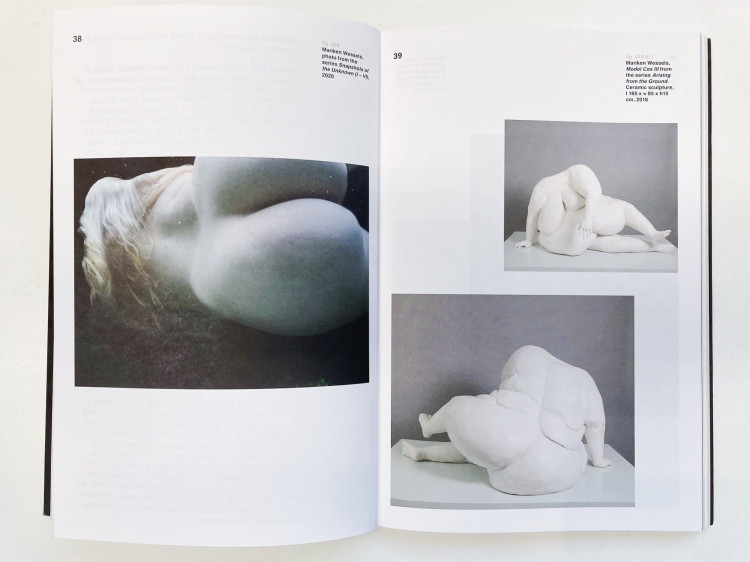
The work of the Dutch multi-disciplinary artist Mariken Wessels engages with archival imagery that she then re-envisions as fragmented or incomplete narratives, often presenting the final work in photobook form. Her earlier photobook Taking Off. Henry My Neighbor (reviewed here) used photographs and collage to re-construct the disturbing backstory of an ordinary married couple, their failed marriage, and the sexual frustration and voyeurism that were part of their relationship. And in a way, Wessels’s new project Miss Cox has its roots in the framework of that previous effort. Of late, she has turned her attention to her fascination with Eadweard Muybridge’s famous series of locomotion studies, and in particular, the photographs he took of an anonymous woman in 1885.
The story starts a few years ago with an auction where Wessels purchased a Muybridge collotype print (a series of still photographs assembled in a grid of 24 images) entitled Arising from the Ground. The sequence shows an obese woman rising from lying down to a standing upright position. To Wessels’s surprise, she didn’t know about this particular study. Little is known about the model, a Miss Cox – she was unmarried, lived in Philadelphia, her weight was 154 kilos, and she appeared in Muybridge’s records as “Model 20”. He typically assigned numbers to his female models, also noting their age, body weight (including hip, bust and shoe size), and marital status, but he didn’t record any additional personal information (this was different from the copious notes he took on his male subjects, including their names and occupations). Intrigued by this series of pictures, Wessels began an unusual examination of oversized human movement and shape.
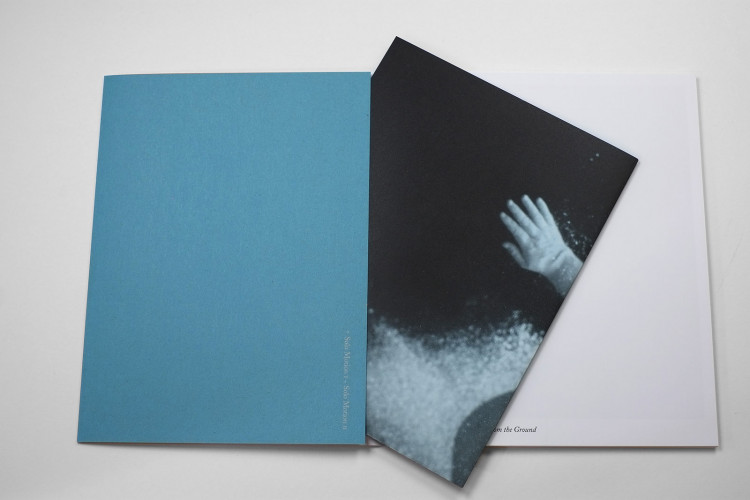
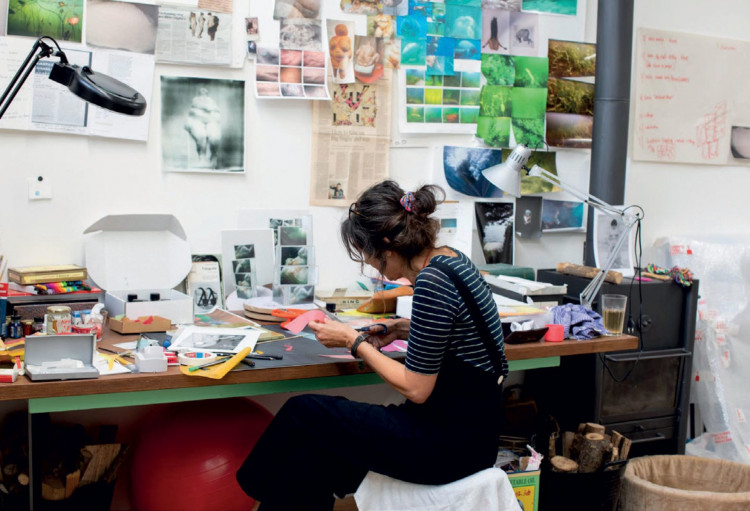
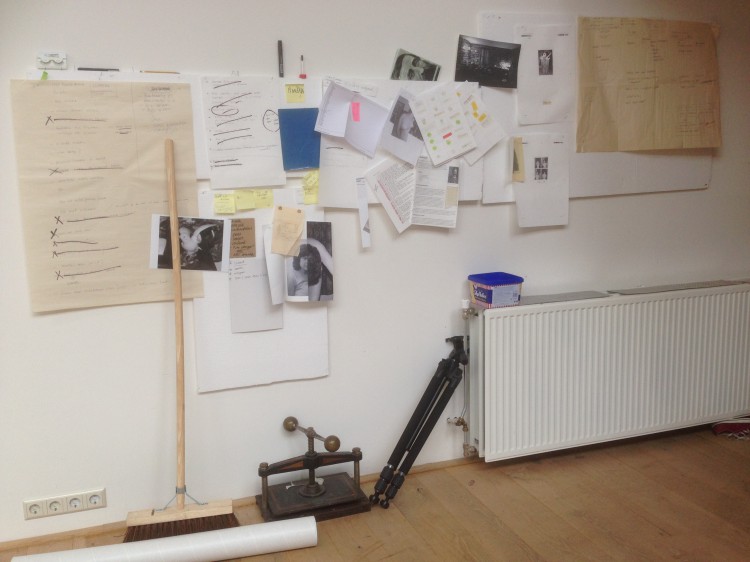
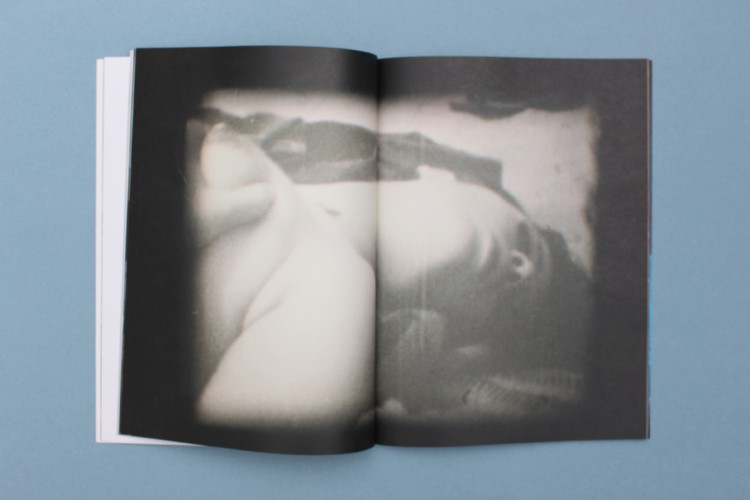
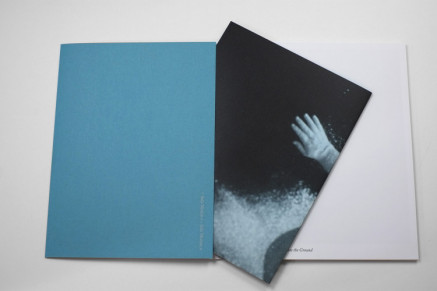
Miss Cox combines sketches, studio views, archival research, essays and photographs, giving us a glimpse into some of the stages of the artist’s creative process. The book has a feeling of a dossier – it is thin, yet somewhat heavy, and it has a simple dirty blue cover, with “Miss Cox” slightly engraved in red in the top right corner, as if somebody quickly scribbled it on a folder. In the first few opening spreads, we get a sustained look at Wessels’s studio, documenting her meticulous research into Miss Cox. The walls of the studio are layered and covered with sketches, movement studies, newspaper clippings, handwritten notes, paintings by Lucian Freud, images of Venus figurines, and other ephemera, as well as photographs of installations and clay sculptures (providing a connection back to the artist’s previous project). These spreads are followed by the artist’s explanatory statement, starting with “for the last two years I have been haunted by “Model 20”.
In Muybridge’s systematic photographs, Miss Cox looks vulnerable, weak, and less human, and a closer look at the sequence raises questions about the relationship between the model and the artist. Wessels wonders if Muybridge knew her name, if he was kind to her, or if she felt comfortable in his presence; Muybridge shot and killed his wife’s lover in 1874, although it is unlikely that Miss Cox knew about it. How he even found her is a mystery, as it wasn’t easy to come across women of her size in 1885. Wessels also wondered whether she had seen the photographs that captured her in that way. But in the end, the images led to more questions than answers.
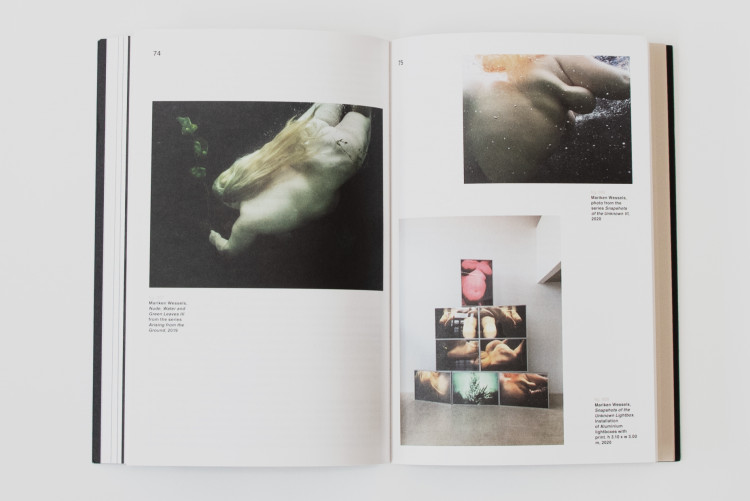
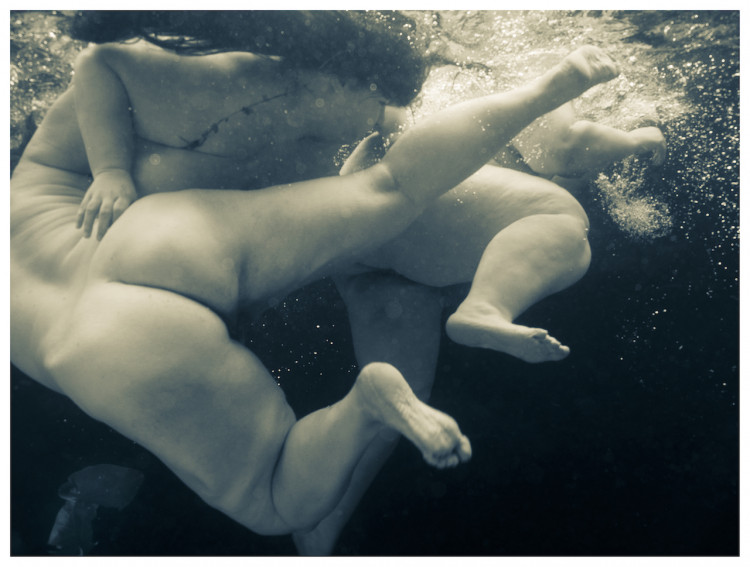
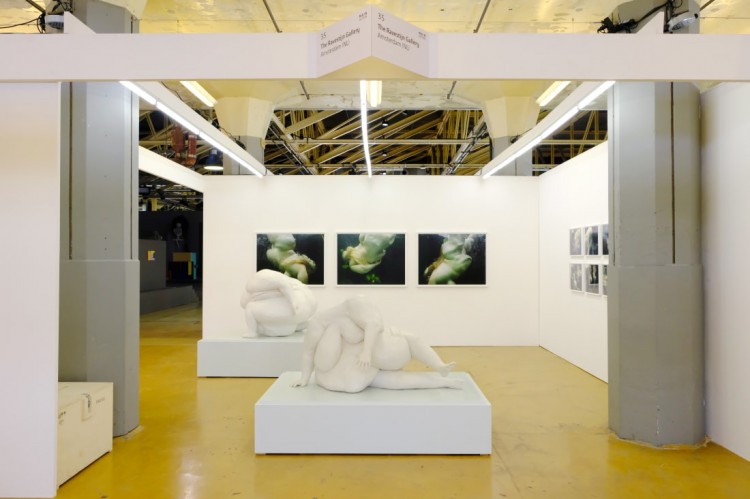
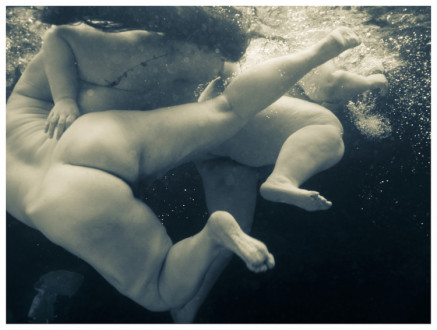
Wessels was fascinated by the fact that for an obese body, the rather simple act of standing up (one which most people can perform easily) becomes a struggle. To reflect that struggle, she began by creating large clay sculptures of an obese woman making moves to stand up (based on her own studio photographs recreating the movements in the Muybridge stills), and as she was slowly working with clay, she began imagining Miss Cox floating in water, freed from the weight of her own body. Wessels says that she was “curious as to how the body would behave under these conditions, contrary to above the ground, where we know much more about how gravity works.” This moved her to photograph various obese female bodies underwater, offering an unexpected response to Muybridge’s land-based studies.
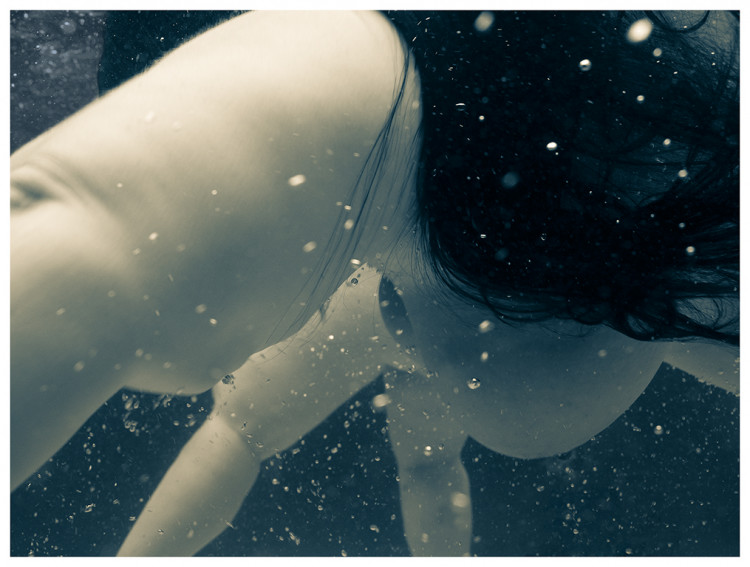
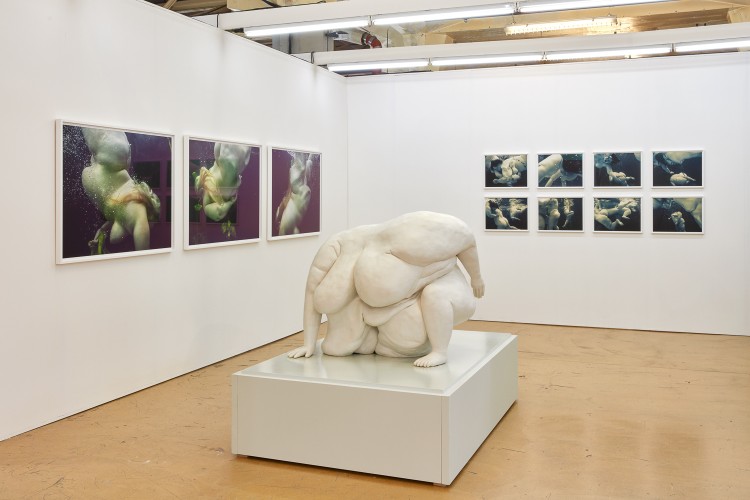
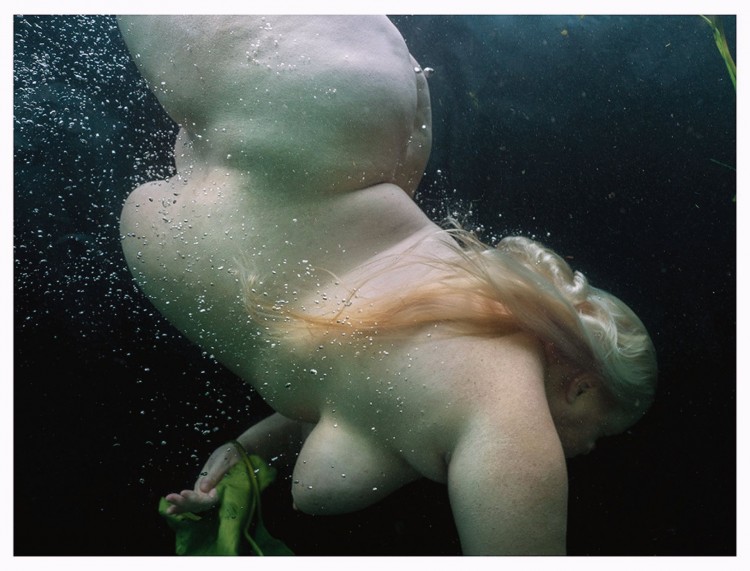
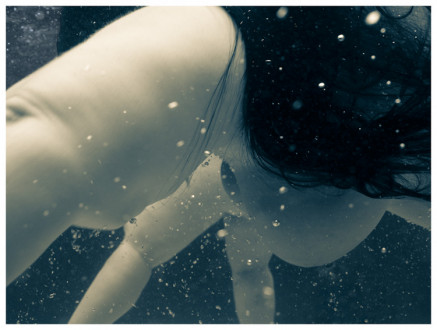
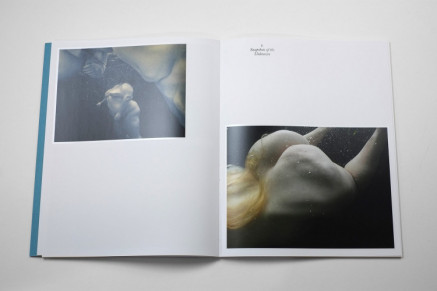
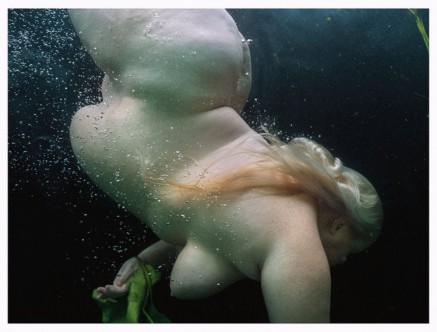
Wessels started her project with sculptures, but in the book sequence, the photographs appear first. Her images of heavy women swimming underwater are quite astonishing. Immersed in water, the bodies have turned into unexpected shapes, which Wessels compares to landscapes. The photographs show bodies transformed by the lack of gravity and atmospheric pressure, and they evoke a surprising sense of settled elegance and beauty. The images are organized into four studies. The first, Nude Upside Down and Back Again, shows photos of women moving, tumbling, and collapsing underwater, almost like wrestling. Images from Nude, Water and Green Leaves find a woman diving down, with tendrils of green leaves twisting nearby, almost like a Pre-Raphaelite scene. And a photograph from Floating Nude in Silence covers a full spread, depicting a woman with long blond hair from behind, hovering sideways with enigmatic grace, like an ancient Venus figure. The water makes the bodies feel light and free, providing a stark contrast to Muybridge’s studies, which in contrast feel heavy and weighed down.
This fundamental contrast is then replayed, with the sequence of ten smaller source photographs Wessels used for her clay sculptures. The photographs documenting Wessels’s four lifesize ceramic sculptures appear at the end of the book, adding three-dimensional representation to the flow of different artistic approaches.
As an integrated artistic statement, Miss Cox is an exciting investigation of femininity and movement, presented in a beautifully produced photobook. It immerses us in a historical mystery, letting us follow the artist’s concerns, and ultimately, providing a thoughtful and powerful reinterpretation of the original source material. Wessels’s series moves away from pure objectification, and brings life and empathy to the study of a female body type most have overlooked.
Fotograaf Koos Breukel portretteert kopstukken uit de kunstwereld Parool
Parool / Koos Breukel / 7 juni 2019
Mariken Wessels (1963) is beeldend kunstenaar. Ze maakt kunstenaarsboeken, fotoseries, films, sculpturen en installaties. Haar tentoonstelling Nude – Arising From The Ground is tot 1 juni op afspraak te zien in The Ravestijn Gallery. Ook staat er een virtuele rondleiding op artland.com. Het bijbehorende kunstenaarsboek Miss Cox, ontworpen door Hans Gremmen, is verkrijgbaar via de galerie en via Fw-books.nl.
BEELD KOOS BREUKEL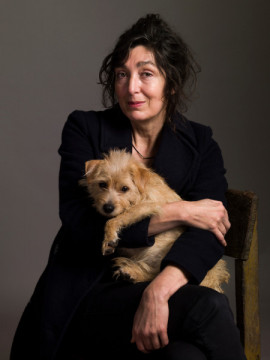
La pesanteur et la grâce, par Mariken Wessels, photographe, plasticienne (4) Le blog de Fabien Ribery
Le blog de Fabien Ribery / May 2020
C’est une recherche plastique magnifique sur la pesanteur et la grâce.
Un modèle prénommé – may be – Rebecca aux formes voluptueuses, une jeune femme très ronde que la Hollandaise Mariken Wessels appelle Miss Cox. Sur le mur de l’atelier des images punaisées, des captures d’écran, une peinture de Lucian Freud, la Vénus gravettienne, des corps dans l’eau, un éléphant de mer, et des recherches de poses.
Mariken Wessels nous propose d’abord de découvrir progressivement son sujet, de participer avec elle à l’élaboration de son livre, avant de connaître la merveille d’un corps lourd nageant sous l’eau avec beaucoup de légèreté, tel un animal marin d’une espèce inconnue, et très humaine pourtant.
Sur le sol, le corps est malhabile, il tangue, c’est un enfant qui vient de naître, et dont l’enveloppe physique est celui d’un sumo. Masse de chair, masse d’être, que l’artiste va bientôt sculpter, en lui offrant la douceur de la céramique, pour le rendre incorruptible. C’est une poupée de Louise Bourgeois égarée chez Rodin.
Une boule de terre, une boule de femme, une boule de mystère. Une femme rampe, danse, tournoie, gauchement. Mais sous l’eau, quel spectacle ! C’est une ballerine, un rat du grand opéra subaquatique, une algue stupéfiante.
Bien sûr, le choix du modèle est politique, renvoyant le spectateur à sa lourdeur psychique et aux critères de beauté que la société publicitaire lui a imposés.
Evoquant les recherches de Muybridge, l’étude de Mariken Wessels est une réflexion en images et matières sur la locomotion de l’animal bipède – à station verticale – que nous sommes tous, peu ou prou.
Voici trois modèles nus, trois Grâces, trois divinités tératologiques, s’ébattant dans l’eau, se heurtant, se frôlant, se repoussant, se caressant peut-être. Flottent comme la robe d’Ophélie de longs cheveux roux sur un corps très blanc.
On ne sait plus où est le haut, le bas, la tête, la cuisse, le ventre, où sont les seins, les fesses, les bras, dans ce firmament aqueux où tout semble bouger avec tant de facilité. Voici la femme acéphale, inouïe, totalement singulière, un corps à embrasser, envelopper, et avec qui danser.
April Virtual Highlights British Journal of Photography
British Journal of Photography / April 2020
Mariken Wessels’ new project — comprising sculpture, photography and film — focuses on the obese body in motion. Inspired by Eadweard Muybridge’s 1887 series, Nude woman rising from the ground, Wessels became interested in gravity, weightlessness, human motion and the material qualities of the human body. Muybridge’s photographs became a model for four lifesize ceramic sculptures of the obese body made by Wessels during a residency at the European Ceramic Workcentre in Oisterwijk in 2018. Wessels then produced photographs and film recordings of obese models swimming underwater. The exhibition at The Ravestijn Gallery, which is temporarily closed, is due to run until 01 July 2020 and is now available to view online.
Mariken Wessels ‘NUDE – Arising from the Ground’ XIBT Contemporary Art Magazine
XIBT Contemporary Art Magazine / April 2020
Unprecedented times call for creative solutions. After having to postpone the opening of the exhibition “Nude – Arising From The Ground” by Mariken Wessels, RAVESTIJN GALLERY invites you to take a virtual tour through the exhibition on their website.
Comprising of sculpture, photography and film, and inspired by a series of Eadweard Muybridge collotypes, Wessels’ most recent work explores the motion of obese bodies and the animalistic aspects of the human form. Nude – Arising From The Ground was partly premiered at Art Rotterdam 2019, but this exhibition aims to give time and space for the entire work to be seen. In autumn 2020, the project will be part of a group show entitled Human After All: Ceramic Reflections in Contemporary Art at Museum Princessehof in Leeuwarden. Other participating artists are Geng Xue, William Cobbing, Klara Kristalova, Kris Lemsalu, Leiko Ikemura, Liliana Porter, Sharon Overmeieren, Nathalie Djurberg & Hans Berg. Curated by Tanya Rumpff.
Amsterdam-based artist Mariken Wessels (NL, 1963) creates artist’s books, sculptures, installations, photo series and film works. Her multilayered projects offer poignant picture stories,combining appropriated (vernacular) imagery and self-produced images, usually featuring female protagonists struggling with life.
Een dag met Mariken Wessels Gallery Viewer
Gallery Viewer / April 2020 / Ish Doney / fotografie Florian Braakman
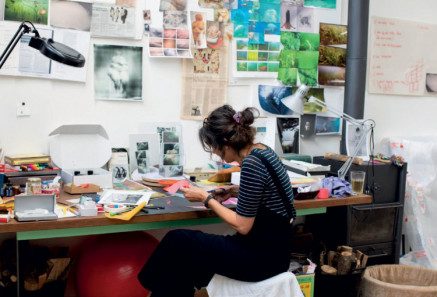
Ergens aan de Amsterdamse grachten in een voormalige drukkerij werkt kunstenares Mariken Wessels aan nieuwe verhalen, geheel naar eigen ontwerp. De voormalig actrice werkt in verschillende media - van fotografie tot sculptuur - en werd door de baanbrekende bewegingsstudies van Eadweard Muybridge op het idee gebracht om menselijke lichamen en gedragingen te verkennen. In aanloop naar haar tentoonstelling Nude – arising from the ground bij de Ravestijn Gallery vertelt Wessels over haar achtergrond en de belangrijke geschiedenis van het gebouw waarin haar studio huist.
ID: Waardoor voelde je je aanvankelijk aangetrokken tot fotografie?
MW: Ik ben opgegroeid in Breda en werkte daar tijdens de middelbare school in een theater. Ik deed allerlei klusjes: koffiezetten, kaartjes verkopen, helpen met de voorstellingen. De theatergezelschappen repeteerden vaak in de grote zaal en ik mocht de acteurs on-set bekijken en fotograferen. Dat was mijn eerste contact met fotografie en het begin van mijn liefde voor het medium.
Als kind was mijn favoriete speelgoed een View-Master: zo’n plastic stereokijker waar je een schijfje met dia's in doet om ze in 3D te bekijken. Op de schijfjes die het meest tot mijn verbeelding spraken, ontbraken enkele afbeeldingen. Daardoor kon ik het verhaal iedere keer anders laten beginnen of eindigen. Misschien is dat waar mijn liefde voor kijken en het maken van verhalen is begonnen.
Uiteindelijk ging ik naar de toneelschool in Amsterdam, maar ik ben nooit gestopt met fotograferen. Ik had zelfs een kleine donkere kamer in mijn badkamer. Nadat ik na mijn afstuderen een aantal jaren als actrice had gewerkt, wilde ik meer autonomie. Ik was het zat om vaste rollen te spelen. Dat heeft me geïnspireerd om kunstenaar te worden.
ID: Hoe heeft de tijd in het theater en achtergrond als actrice jouw werk als beeldend kunstenaar beïnvloed?
MW: Als acteur leer je hoe je een rol kan invullen door eindeloos vragen te stellen over het personage dat je speelt: waar komt zij vandaan? Waar gaat ze heen? Wat is haar doel? Die benadering gebruik ik nu nog steeds in mijn artistieke praktijk. Ik schrijf de antwoorden op grote vellen papier en hang ze aan de muur, waarbij ik alles opschrijf dat met elke personage, omgeving of verhaal te maken heeft. Het is vaak erg intuïtief.
In het begin ben ik op zoek naar feiten, maar dat laat ik gaandeweg los en daarna verzamel ik alles dat bij het project past. Dan begint het maakproces; ik kan foto’s of collages maken, archiefmateriaal gebruiken, met klei of zelfs met film werken. Vanaf dat moment is alles mogelijk, omdat ik mijn raamwerk dan heb en vrij kan schakelen tussen de media die ik binnen dat kader kies.
ID: Hoe combineer je deze verschillende materialen en visuele benaderingen?
MW: Het is echt een proces. Ooit kocht ik op een Spaanse rommelmarkt een oude foto van een groep mensen die rond een boomstronk stonden. Het was klein en vrij gewoon, maar ik vond het intrigerend. Ik maakte een kopie en begon te werken met knippen en plakken. Vervolgens gebruikte ik het beeld als basis voor een paar kleine sculpturen van klei, waarbij de boomstronk veranderde in een kluwen lichamen en de benen de plek in namen van de wortels.
Rond die tijd kocht ik op een veiling een fotogravure van Eadweard Muybridge. Nude woman arising from the ground bestaat uit meerdere frames die de bewegingen van een zwaarlijvige vrouw vastleggen terwijl ze vanuit een liggende positie opstaat. Muybridge’ opnamen werden modellen voor een aantal grote keramische sculpturen, waarvan het gewicht mij vervolgens inspireerde om even grote vrouwen in een andere omgeving te fotograferen: onder water. Ik wilde onderzoeken hoe van een zwaar lichaam zich gedraagt zodra de zwaartekracht afneemt. Nu onderzoek ik dezelfde ideeën via film en in boekvorm. Ik noem het werk Nude - arising from the ground, een verwijzing naar de fotogravure van Muybridge die aanleiding gaf tot dit onderzoek.
ID: Die interesse in het menselijk lichaam en beweging lijkt een terugkerend thema in jouw werk; hoe komt dat zo?
MW: Mensen fascineren me. Dat is een van de redenen waarom ik naar de toneelschool ging. Een van de dingen die ik het leukste vond, was mensen observeren en die waarnemingen vervolgens vertalen in rollen die ik kon spelen. Dat is niet echt veranderd. Mensen hebben me altijd geïntrigeerd en die obsessie vormt de kern van bijna al mijn projecten.
Het werk van Muybridge is een andere grote inspiratiebron, en dan met name de wijze waarop hij de details van dagelijkse bewegingen vastlegde. Er is de serie waar ik direct mee heb gewerkt, maar er zijn er zoveel meer. Van een vrouw die een emmer water leeggooit tot een kruipend kind, Muybridge toont het leven in al zijn eenvoud en ik vind dat ontroerend.
Bij mijn werk kan je je natuurlijk afvragen wat waar is en wat is verzonnen, maar dat kun je je bij alles afvragen!
ID: Bij jouw projecten is lastig om te bepalen wat waar is en wat is verzonnen, met name die projecten waar je welke archiefbeelden gebruikt en de kijker laat gissen naar waar het archief eindigt en de artistieke interventie begint. Hoe zit het met de relatie tussen feit en fictie?
MW: Bij mijn werk kan je je natuurlijk afvragen wat waar is en wat is verzonnen, maar dat kun je je bij alles afvragen! Dingen worden vaak gepresenteerd als feiten, maar hoe waarheidsgetrouw zijn feiten? Ik neem de vrijheid om materialen uit verschillende disciplines te gebruiken om mijn verhaal te vertellen op een manier die overtuigend is. Als een werk klaar is, vind ik het niet belangrijk welke onderdelen ik helemaal zelf heb gemaakt en welke materialen ik heb gevonden, omdat alles wat ik heb gebruikt is veranderd of in een nieuwe context is geplaatst. Binnen dat framework probeer ik altijd de mogelijkheid van waarheid te handhaven.
ID: Wat is er zo bijzonder aan jouw atelier?
MW: Mijn atelier bevindt zich in het 17e-eeuwse centrum van Amsterdam. Tijdens de Tweede Wereldoorlog was hier een drukkerij gevestigd. In 1944 werd de toenmalige directeur Frans Duwaer gearresteerd en enkele dagen later geëxecuteerd. Duwaer en zijn personeel hadden hun drukpersen gebruikt om illegale identiteitskaarten en geboorteakten te vervalsen voor Joodse burgers en mensen uit het verzet. Ze hebben vele levens gered. Meer recent werd het complex verbouwd tot kunstenaarsateliers. Ik betrok deze studio in 2008.
ID: Waar werk je momenteel aan?
MW: Op dit moment bereid ik een aantal tentoonstellingen voor. Ik heb een solo-show in de Ravestijn Gallery in Amsterdam in het voorjaar, en is Nude - arising from the ground opgenomen in een groepsshow in Keramiekmuseum Princessehof in Leeuwarden later deze zomer. Ook werk ik met Hans Gremmen van Fw: Books aan een nieuw boek over dit werk.
ID: Wat hoop je vooral via je werk te communiceren?
MW: Ik ben fundamenteel geïntrigeerd door menselijk gedrag en het menselijk lichaam. Deze fascinatie is de drijvende kracht achter de verhalen en beelden die ik maak, en ik hoop dat dit resoneert bij de mensen die ze bekijken.
Mariken Wessels - The Art of Human Motion Metal Magazine
Metal Magazine / April 2020 / Olivia Dworakowska
Mariken Wessels’ latest exhibition, Nude - Arising from the Ground, at Amsterdam’s The Ravestijn Gallery and currently on standby due to COVID-19, presents an unusual approach to human motion and shape. This time, the Dutch artist surprises us through photography, sculpture and a new installation.
The photographer was inspired by one of Eadweard Muybridge’s photo series and decided to shoot obese female bodies in a rather unusual setting: underwater. The results bring the audience into a brand new, mystique world of movement and the structure of the human body. The variety of art forms creates a diverse setting that enables the artist’s creativity to shine bright. Today, we sit down with Mariken to talk about her approach to art projects, ideas and the exhibition.
What do you do when you're not working on a visual art project?
I'm usually working on multiple projects at the same time. Because most of my projects are research-based and deal with matters of fact and fiction, I am always on the alert as to what happens around me. I scan the world around me, sometimes more consciously than others, to recognize and seize on the opportunities presenting themselves. If you want to know about my hobbies, I can tell you that I like to play tennis.
With the idea already formed in your head, how do you approach working on a new project? What kind of space makes you feel the most creative?
Every project starts with an idea indeed. Often, when I'm already working on a project, a new idea might pop up. This idea nestles in my head and urges me to collect content step by step, which I can later employ to materialize and sharpen the concept. In my studio, I collect materials on what I call ‘walls of inspiration’ that work as intuitive collections and mood boards.
In my most recent book, Miss Cox (2020), such mood boards can be seen in the studio views that the publisher and I decided to include. It is possible that one project gives birth to the next, sometimes from the need to deepen and expand on a certain topic in a different medium. As such Nude – Arising from the Ground sprang from Taking Off. Henry My Neighbor (Art Paper Editions, 2015).Nude – Arising from the Ground was premiered in 2019 in Rotterdam, but it’s currently on view at Amsterdam’s The Ravestijn Gallery – now closed to the public due to COVID-19. Can we find new works there?
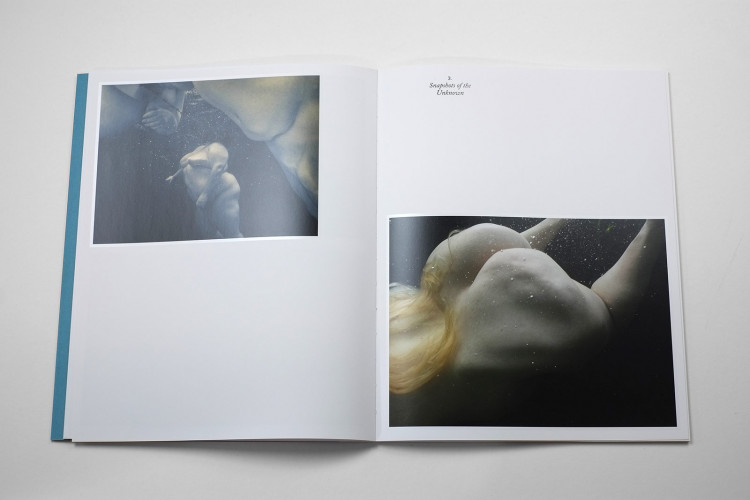
For sure! There are more photo works on display than in Rotterdam. Furthermore, I also show the installation Snapshots from the Unknown, which I built from light boxes, and there is a new film that I edited in a loop.
Previously, you mostly worked with film, text and photos. Why did you decide to include sculptures in this exhibition? Does sculpture allow you to present the idea of form and the human body better than other forms of artistic expressions?
For me, it is simple: sculpture is a three-dimensional medium, and I found it to be a nice addition and also a challenge to give shape to this topic in this medium. In ceramics, the body is more concrete and tangible compared to two-dimensional visual media.
All of the images were taken underwater, why did you choose to photograph the bodies/models in this environment?
I have chosen the underwater setting because I was curious as to how the body would behave under these conditions, contrary to above the ground, where we know much more about how gravity works. I was surprised by the results in which the obese bodies have turned into landscapes shaped by the water’s pressure.
The exhibition is inspired by a particular series from Eadweard Muybridge's photo series Human and Animal Locomotion. What about these images is so interesting to you?
One particular photogravure from the Human and Animal Locomotion series gave me food for thought. Not only was I fascinated by the rather heavy body of the young woman portrayed, but above all, by her struggle to even just raise to her feet from a lying position. This is a move that most people will just perform without ever thinking about it. I wanted to shape this struggle into a three-dimensional form, that’s why it ended up becoming sculpture.
Do you often seek inspiration in work created by other artists?
Although I find inspiration in the work of other artists, I rarely ever base my projects on other people's art.
Is there a new meaning you want to assign to Muybridge's title Arising from the Ground through your project?
Not really. This image showing a woman – presumably named Miss Cox – made me imagine how having such an obese body turns something as simple as standing up into quite a task. I could only make the movement and changes in her body palpable by translating this two-dimensional representation into a three-dimensional work. Only after that I began to consider using a living model for the underwater series.
Obese female figures are not a conventional form of beauty. Do you think it's important for artists to discover and show that it is possible to find sensuality in different types of human bodies?
That isn’t really my line of approach. For me, it's mostly to do with the shapes the body assumes, which in a photograph could appear as a landscape. I've never been interested in the social position of obese people. What intrigues me is the way the body behaves underwater, how the heavy body appears to be exempt from the normal pull of gravity. I’ve also found beauty and elegance in the unexpected shapes the body is crinkled into by the water. Personality doesn't count in my project. That’s why you will barely see faces, or parts thereof, in this series.
What’s the reason you only focused on female bodies, and how do you work with models that need to pose in nude?
Because I was looking for unforeseen shapes, in which abstraction had a role to play. I sensed that the male genitals would be present so dominantly as to distract from the aesthetics. I was looking for a more anonymous type of body for the more bestial features of the human body. I invited several potential models to my studio to inform them about my project and my way of working, about what I expected from them and why. Thus, I was able to convince them about the importance of their contribution in a choreography that I directed.
You have created internationally acclaimed photography books. Why do you often choose this form to present your art?
I'm particularly interested in the photo book as a medium. I think that photographs placed in sequences work well when there's tension and suggestion built into the edit. Because photography is so intricately linked to the notion of time, to play with that relationship is what I’m attracted to. Because of its intimate character, I often choose the photo book as means and form. In a well-executed book, everything plays its part, from the size and weight to paper type and printing quality. And, contrary to film, the audience determines the order in which it wants to read the photo book.
Make Believe - Jahrespublikation KUNSTVEREIN HILDESHEIM
Jahrespublikation Kunstverein Hildesheim / 2019 / Hrsg. Von Charlotte Rosengarth & Torsten Scheid
“Make Believe”—credit for the title of the Kunstverein’s 2019 program goes to the participating artist Anika Schwarzlose, whose “Strategies for make believe” addresses the military strategies of deception and disguise. Her works are based on an image archive that she appropriates and supplements with photographs of her own presentations and artistic interventions. It is not without irony that the artist transfers the illusionism of military deception to visual art. Indeed, the creation of illusions in the military or in politics, for instance, vary significantly from artistic practice. The military deceives and disguises, politics dissembles or simulates; art, however, transcends its potential to deceive, creates illusions, and disappoints those who view it; art does not create (false) security, but irritation.
Using archives; appropriating image material; telling, documenting, staging stories; each of the artists participating in the 2019 program developed their own way of dealing with (existing) photographic and filmic images—hencewith media to which one generally ascribes a special relationship to reality—and they each tread a different path for the purpose of deceiving us into believing their visual constellations and the stories they tell. The program included the group exhibition “spread: Ruth van Beek, Thomas Mailaender, Anika Schwarzlose, Erik van der Weijde, Mariken Wessels”—with Artist as curator Lotte Reimann, the solo exhibition “Noémie Goudal: Observatorium”, the student presentation “Copycats. Das zweite Leben der Bilder”, and the“beLichtungen” by Frederik Preuschoft, as well as an extensive supporting program on the relationship between facts and fictions and on the theory and practice of curating.
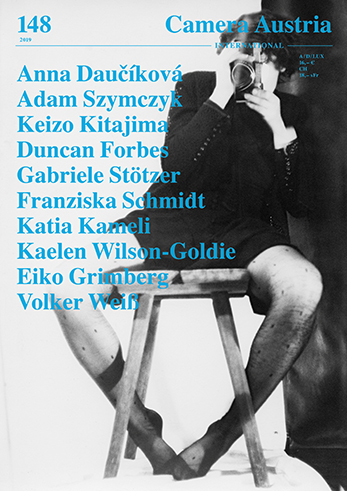
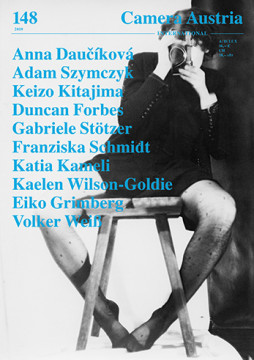
Erik van der Weijde in conversation with Mariken Wessels Camera Austria #148
Camera Austria #148 / December 2019 / Erik van der Weijde
Mariken Wessels is a Dutch artist and former actress. She is a master at creating detailed stories and characters by combining found footage, texts, and her own work in various media. Her books are mysterious gems that sometimes feel and read more like movies. I have the feeling that our shared passion for photobooks, found photography, and outsider art has roots in common ground: our studies at the Gerrit Rietveld Academie in Amsterdam..... Continue reading.
Picks From Art Rotterdam 2019 FAD Magazine
FAD Magazine / 9 February 2019 / Paul Carey-Kent
Art Rotterdam (7-10 Feb) and the associated shows and events in a dynamic and architecturally stimulating city are always interesting – I’ve been several times – and this was the 20th edition. There were 80 galleries showing in the iconic Van Nelle Factory site, plus several prizes and special exhibits. Several British galleries were present with good stands – Division of Labour, FOLD, IMT, l’étrangère – and the excellent Swiss gallery Barbara Seiler but that would have been a little easy. Here are my choices from the Union we’re about to leave… []
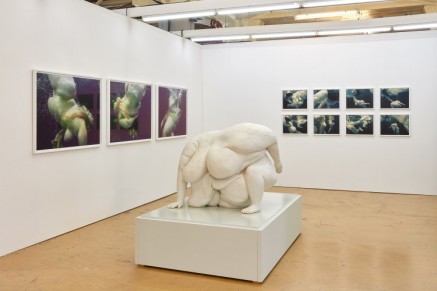
Amsterdam artist Mariken Wessels was sufficiently inspired by Eadweard Muybridge’s little-known studies of the motion of an obese person that she bought them from an auction and embarked on a series of photographs and sculptures. Choosing white rather than flesh colour in both photographic and ceramic works, allowing the water’s distortions and her sculptural editing all tend toward abstracting the body while engaging with its fascinating qualities in one of the more left-field presentations at the fair.
De Kunstmeisjes tippen de vijf beste presentaties op Art Rotterdam Gallery Viewer
Gallery Viewer / 08-02-2019 / De Kunstmeisjes
De kunstbeurs Art Rotterdam is begonnen en de komende vier dagen kunnen we massaal genieten van wat de tientallen galeries in de Van Nellefabriek laten zien. Eerder tipten wij onze favoriete tien kunstwerken onder de € 4.000, maar we zijn nog niet klaar. We hebben de hele beurs afgestruind naar de vijf stands die wij het allerbest vonden. Ideaal voor als je in één keer de highlights wilt meepakken, en verzekerd wilt zijn van een goed gespreksonderwerp bij het koffiezetapparaat volgende week. []
In deze stand is geen ruimte voor bodyshaming. Mariken Wessels’ werk laat een heerlijk overweldigende hoeveelheid lichamelijkheid zien. We wanen ons weer even in de tijd van Rubens, toen voluptueuze vrouwen het schoonheidsideaal vormden. De presentatie bestaat uit foto’s, film en sculpturen waarin rondingen de show stelen. De lichaamsplooien vleien zich over de sokkels en vullen zo de ruimte. De sculpturen worden omringd met onderwaterfoto’s aan de wand, en een film waarin we een dame zien zwemmen en we mee worden gevoerd met de bewegingen van haar lijf in het water. Wij verlaten de stand helemaal zen, zowel door het kabbelende water van de video als de rustgevende eenheid van het geheel.
Arising from the Ground – Interview with Mariken Wessels Gallery Viewer
Gallery Viewer / 07-02-2019 / Wouter van den Eijkel
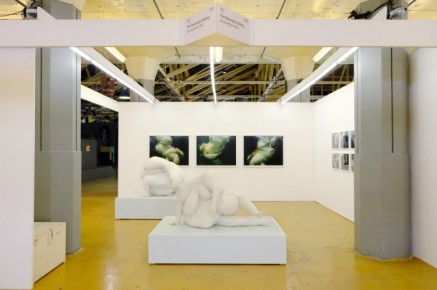
Mariken Wessels maakte internationaal naam met fotoboeken als Queen Ann. P.S. Belly cut off en Taking Off. Henry my Neighbor. Op Art Rotterdam presenteert The Ravestijn Gallery een eerste selectie uit het nieuwe project Arising from the Ground; Wessels’ eerste serie die grote sculpturen bevat. We spraken Mariken Wessels over deze serie waarin de schoonheid van het obese lichaam centraal staat.
De serie bevat zowel foto’s als sculpturen. We kennen je van je fotoboeken. Hoe kwam je erop om grote kleibeelden te gaan maken?
Voor mijn project Femina Ludens had ik al kleibeeldjes gemaakt en thuis maakte ik al keramische beeldjes. Ik had al een tijdje het idee om iets met zeer zwaarlijvige modellen te gaan doen. Ik had al een sculptuur gemaakt van een obees lichaam. Toen kwam ik op een veiling een fotogravure uit 1885 tegen van Eadward Muybridge (1830-1904) en alles viel op zijn plek. Voor zijn studie naar Human and Animal Locomotion (vanaf 1877) vroeg Muybridge de zwaarlijvige Ms Cox om vanuit een liggende positie op te staan. Door de worsteling die ik op die foto’s zag, wist ik waar het project over moest gaan en welke sculpturen ik moest maken.
Over worsteling gesproken, het lijkt me ook een hele worsteling om je een nieuwe discipline eigen te maken. Hoe heb je dat gedaan?
Dat klopt. Ik kreeg de mogelijkheid om het te leren tijdens een residentie aan het zeer professionele Europees Keramisch Werkcentrum (EKWC) in Oisterwijk. Ik werkte zo’n drie maanden aan elk van de beelden.
Beeldhouwen vormt in zekere zin een breuk met je eerdere werk waarin je vooral werkte met fotografie en film. Is het werk wel thematisch verwant?
Ja, zeker. Net als bij eerdere projecten als Queen Ann en Taking Off treed ik mijn onderwerp met empathie tegemoet en heb ik aandacht voor het verhaal van mensen wier levens niet aan de gangbare normen voldoen. Wat ik met deze serie wil laten zien, is dat er ook schoonheid schuilt in lichamen die niet voldoen aan de algemene norm van slankheid.
Is dat ook de reden dat er op de sculpturen en het merendeel van de foto’s geen hoofd zichtbaar is en de sculpturen geen hoofd hebben?
Dat is juist. Ik wil de aandacht vestigen op het lichaam. Ik wil er ook geen erotisch werk of een freakshow van maken, maar laten zien dat er meerdere vormen van schoonheid bestaan.
Waarom heb je om dat te laten zien gekozen voor onderwaterfotografie?
Het menselijk lichaam gedraagt zich anders onder de druk van het water en neemt wanneer het beweegt ook andere vormen aan. Dat levert bij obese mensen intrigerende, onverwachte vormen op, zoals de rotsachtige vorm die een buik kan aannemen of de sterrennacht aan belletjes die ontstaat bij het draaien van een lichaam. Doordat het hoofd weg wordt gelaten, vervalt het individu en kijk je in de eerste plaats naar de landschappelijke en dierlijke kanten van een lichaam.
Kleiner Art Rotterdam is de beste editie in jaren NRC
NRC / 07-02-2019 / Arjen Ribbens
Kunstbeurs Ruim van opzet, interessante kunst en een uitgebreid bijprogramma. De jubileumeditie van Art Rotterdam is een van de beste in het twintigjarig bestaan van de beurs voor eigentijdse kunst.
Uit nood ontstaan soms mooie dingen. Voor de twintigste editie van Art Rotterdam, al jaren de beste Nederlandse beurs voor hedendaagse kunst, schreven zich dit jaar een kwart minder galeries in. De top van de internationale kunsthandel mag dan recordomzetten boeken, galeries in het middensegment hebben het moeilijk. Ze beknibbelen op beursdeelnames of sluiten zelfs de deuren.
Maar met slechts 90 in plaats van 130 galeries, waarvan ruim veertig uit elf buitenlanden, is de jubileumeditie van Art Rotterdam misschien wel de beste aflevering ooit. Ruim van opzet, inhoudelijk interessant en met een overladen bijprogramma, met nevenbeurzen (voor fotografie en design), atelier-openstellingen en wat niet al. Veel te veel om in één dag allemaal te bezoeken.
Het hoogtepunt van Art Rotterdam is ook te danken aan het kleinere aantal deelnemers. In het hart van de beurs heeft Hester Alberdingk Thijm, directeur van de bedrijfscollectie van AkzoNobel, de tentoonstelling Now/Forever samengesteld – een cadeautje van de Nederlandse multinational voor de jarige beurs. []
Opvallend in de Van Nellefabriek is het grote aanbod kunst gebaseerd op andere kunstwerken. Soms zie je de vertaalslag pas na een toelichting. Zo hangen bij Upstream grote textiele werken van computerkunstenaar Rafaël Rozendaal. De gekleurde pixels van de bij het Textielmuseum geweven doeken zijn gebaseerd van de beeldenstroom van Google. En de foto’s en beelden van Marike Wessels van een naakte vrouw wier zwaarlijvigheid landschappelijke vormen heeft aangenomen, te zien bij The Ravestijn Gallery, blijken te stoelen op een fotoreeks van de negentiende-eeuwse Britse ‘bewegingsfotograaf Eadweard Muybridge. Op die reeks legde Muybridge vast hoe een obese vrouw opstaat.

The Photograph That Took the Place of a Mountain Taco Hidde Bakker
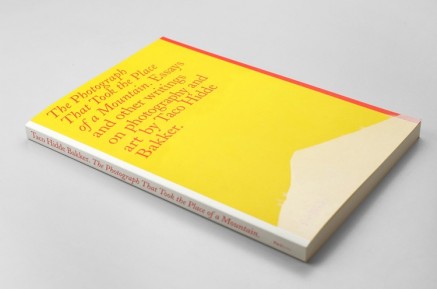
The Photograph That Took the Place of a Mountain by Taco Hidde Bakker is a diverse collection of writings on the philosophy, politics, and art of photography. Its topics range from the tension between artist and model to the landscapes of the American West, the surfaces of a second-hand New York City, and the predicament of transcultural photography. Taco Hidde Bakker has selected and revised sixteen pieces of writing from a variety of publications spanning the past decade of his journeys through photography and art. In addition, Bakker has written four new pieces for this volume. Often engaging in close collaboration with the artists about whose work he writes, Bakker explores different literary forms in response to their views. The recurring reference to poetry informs the productive friction between images and the words that accrue around them. The Photograph That Took the Place of a Mountain contains writings about artists such as Witho Worms, Onorato & Krebs, Dirk Braeckman, Renato D’Agostin, Tom Callemin, Mariken Wessels, Ken Schles, Stephan Keppel, and Francesca Woodman.
16 x 23 cm / 160 pages + 2 p insert / softcover / colour + bw / isbn 978-94-90119-62-1 / Design Hans Gremmen
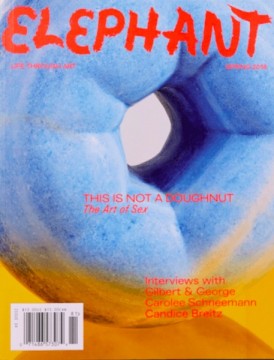
Really Good Bad Photography Elephant
Elephant / issue 34 / David Evans
What constitutes a genuinely good photograph nowadays, when the equipment available to almost everyone makes it so easy to take one? Should you follow the rules - or break them all? David Evans takes a tour of the well-policed frontiers that separate amateur and professional photographers. Click below for the full article.
anybody’s image could become everybody’s image: an interview with Mariken Wessels ICP library
Emily P Dunne / 26-1-2018 / ICP library
Excerpt from the interview:
epd: When did you start making visual art works, and how did you start working with found materials?
MW: Before I moved to Amsterdam to attend the Theater School I was already taking photographs. In the southern Dutch city of Breda, where I grew up, I worked in the small local theater, where each employee had multiple responsibilities, from door keeping and preparing the dressing rooms to constructing the sets and serving coffee during the breaks. This small theater was part of a larger theater where large companies were holding their rehearsals. At the time, in the early 1980s, I was able to attend every show, by both small and larger companies. Due to my job I was allowed to take pictures during rehearsals too. I felt intrigued by the narrative power embodied within theatrical scenery, which prompted me to move to Amsterdam to study acting at age twenty. A few years later, after having graduated from the Amsterdam Theater School I studied a year abroad at the Lee Strassberg Institute in New York City. During my subsequent acting career in The Netherlands, where I worked for classical theater as well as for T.V. series, I kept on taking photos. Additionally I was involved, like during my apprentice years in Breda, in everything dealing with a play, from suitable attire to the design of sets. This attitude was stimulated at school and also welcomed in practice.
Parallel to my acting career I kept making my own work, which grew stronger and stronger on its own, up to the point that I realized I’d be happier on my own and let my art works develop within an autonomous practice, rather than remain part of the bustle of theater. And I went back to school, this time the Rietveld academy of arts in Amsterdam. One of my teachers in the photography class assigned us to make a book. At that moment I realized I wanted to make a book about someone dear to me who passed away, but of whom I had no photographs at all. On the internet I started searching for photos related to his everyday surroundings. I worked from the outside toward the interior, as it were. I asked myself the same questions that I would have asked myself in the capacity of actress. By means of these questions I tried to build a picture of this person, adding to the portraits pictures that approximated the way he lived, where he lived, how his room looked like, and what things he used. He played the guitar and listened to cassette tapes a lot, so I went looking for these kind of images, too. And I found exterior shots of his house. This collecting activity helped coming close again to this dear one I’d sadly lost. I collected the images I found in a little artist’s publication. One of the results that fascinated me is how the images in this book replaced my actual memory of where and how he lived. When I think of the staircase in his house or his room, my mind is directed to the book. I discovered the frightening possibility of pasting images onto one’s memory, distorting that memory toward a belief in the later images rather than the actual, living memory. Even though human memory is unstable to begin with, the idea of memories being replaced by (other people’s) photographs is something that kept me busy ever after. This launched my interest in ‘found footage’ and convinced me that other people’s images, often anonymous, can be easily appropriated both into my artist’s practice and into my private memories. I realized that anybody’s image could become everybody’s image.
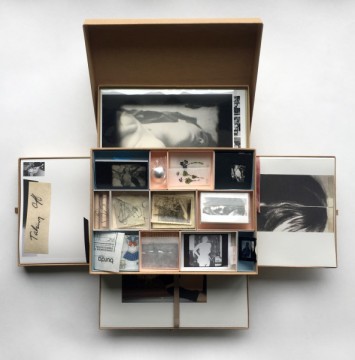
Mariken Wessels entrevista Revista Old Nº 69
Revista Old / Nº 69
Mariken Wessels: Queen Ann. P.S. Belly cut out Emily P Dunne
To say that Mariken Wessels’ work did not plant the seed to put on our exhibition Je est un autre: The vernacular in photobooks, would be a lie. Wessels work takes a collection, examines it with a considered eye and presents it carefully. For me, where Wessels work transcends from printing a collection in book form is how she introduces herself and an unreliable narrator, which in photography involves the act of manipulation.
This comes up in both Queen Ann. P.S. Belly Cut Off and Taking Off: Henry My Neighbor (Which I will be writing about later, and have been obsessed by all year.) Looking at Queen Ann again, I noticed the images that place the element of doubt, visually. An image of a woman in the water, beside a dock, but there is a second reflection in the water–Where is that person? In another photograph, possibly a double exposure, a ghost of a woman stands in the woods. Who manipulated these photographs? Was it Wessels, or was it Queen Ann? We begin to learn that Ann herself is fond of altering her own images: We see a family portrait where she has painted makeup and some hair on her mother and collaged a sailors suit on herself, as well as subtle examples of manipulation such as cutting out faces or obscuring them. Anne wrote on the image of her and her mother: “I drew myself and I drew myself a sailor suit. At my First Communion I wore a sailor’s dress, sadly enough no one took any photos it just wasn’t done in our days. Back then there was (no money and no worries) my father sand that all the time, well, it was just after the war.” We learn that photography and memories are important to Anne, and she finds her interventions a way to correct history.
Then we are presented with a mystery. A series of dark and potentially violent images break the narrative. A woman runs, topless through a field or possibly on a beach, is seen touching her breast, while a nude man is also introduced. The tone in this section of the book is remarkably different than the previous and series that precedes it. The only clue that I can guess at is from a caption Anne has written about a man about her age named Piet: “HI our Piet – p.t.o. Sadly met with an accident he appeared to me in a lightweight body. I’ll tell you some time.”
The reader is then re-introduced to Anne, but time has passed (the dark and mysterious photographs we just saw?) and Anne is holding a hand tinted photograph of herself. We see Anne hiding behind portraits of her younger self with a drawn on mustache and freckles. We are then finally introduced to Anne as an older woman and her artistic interventions in her portraits. Anne’s style is bright and poppy. She often paints scarves or head wraps that conceal her chin, implying that she isn’t pleased with her appearance in the photographs and adjusts them accordingly. However, body image issues aside, Anne’s interventions in her portraits are beautiful, she has a recognizable style and is extremely funny. In one image, she stitches two stills from a television and creates a small self portrait with a drawing of her torso montaged on top.
The last section of this narrative is Anne running through a fall scene. The aesthetic is similar to the dark scenes in the previous section, but the images are in color and Anne smiles and wears a bright red poncho. Perhaps Anne has transcended the dark period of her past.
Of course, this is all conjecture. There is little text, save for Anne’s captions or notes written on her photographs. My reading however, is that this is a transcendent story and while there are elements of pain in Anne’s history and she has some disappointments with her appearance, she is not an unhappy woman, and is in her heart an optimist. The last caption she writes “Is there any hope for me?”
Emily P Dunne
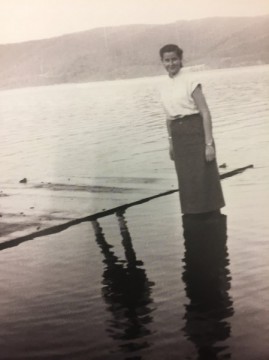
Je est un autre: the vernacular in photobooks Bernard Yenelouis
. . . these pictures no longer simulate vertical fields, but opaque flatbed horizontals. They no more depend on a head-to-toe correspondence with human posture than a newspaper does. The flatbed picture plane makes its symbolic allusion to hard surfaces such as tabletops, studio floors, charts, bulletin boards – any receptor surface on which objects are scattered, on which data is entered, on which information may be received, printed, impressed – whether coherently or in confusion . . . the surface is no longer the analogue of a visual experience of nature but of operational processes.
. . . What I have in mind is the psychic address of the image, its special mode of imaginative confrontation, and I tend to regard the tilt of the picture plane from vertical to horizontal as expressive of the most radical shift in the subject matter of art, the shift from nature to culture.
The shift “from nature to culture” that art historian Leo Steinberg describes, which was a way to unpack the then new paintings of Robert Rauschenberg, can also act as a portal to understand the interest and market for photo books.
The International Center of Photography Library presents an investigation of vernacular imagery in the photobook. These books utilize found photographs, snap shots, archives and collections of others. The turn of the most recent century has seen an impassioned interest in these objects both for collectors and artists. With the glut of over a century of folk photography, there is an endless source of images to collect, curate, re-appropriate and digitize. The photobook reproduces the images both so the reader can collect themselves and the artist can manipulate or alter the meaning of the image.
The Vernacular manifests itself in the photobook along a spectrum, or concocting elements from variations on: The mysterious narratives of Wisconsin Death Trip and Mariken Wessels, the born-digital collections of Chris Clary and Joachim Schmidt, presentations of a hyper specific collections of raccoon hunts or sad postcards, Luc Sante and William E. Jones mining public institutional collections. They all share the unique quality of the book: a presentation of material in an intentional sequence meant to move the viewer.
Bernard Yenelouis
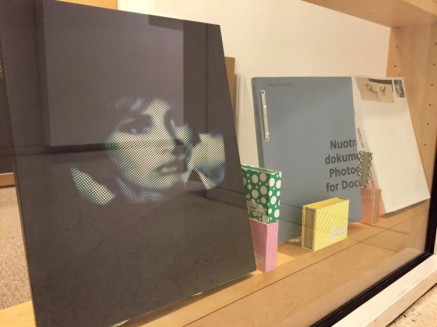
He was there 10x10photobooks
Dutch photographer Mariken Wessels is one of the librarians go-tos when a patron asks for a recommendation. This is her fifth book, published in 2012 titled: He Was There. This limited edition book (our copy is also signed!) published as a concertina folding but (as most of Wessels books) the design elements are both aesthetic and extend the narrative of the book. The concertina style allows this book to expand out to almost 30 feet long, evoking film strips or a diagramed timeline. In the book, the viewer is approximately 30 feet from the subject, a man unpacks a suitcase and crawls on the floor. The relationship to the subject is mysterious: is this work staged? What is the man doing? Is he aware he is being observed? What is the nature of this performance? In the final panels of the series, the man holds up a pink blanket (like a bullfighter) and drops it to the ground. Mariken came to the ICP library in 2016 and spoke with us about her work and left a certain staff member quite struck.
Sheer Perfection! Cheap Prints and Digital Mud Elephant
Excerpt from the Elephant article:
Mariken Wessels’s work circles around the appearance of amateurism. What are you showing by her?
Queen Ann. P.S. Belly Cut Off (2010) and Taking Off. Henry My Neighbor (2015). Both projects are best known as photobooks. Therefore, we have placed each volume on a plinth and invite the visitor to pick up and peruse. Please touch! Like Penelope, Mariken is engrossed by amateur photography, but her preoccupations are very different. The two books exemplify how the sort of discarded material that one might encounter in the local flea market can be transformed into complex, subtle narratives—in the right hands.
In 1979, Jo Spence exhibited her now famous project Beyond the Family Album in the provocative show Three Perspectives on Photography at the Hayward Gallery, London. Her valorization of the amateur photographer has profoundly marked me. She took it for granted that standard distinctions between professional/amateur or perfect/imperfect are unhelpful. And I regard Mariken as an outstanding example of a contemporary artist who builds on those insights.
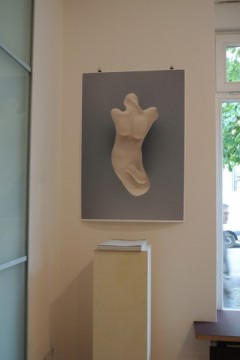
Artist talk at Bodleian Libraries / University of Oxford PHOTO OXFORD 2017
The Bodleian Libraries of the University of Oxford organises an afternoon of stimulating discussions with artists, curators and academics that draw on the themes and theories explored in PHOTO OXFORD 2017, a series of explorations into the complex and often contradictory relationship between photography’s capacity to both conceal and reveal.
The event starts with an introduction from Bodley’s Librarian and Chair of PHOTO OXFORD, Richard Ovenden. This will be followed by a lecture on the practice of reconceptualising photographic archives, discussions on the Russian Criminal Tattoo Archive, Edgar Martins’ Siloquies and Soliloquies on Death, Life and Other Interludes, and Taco Hidde Bakker discussing Taking Off. Henry, My Neighbor with artist Mariken Wessels. The day concludes with Martin Parr in conversation with Richard Ovenden, discussing the making of his newly-commissioned project OXFORD.
Date: 7 September 2017 1.30pm — 6.00pm
Location: Lecture Theatre, Weston LibrarySpeakers:
Martin Parr, Richard Ovenden, Professor Val Williams, Tim Clark, Greg Hobson, Daniel C. Blight, Damon Murray, Stephen Sorrell, Mariken Wessels, Taco Hidde Bakker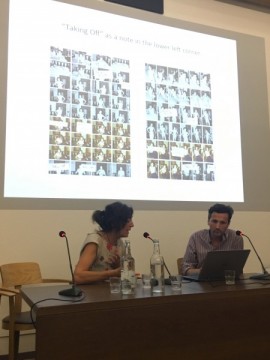

Photo Oxford returns, with a new team and big ambitions British Journal of Photography
British Journal of Photography / 20-07-2017 / Gemma Padley
Excerpt from the article:
The show will be complemented by works from Mariken Wessels’ critically-acclaimed Taking Off. Henry My Neighbour, which tells the story of a failed marriage, sexual frustration and voyeurism through archival photographs and collage.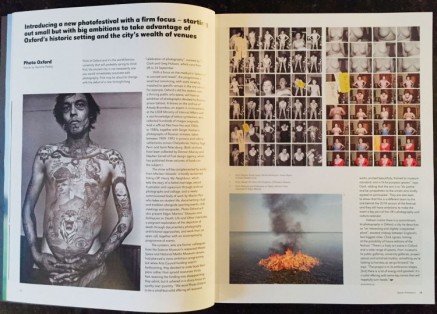
Een loopje met de waarheid De Telegraaf
De Telegraaf / Wietse Schmidt / 24 - 04 -2017
Smaak de Volkskrant Magazine
De Volkskrant Magazine / 08-04-2017
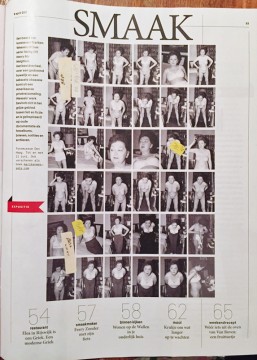
Muze Martha Het Parool
Het Parool / 04-04-2017
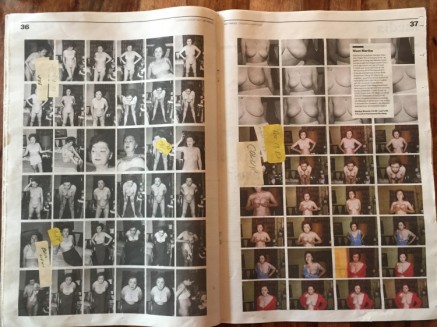

Taking Off. Henry my Neighbor genomineerd voor de Nederlandse Fotoboekenprijs FotoFestival Naarden
Taking Off. Henry my Neighbor is genomineerd voor de Nederlandse Fotoboekenprijs, samen met vier andere boeken. De prijs wordt uitgereikt aan het beste fotoboek van een Nederlandse (of in Nederland werkzame) fotograaf dat verschenen is in 2015 0f 2016. De uiteindelijke winnaar wordt bekendgemaakt tijdens de komende editie van het FotoFestival Naarden 2017. Aan de nominaties is een expositie rond hun boeken verbonden.
De jury voor de Nederlandse Fotoboekenprijs: Edie Peters (oprichter en hoofdredacteur van PhotoQ), Merel Bem (publicist en kunstcriticus), Rob Hornstra (fotograaf en docent fotografie), Narda van ’t Veer (oprichter agentschap UNIT), Wannes Ketelaars (general manager Huis Marseille) en Bert Teunissen (fotograaf).
Datum: 20 mei t/m 18 juni 2017
Locatie: NaardenFotoFestival Naarden
NaardenThe Committed Amateur Source - The Photographic Review
Source - The Photographic / ISSUE 88 / Winter 2016 / David Evans
See pdf for full review of Taking Off. Henry my Neighbor.
Conversations 2 Rémi Coignet
Conversation 2, interviews by Rémi Coignet, bundled in English and French.
Included artists on contemporary photography: Erik Kessels, Gerhard Steidl, Martin Parr, Stéphanie Solinas, Joan Fontcuberta, Patrick Faigenbaum, Aron Mörel, Akio Nagasawa, Greger Ulf Nilson, Christian Patterson, Lise Sarfati, Alec Soth, Eric Tabuchi, Bertien van Manen, Mariken Wessels, Daniel Blaufuks, Pieter Hugo.
Editing with Mariken Wessels fototazo
Excerpt from the fototazo interview. See link below for the complete text.
fototazo: Tell us a little about yourself and what area of photography you work in.
Mariken Wessels: I studied drama at the theater school in Amsterdam, where I graduated at age 26. I have worked as an actress for theater and television for a good decade, before I decided my future should be in visual arts. I then started my studies at the Gerrit Rietveld Academie (also located in Amsterdam), where my focus shifted towards working with photography, books, and to a lesser extent installation and sculpture. I believe that my background and experience in drama still influences my attitude in photography today, in the sense that I often work with characters and story lines.
f: How do you select images to work with from a larger group? What criteria do you use?
MW: It depends on the project I'm working on. For example, for my latest book Taking Off. Henry My Neighbor I puzzled with several narrative layers. First I conduct research into the characters I present and represent, then I try to shape a story line, which determines the editing proces and how I need to combine photographs with other documents. I keep track of my research results in a notebook, but most of all I past notes and images to the wall of my studio. Thus I can see clearly where a project is heading to. Afterwards is mostly editing and working on images. Basically the research and the narrative structure guide my choices in how a project is given shape and what selections I make. This effects a book's graphic design and layout as well.
f: How do you consider the balancing of formal qualities in the photographs with the content/narrative of the series as a whole as you select and sequence a series?
MW: For the balancing of formal qualities with the narrative structure of a series it is also the underlying research that proves decisive. At some point it makes the pieces fall into place. You feel what is right, so it's an intuitive process for a great deal, but with its foundation in preliminary investigations.
f: What are common issues, problems and questions that unfold for you during the process of laying things out?
MW: I keep posing questions to myself, about why I'm making the choices I make. It helps me staying focused and alerts me to certain issues that aren't quite right yet. If I feel there are still knots to untie, I will need to figure out where the friction is. This is a natural part of the workflow. During editing and layout this flow sometimes comes to a standstill, but I know then that a solution will announce itself sooner or later. Things for me go easily wrong when I work too fast, so I need to take time and give projects plenty time to ripen.
f: How do you know when a layout is done?
MW: I begin making book dummies in the very early stages of a project. Making dummies is what I consider essential. Turning the pages, a thousand times, leafing through again and again. It makes clear to me what otherwise remains unsolved, so that I know where to smoothen rough edges for the final edit and layout. If a dummy leaves me unsatisfied, I'm up to the daunting task of confronting myself: where did I go wrong? I have to be honest and never compromise in order to achieve a book that I feel has the right form.
f: What are common mistakes you see in editing?
MW: Often I see a choice of paper that doesn't match with the content or story. The same goes for choices of fonts, style of layout or binding. I believe that everything should have been brought together in such a way that one doesn't wonder at all why a book appears the way it appears, it is just naturally there. The relationship between design and edit must be right on all levels.
f: Finally, what is the best advice you've ever gotten about editing?
MW: Not an advice on editing per se, but one of my teachers at the Rietveld one day said to me "Make a book!" This advice went straight to my heart. While I was already being fascinated by photography in series, I felt that photographs organized within the book format could make everything fall into place.
Portrait-Photography of the Year bronze award for a series of 8 photos from Taking Off. Henry my neighbor in Vice/N° 11 LeadAwards
At the LeadAwards, a series of 8 photos from Taking Off. Henry My Neighbor, published in Vice/N° 11/2015 has won the bronze medal award in the category Portrait Photography Of The Year. The LeadAwards was given by an independent expert selection committee, made up of 35 accredited professionals.
Work from Taking Off. Henry my neighbor can be seen at the LeadAwards exhibition: Visual Leader. The LeadAwards exhibition at the Haus der Fotografie in Hamburg's Deichtorhallen runs from August 24 till October 30, 2016 and features a series of 8 photos from Mariken Wessels.
Opening Exhibition: August 26, 19:00
Exhibition: August 24 - October 30, 2016
Location: Hamburg's DeichtorhallenHALLE FÜR AKTUELLE KUNST
Deichtorstraße 1-2
20095 Hamburg
GermanyTaking Off. Henry My Neighbor Ladybeard - Mind Issue
Ladybeard / The Mind Issue / 2016
The Mind Issue, featuring a review of Taking Off. Henry My Neighbor, aims to open up our expectations for life by telling stories that celebrate this richness and complexity.
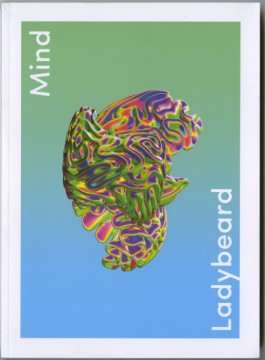
Meerwaarde In De Veelheid The Aubergine Coat
The Aubergine Coat / Merel Bem / 15 september 2016
Vorig jaar bracht Mariken Wessels haar boek Taking Off. Henry my neighbor uit. Het vertelt het verhaal van een man die bezeten is van zijn vrouw en haar obsessief fotografeert. Wessels kreeg zijn archief in handen. Bladzij na bladzij stort zij de bezetenheid van die onbekende man uit over de lezer (kijker) in de vorm van een overweldigende hoeveelheid zwart-wit fotootjes waarop een (half) ontblote vrouw poseert. ‘Ik wilde echt álles gebruiken’, zegt Wessels. ‘Dat was een overwogen keuze: alleen zo kon ik dat dwangmatige duidelijk maken, én de voortgang van de tijd. Die man heeft dit jaren achter elkaar gedaan. Het is nodig dat je dat ziet.’
Ze heeft niets tegen het enkele beeld, dat kan vaak heel raak zijn, alleen: ‘Ik hou gewoon veel meer van het seriematige, van het verzamelen en ordenen. Bovendien, ik denk dat dit is hoe het geheugen werkt: je herinnert je iemand in een veelvoud van beeld.’
Of hij niet gewoon slecht is in kiezen? Kooiker schiet in de lach. ‘Probeer maar eens een serie van duizend foto’s terug te brengen naar vijftig. Het is natuurlijk wel anders dan bij de fotograaf die op zoek is naar dat ene, enkele beeld. Die maakt de keuze voor het beeld eigenlijk op het moment zelf, wanneer hij voor zijn camera iets ziet gebeuren en in een flits het knopje indrukt. Ik maak de keuze altijd achteraf.’
Portrait-Photography of the Year nomination for a series of 8 photos from Taking Off. Henry my neighbor in Vice/N° 11 LeadAwards
A series of 8 photos from Taking Off. Henry My Neighbor, published in Vice/N° 11/2015, was nominated for the Portrait-Photography of the Year category at the LeadAwards. The LeadAwards, given by an independent expert selection committee, made up of 35 accredited professionals, will be handed out during the grand LeadAwards ceremony on September 28, 2016.
Accompanying the ceremony, with work of Taking Off. Henry my neighbor, is the LeadAwards exhibition: Visual Leader. The LeadAwards exhibition at the Haus der Fotografie in Hamburg's Deichtorhallen runs from August 24 till October 30, 2016 and will feature a series of 8 photos from Mariken Wessels.
Ceremony: September 28, 2016
Opening Exhibition: August 26, 19:00
Exhibition: August 24 - October 30, 2016
Location: Hamburg's DeichtorhallenHALLE FÜR AKTUELLE KUNST
Deichtorstraße 1-2
20095 Hamburg
GermanyHet seriematige in de fotografie De Volkskrant
De Volkskrant / 22-07-2016 / Merel Bem
Gooi het in de groep, over het seriematige in de fotografie. Met werk van Arno Nollen, Paul Kooiker en Mariken Wessels.
Zie PDF voor de tekst.
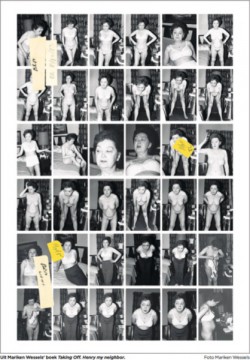
Taking Off. Henry my neighbor winning Author Book Award Arles
The artist book Taking Off. Henry my Neighbor has won The 2016 Book Awards in Arles!
The Book Award, created 47 years ago, grants nowadays three categories of books, as a contribution to the extraordinary expansion of photography publishing and to its optimal distribution. The main partner of the Book Awards is the Fondation Jan Michalski pour l’Ecriture et la Littérature. The Author Book Award, organised with the backing of the FNAC, goes to the best author project for a contemporary photography work.
The exhibitions of the festival run through 25 September 2016.
Taking Off. Henry my Neighbor is a real picture story of a failed marriage, of sexual frustration and voyeurism. An extraordinary amount of photographs and cut-up collages comprise an archival vertigo of amateur nude art.
The book can be purchased directly from the artist or at various bookshops around the world. Click here for a list of book shops. The special edition and limited edition can only be purchased directly from the artist via e-mail or from the Johan Deumens Gallery. Please note: variants of the special edition may differ.
The artist book Taking Off was launched on May 22, 2015, at Offprint London, Tate Modern and May 28, 2015 at Amsterdam Art Fair. The book, published by APE (Art Paper Editions), is of the same format as Elisabeth – I want to eat (2008) and Queen Ann. P.S. Belly cut off (2010), the artist’s books with which it forms an open trilogy.
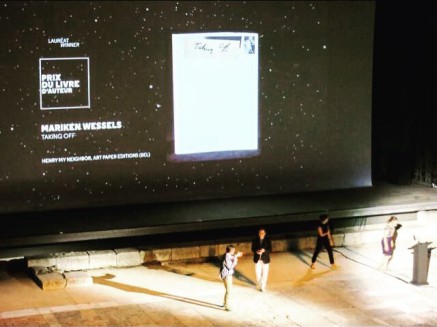
Artist book Taking Off. Henry my Neighbor selected for The 2016 Book Awards Les Rencontres de la Photographie
The artist book Taking Off. Henry my Neighbor has been selected for the The 2016 Book Awards of the international festival Les Rencontres de la Photographie in Arles (France).
The Book Award was created 47 years ago at the birth of the festival. It has been developed and grants nowadays three categories of books, as a contribution to the extraordinary expansion of photography publishing and to its optimal distribution. Since 2015, the main partner of the Book Awards is the Fondation Jan Michalski pour l’Ecriture et la Littérature.
Discover the competing books in each category before the award ceremony at Théâtre Antique on July 9th. The Author Book Award, organised with the backing of the FNAC, goes to the best author project for a contemporary photography work. The allotted sum is 6 000 euros.
A jury formed with the nominators of the Discovery Award 2016 will name the Book Awards winners during the opening week. Half of the allotted sum is paid to the publisher and half to the photographer after the ceremony - or all the authors in the case of collaborative or collective works.
The exhibitions of the festival run through 25 September 2016.
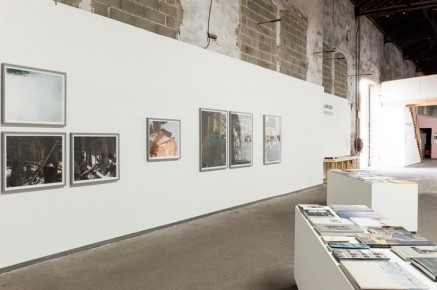
9 de julio 2016. Oportunismo… apropiado ? Mariken Wessels Gabriela Cendoya
Ayer dieron los premios a mejor libro del año en Arles. En la categoría de libro de autor, Taking off. Henry my neighbor, de Mariken Wessels.
Aquí os dejo algunas fotos de los libros de Mariken Wessels, tanto de Taking off. Henry my neighbor, como de I want to eat (2010, reedición de 2008 ) y Queen Ann. P.S. Belly cut off ( 2010 ), sus tres publicaciones hasta ahora. Los tres libros forman una trilogía, y creo que es interesante enseñarlos juntos, para resaltar la finura e inteligencia de Wessels.
Mariken es una artista holandesa ( Vlaardingen 1963 ) que trabaja con fotografías de archivos, intervenidas o no.
Taking off. Henri my neighbor ha ganado también el premio al mejor diseño de libro holandés este año.
Mariken trata unos archivos anónimos de particulares, haciendo con ellos un trabajo muy personal, creando una narrativa original, mezclando, en sus dos primeras publicaciones, sus propias fotografías o interviniendo en el archivo, recortando, o con collages. Son en los tres casos historias y retratos de mujeres, de rechazo o insatisfacción, de fracaso y frustración.
En I want to eat y Queen Ann. P.S. Belly cut off, Mariken recompone unas historias melancólicas, entre blanco y negro y color. Los retratos, en contraste con las cartas o las alegres postales, consiguen formar una historia compleja y profunda, entre ficción y realidad. Entre las lineas y las imágenes aparece un vacío, un abismo de incomprensión o ansiedad. Lo que adivinamos de esas vidas es triste o aterrador.
Taking off. Henry my neighbor nace de un archivo encontrado en Estados Unidos por unos vecinos de Mariken, mientras vivía en Long Island. Descubrieron la historia de la pareja que fue en su tiempo, vecina de la autora. Henry (“su vecino” ) dejó mas de 5000 fotografías de su esposa Martha, desnuda en mutlples posturas .La historia, tal como aparece aquí, es una historia de frustración sexual, obsesión y voyeurismo, a la vez que una de sumisión , fracaso y posterior abandono.
Mariken reconstruye aquí también la vida de la pareja, ademas del propio catalogo de fotografías sacadas por Henry. Vemos aquí el interior de la casa, el momento en que Martha echa por la ventana las fotografías sacadas por Henry, el exterior de la casa y algunas trampas construidas por el para cazar, encontradas en una cabaña que le pertenecía. Otro capitulo son las 17 esculturas de tierra de Henry, ahora fondo del Hackettstown Heritage Center for Arts and Craft de New Jersey.
El conjunto es impresionante y ciertamente obsesionante, tanto el catalogo de fotografías de Henry como el tratamiento que le da Mariken Wessels, con la ayuda de Jurgen Maelfelt en el diseño. Papel mate por un lado, papel satinado para las fotografías de Henry, separación de hojas en blanco para la posterior huida de Martha… El libro , es también, muy inteligente. Al final solo podemos dudar de la veracidad del archivo, Mariken Wessels jugando con maestria entre ficción y realidad de nuevo. Dedicado a Martha, “for her courage”, el libro , de manera retorcida e incomoda nos pone, sin embargo en el papel de voyeurs de sus años de “tortura fotográfica”.
Por alguna oscura razón, no había escrito reseña de esta trilogía, comprada el año pasado en Arles. Recuerdo cargar con ella un dia caluroso. Aprovecho su premio de hoy, de manera muy oportunista, para presentarla. En mi defensa, diré que aparecía en la lista de favoritos del año…
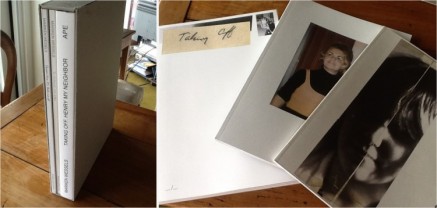
Taking Off. Henry My Neighbor Aperture Magazine
Aperture Magazine, #223, Vision & Justice, Summer 2016
Reviewed by Justine Kurland for Aperture / The Photobook Review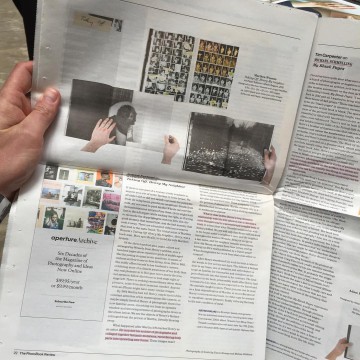
Gerard Petrus Fieret exhibition booklet Le Bal, Paris Émilie Lauriola
The artist book Taking Off. Henry my neighbor was selected by Émilie Lauriola to accompany the exhibition Gerard Petrus Fieret at Le Bal, Paris. Accompanying the exhibition is a exhibition booklet (15.000 copies).
Feminine Masculine - Over de worsteling en de fascinatie in de omgang met het andere geslacht EXTRA
EXTRA (fotografie in context) / nummer 19 / thema LIJF / uitgave FoMU / Federica Chiocchetti
Zie PDF voor de tekst.
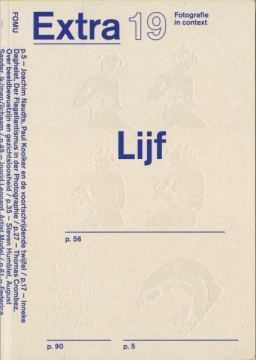
Martha, Martha, Martha NRC
NRC / 07-04-2016
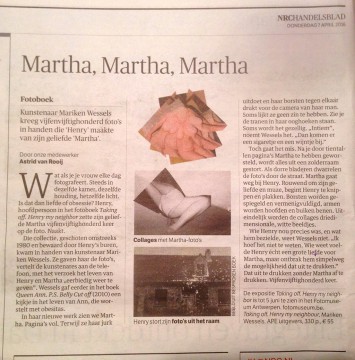
In voor- en tegenspoed — Mariken Wessels op het snijvlak tussen feit en fictie PhotoQ
‘Een museale impressie van Henry’s werkkamer’ noemt beeldend kunstenaar Mariken Wessels (1963, Vlaardingen) de eerste ruimte van haar presentatie in het FotoMuseum in Antwerpen. In 2015 bracht ze bij APE ‘Taking Off. Henry My Neigbor‘ uit, een publicatie waarin ze losjes de inhoud van een wel heel opmerkelijk archief ontvouwt. En nu is er dus een tentoonstelling. Met een heleboel borsten. En een heleboel vragen.
Op een zwart gordijn in het deurgat staat ‘In dedication to Martha. For her courage’. Ben je er doorheen – dat gaat alleen door beide armen in een dramatisch gebaar te spreiden – sta je tussen 5.500 paar borsten. Bevindt zich tegelijktijdig met jou ook een groep scholieren in de leeftijd van vijftien jaar in diezelfde ruimte van bescheiden afmetingen, hoor je wellicht, behalve gesnuif en gegiechel, de volgende reacties: ‘Maar ze is helemaal niet zo knap.’ ‘Waarom zou je je zo laten fotograferen?’ ‘Ik zou echt niet zo in een museum willen hangen.’ ‘Waarom houdt ze haar borsten vast?’ Hoewel dit de generatie is van photoshop-gladde huid, getrimd schaamhaar, en, sinds Kim Kardashian, opgevulde billen, zijn die vragen niet eens zo onterecht. Waarom dat is komt zo; eerst nog even over woorden.
Hoewel er gemakkelijk naast te kijken is – de meeste museumbezoekers lezen niet of slecht – spreekt er uit de titel en die tekst op het gordijn een interessante tegenstelling. Want gaat het nu over Henry, die nergens te zien is, of gaat het over Martha, het lijdzame onderwerp van die vier muren vol standaard afdrukjes? Ook in een disfunctioneel huwelijk hebben echtelieden elkaar nodig, in voor- en tegenspoed.
xxgood
Na ruim twintig jaar huwelijk besluit Henry zijn amateurlens op zijn vrouw Martha te richten. Met een overgave alsof hij iets had in te halen. In een tijdsspanne van ongeveer tweeëneenhalf jaar maakt hij meer dan 5.500 opnames van haar tijdens wat wekelijkse poseersessies geweest moeten zijn. Wessels kreeg een doos vol afdrukken, negatieven, collages, beeldjes en correspondentie in handen en verwierf er de rechten over. Ze reconstrueerde de laatste huwelijkse jaren onder meer middels gesprekken en materiaal van bekenden van het echtpaar.
Op ooghoogte hangen de meest opmerkelijke foto’s, want wanneer elke volgende foto minimaal verschilt van de vorige, loont het om de details te bestuderen. Dan ontdek je een reeks foto’s waarin Martha verleidelijk op het puntje van haar tong bijt terwijl ze haar borsten ondersteunt en er een licht generende glimlach over haar gezicht speelt – denk een jonge Marilyn Monroe op het strand. Hier wordt plezier gemaakt. Verderop, later in de tijd ook, één foto waarop niet Martha maar de poedel het onderwerp is. Gewikkeld in een gehaakte lap kijkt het dier mistroostig de kamer in.
Het is onmogelijk om door de obsessieve vorm van Henry’s hobby heen te kijken. Het is dan ook verleidelijk om te denken in termen van voyeurisme, perversiteit, masochisme, onderdrukking. Dat Martha op tachtig procent van de foto’s ongelukkig, gegeneerd of op zijn minst ongeïnteresseerd of zelfs afwezig kijkt, sterkt de overtuiging dat het niet vrijwillig gebeurde.
Maar als je na bijna vijfentwintig jaar huwelijk niet meer weet hoe en wat, dan vraag je je echtgenoot misschien wel je erotisch te fotograferen. En hij doet dan dan, maar zet wat intiem moet zijn naar zijn hand door de fanatieke amateur in zich naar boven te laten komen en voor elke gemaakte foto houding (squeeze, xxgood, kneeling) en technische details te noteren. En dat zij denkt ‘ja, zo komen we nog niet nader tot elkaar, beter hadden we een massagecursus gedaan’. En dat zij na de ontdekking dat haar beeltenis alle muren van de werkkamer van haar echtgenoot siert eindelijk voldoende moed bijeen heeft geraapt om er de brui aan te geven, maar niet voordat ze alle afdrukken uit het raam smijt. Wie weet, is het wel zo gegaan. Of nog anders. Zouden die scholieren zo’n antwoord op de waarom-vraag accepteren?
Martha, Ann en Elisabeth
Voorbij de benauwende eerste ruimte biedt de tentoonstelling een foto van de oorspronkelijke werkkamer, Hans Bellmer-achtige collages gemaakt na het vertrek van Martha en zelfs een serie sculptuurtjes op basis van die collages gefotografeerd tegen een onschuldig poederblauwe achtergrond. Ook te zien: een foto van het moment waarop Martha de foto’s uit het raam kiepert. En dat is vreemd. Zou ze de buur uit de titel hebben gewaarschuwd? Heeft Wessels die foto zelf gemaakt om het verhaal aan te vullen?
Het is in dat prikkelende schemergebied tussen feit en fictie, een omstandigheid waar voormalig actrice Wessels zich zo goed lijkt thuis te voelen. Ze beschouwt het verhaal van Martha en Henry als deel drie van een ‘open trilogie’ met ‘Queen Ann. P.S. Belly Cut Off’ en ‘Elisabeth – I Want To Eat’. Ook daar draait het om ‘personages’ die vastzitten, ook daarin het lichaam en de poging los te breken of iets te bewerkstelligen als onderwerp. Zelfs de vorm vertoont overeenkomsten. Het is bijna te mooi om waar te zijn. Alsof Martha, Ann en Elisabeth enkel dienen ter illustratie van gemankeerde verhoudingen tussen mensen, eenzaamheid, erotiek, schaamte, gekte, een laatste redmiddel, de oorsprong van compulsieve obsessies.
Hoewel Wessels op basis van historisch onderzoek de geschiedenis heeft geïnterpreteerd, laat ze veel in het midden. Anekdotische vragen over het echtpaar ontwijkt ze methodisch. Artistieke vrijheid heet dat, of een slimme manier om een rauwe waarheid beter verteerbaar te maken. Irritant en prikkelend tegelijk – gevoelens die passen bij documentair aandoend werk waarvan het waarheidsgehalte ter discussie staat – zodra het woord ‘archief’ valt is het al goed en willen we graag geloven in de historische betrouwbaarheid van een bron – en dat het universum van de kunst wordt binnengebracht. Spannend om los te laten en toe te staan iets niet te weten, voorbij tieten en schaamhaar te kijken en andere vragen te stellen.
Best goeie tieten, trouwens.
PhotoQ / Lotte ten Voorde
Martha, Martha, Martha NRC Next
NRC Next / 22-03-2016
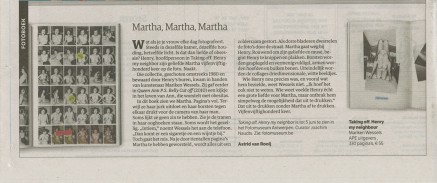
Met een 20-jarige vrouw had het iets pornografisch gekregen Gazet van Antwerpen
Gazet van Antwerpen / 12-03-2016
In het Fotomuseum op het Zuid valt een opvallende tentoonstelling te bewonderen. Met Taking Off. Henry my Neighbor brengt de Nederlandse kunstenares Mariken Wessels een mislukt huwelijk met seksuele frustraties in beeld.
Zie PDF voor de volledige tekst.
Als liefde omslaat in obsessie De Standaard
De Standaard / 09-03-2016
Zo’n 5.500 kil gecatalogiseerde naaktfoto’s, veertig fotocollages en zeventien verwrongen kleibeeldjes. Allemaal met en naar de beeltenis van Martha, een doordeweekse Amerikaanse vrouw. De Nederlandse Mariken Wessels kreeg ze in handen en maakte er een boek mee. Een gebalde versie daarvan is nu te zien in het Fomu in Antwerpen.
Zie PDF voor de volledige tekst.
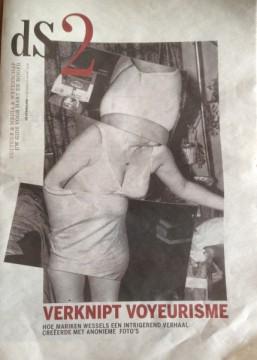

Het relaas van een wringend huwelijk De Morgen
De Morgen / 08-03-2016
Henry is al jaren getrouwd met Martha als hij haar maniakaal gaat fotograferen. Duizenden foto’s maakt hij van zijn vaak naakte vrouw, tot die zich met veel vertoon uit het benauwde huwelijk bevrijdt. In Taking Off, tot juni te zien in Antwerpen, reconstrueert Mariken Wessels de droevige obsessie.
Zie PDF voor de volledige tekst.
Honorary Appreciation for Taking Off. Henry My Neighbor Schönste Bücher Aus Aller Welt
On February 5th and 6th the jury panel of the international competition judged almost 600 submitted entries from 32 countries from all over the globe. It’s an honor for me to let you know that Flanders is among the 8 awarded countries!
The number of awards as always:– one Golden Letter
– one Gold Medal
– two Silver Medals,
– five Bronze Medals and
– five Honorary Appreciations.Taking Off. Henry My Neighbor has been awarded with the an HONORARY APPRECIATION.
[GERMAN]
Das Buch erzählt die Geschichte von Martha und Henry. In Bildern. Die Jugendfotos. Trauung. Dann endlose Reihen von Entkleidungsposen. Martha verlässt Henry. Organische Collagen aus Fragmenten der Aktfotos. Surreale Tonfigürchen. Tierfallen im Wald.Waren die Aktfotos jemals für die Öffentlichkeit bestimmt? Alles wirkt privat. Die biedere Umgebung. Geistesabwesender Ausdruck des Models. Selten lächelnd. Blumenampel mit Plastikeichhörnchen. Henrys unermüdliches Herstellen, Sammeln und Kategorisieren der Aktposen in bizarrer Buchhaltung.
Der Katalog inszeniert das Material wie einen Nachlass. Der Betrachter wird völlig distanzlos Henrys rätselhaftem Projekt überlassen. Man wird eher an Mammografie erinnert als an Erotik. Der Sohn schreibt einen Brief an die Mutter. Faksimiliert liegt er in einer Vakatdoppelseite bei. Die Vergangenheit zersplittert.Wenn man sich geduldig durch den Wahnsinn blättert, gelangt man zu den weißen, phantastischen, in sich ruhenden Körperplastiken – Hermaphroditen gleich, an antike Torsi erinnernd. Abstrakte Körperformen entstehen. Eigenständige Objekte, abgelöst von Henrys manischer Beschäftigung mit seinem Fetisch, seiner Fahndung nach der Form. Das Buch endet – vor Epilog und Impressum – mit einem Werkverzeichnis der Körperplastiken.
Die Veröffentlichung ist eine Würdigung von Marthas Mut. Und es ist eine späte Würdigung von Henrys Weg zur Kunst.
[DUTCH]
Nederlands-Vlaamse selectie De Best Verzorgde Boeken 2015 scoort het hoogst bij internationale jureringUit bijna 600 inzendingen uit 32 landen heeft de internationale jury van Schönste Bücher aus aller Welt de Nederlands-Vlaamse selectie van De Best Verzorgde Boeken 2015 vier prijzen toegekend waaronder de hoofdprijs, de Gouden Letter.
Die gaat naar Other Evidence: Blindfold (uitgave en ontwerp Titus Knegtel; drukkerij Tielen). Een Zilveren medaille kent de jury toe aan Brick van Jan Peter Wingender (uitgave Architectura & Natura; ontwerp Studio Joost Grootens; drukkerij robstolk®, boekbinderij Van Waarden). Het Meest Geloofde Sprookje van De Vormforensen (uitgave De Vormforensen; ontwerp De Vormforensen en Lyanne Tonk; drukkerij Tielen, boekbinderij Abbringh) krijgt een Bronzen medaille. Een Eervolle vermelding verleent de jury aan Taking off. Henry my neighbor van Mariken Wessels (uitgave Art Paper Editions; ontwerp Mariken Wessels, Jurgen Maelfeyt; Die Keure, binderij Hexspoor).
Titus Knegtel studeerde met Other Evidence: Blindfold vorig jaar af aan de AKV|St Joost. Het boek is een monument voor de doden van de val van Srebrenica en valt in twee delen uiteen. In Blindfold zijn 165 autopsierapporten met bewijsmateriaal van de slachtoffers samengebracht. In Other Evidence foto’s van blinddoeken die de slachtoffers droegen en hun vindplaatsen (massagraven). Het boek is gedrukt bij Tielen, Boxtel.
De internationale jury Schönste Bücher aus aller Welt kent de volgende prijzen: 1 Gouden Letter, 1 Gouden Medaille, 2 Zilveren medailles, 5 Bronzen medailles en 5 Eervolle vermeldingen. Voor meer informatie zie hier. Ook voor foto’s van de awarded books en de jury panel. De uitreiking van de prijzen vindt plaats op vrijdag 18 maart tijdens de Leipziger Buchmesse.
De Nederlands-Vlaamse selectie is gekozen door een Nederlands-Vlaamse jury die de boekenbranche, de grafische bedrijfstak en de ontwerpers vertegenwoordigt:Carolien Glazenburg (conservator Stedelijk Museum Amsterdam), Wouter Roelants (boekhandelaar en uitgever), Luc Derycke (ontwerper),
Koen Brams (voormalig directeur Jan van Eyck Academie & voormalig hoofdredacteur De Witte Raaf) en Freek Kuin (creatief directeur drukkerij robstolk®).Voor meer informatie: Stichting De Best Verzorgde Boeken: Esther Scholten, 020-6264971 / info@bestverzorgdeboeken.nl ; Sarah de Graef/ Greet Spaepen, 0032 (0)3 287 66 92 / Sarah.DeGraef@boek.be

Expo: obsessief naakt HUMO
HUMO maart 2016 editie
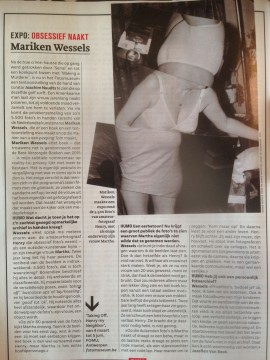
De Obscure Kamer de Volkskrant
De Volkskrant / 26-02-2016
THE BEST DUTCH AND FLEMISH BOOK DESIGNS 2015 Stichting De Best Verzorgde Boeken
The artist book Taking Off. Henry my Neighbor has been selected for the Best Dutch and Flemish Book Designs of 2015.
This year, a special selection of 33 Dutch and 17 Flemish books were selected. Because the Netherlands and Flanders are Guest of Honour at the Frankfurt Book Fair 2016 the Flemish Publishers Association and The Best Dutch Book Designs have worked together to reach a joined competition.
Publishers, commisioners, designers, printers and binders have submitted books that appeared in 2015 amounting to 410 books in total. They were judged by a Dutch-Flemish panel consisting of Carolien Glazenburg (curator at the Stedelijk Museum Amsterdam), Wouter Roelants (bookseller and publisher), Luc Derycke (designer, Ghent), Koen Brams (former director Jan van Eyck Academie & former chief editor De Witte Raaf) and Freek Kuin (creative director at printer robstolk®). Books in which one of the judges was involved were nominated for election by a shadow panel consisting of former Best Dutch Book Designs judges.
The books that have been selected distinguished themselves conspicuously by their editorial choices, graphic design, treatment of images and text, choice of material and technical workmanship.
TAKING OFF. HENRY MY NEIGHBOR GUP
One of the most significant characteristics of photographs is their orphaned status. That is to say, they may have vernacular roots in the camera or, more in general, they may be traceable all the way back to the short-lived moment of the capture of light on some surface that made them into pictures, but there is no fixed location for them to land on (or in). This nomadic potential is, in essence, what makes 'anonymous' photographs so interesting for the sake of recontextualization – a quality that has triggered so many visual artists, over the years, to make use of 'found footage' as the raw material from which they then 'author' a self-established (or curated) body of work.
There are many examples to name here, but one of the most recent appropriations is from the hand of Dutch visual artist Mariken Wessels. She previously published two books, Elisabeth - I Want To Eat (self-published, 2008/reissued by Alauda Publications in 2010) and Queen Ann. P.S. Belly cut off (Alauda Publications, 2010), which are both based on the private archives of apparent protagonists with troubled lives who nevertheless somehow managed to act upon their crises in a creative manner. 'Taking Off. Henry My Neighbor' (Art Paper Editions, 2015) can be seen in line with those two titles and in that sense as the completion of a loose trilogy.
The book contains little explanation of what it exactly is that we are looking at. To paraphrase the existential questions arriving from Queen's Bohemian Rhapsody: “Is this real life? Is this just fantasy?” Wessels already addressed that ambiguous zone between fact and fiction in the aforementioned works and she seemingly does it again in Taking Off. Henry My Neighbor, presenting the story of a man named Henry who obsessively photographed his wife Martha, until the point of her eventual exhaustion. Is this yet another mysterious 'anti-historical' biography arriving from a proclaimed coincidental retrieve of a private archive?
The archive contains approximately 5,500 boudoir photos of Martha S. and she appears to be around her late fifties. Indeed, that is not exactly the moment in a woman's life when she is generally regarded as having her body in the 'ultimate shape', but although she exposed herself at an age far beyond that of the average pin-up model, the look on her face is not so much one of shame. It rather reflects a state of indifference, or even boredom, although the repetitious shoots next to and on the bed – which seems to have been part of a morning ritual and only remotely hints at something sensual – might also be considered a humiliation. We don't exactly know how Martha really felt about it all but as we learn from the epilogue in the book, she eventually decided to leave Henry and ‘took off’.
The title has a double meaning, of course, and 'taking off' thus also refers to the theatrical removal of the bra, revealing the gravitational pull on her body. Martha might no longer be as flexible as she used to be but nevertheless turns and twists her body to the best ability in the most awkward positions to please the man behind the camera – the preoccupied husband who just could not stop being the potent 'go-getter' with a seemingly fetishistic pleasure to act out cliché Playboy aesthetics. The fact that both Martha - as model - and Henry- as photographer - remain far removed from that ideal leaves both a humorous and a tragic appeal to the results of their pseudo-erotic enactments.
There is something tedious about it all which might lead the viewer into a state of mind reminding of the feeling one has when not being able to escape from a numbing event; an uneasiness arriving from overseeing an archive of over 5,000 more or less similar portraits that have been produced in the relative short time span of approximately two years. A concentrated look into this book thus comes with the risk of ending it with an overwhelming boredom that equals a nightmare.
Before witnessing all that, 'Taking Off' opens with a selection of uncanny full bleed spreads on matte paper dealing with hard to distinguish snapshots leading into the peculiar story of Henry and Martha. This section functions as an omen of the seemingly endless amount of nude portraits that follow, a repetition to the absurd: 150 glossy pages, each one containing the results of one roll of 35 mm film presented in grids of 6 x 6 pictures when taken vertically ('portrait' format) and 4 x 9 pictures when Henry positioned his camera horizontally ('landscape format'). On and on it goes, always in a frontal position that clearly shows Martha as a middle-aged woman with her permed 'coif' in the same regime of nude poses, all of them acted out between 1981 and 1983.
We can know the exact period as some of the portraits have stickers with dates on them, while there are also labels that indicate a certain system in Henry's obsessive drive; a specific categorization of labelling (e.g. 'sitting', 'squeezing', 'standing taking off', ‘bust closeups', 'bra/slacks', 'laying flat', etcetera) that only starts to make sense on the final page of the 'glossy' segment. For there, conclusive to the more or less repetitive regime of portraits, we find a ridiculously extensive nuance of all the poses/situations and the months in which they have been taken. There we find a template stitched together with tape, making it plausible that all that we have seen before actually belongs to an ever extending archival system created by Henry.
In line with how the book started, it then continues with another extensive sequence of matte pages – this time indicating the aftermath of the affair. A few blank pages stress the fragmentary state of both the archive and Henry's mind once Martha decided to stay out of the picture once and for all. By the look of it, he was never really salvaged from the gap in his life defined by this abandonment. The only thing that could compensate for that loss was to make collages created from fragments of the cut-up portraits that he made of his wife, into extrema; montaged juxtapositions with typed out titles that are to be understood in line with the earlier mentioned systematic template of the poses; creatively composed puzzles of scraps that are indicated as 'squeeze bust cross-xx', 'bra round sit', 'arms back twist color' (most of the archive consists of black and white portraits but at some point Henry apparently mixed it up with some rolls of colour film), 'double belly knees up' and many other plastic, to-the-fact descriptions.
The voluminous and pervasive book closes with the presentation of a small selection of three dimensional white clay sculptures that translate the abstract form of some of the mentioned collages. These small sculptures echo the cut-and-paste montages of Martha's nude portraits – all of it allegedly arriving from the artistic ambitions of Henry – and have been photographed in front of a neutral grey background, not so much different from how museums archive their stock. All is concluded with a few more matte pages hinting at the dramatic ending of the apparent 'hermit's life' that Henry eventually began to lead. He retreated from photography all together and disappeared into the woods of northwestern New Jersey, only barely surviving by setting traps in order to catch small wild animals. Until he eventually died? We can't know exactly what eventually happened to him, as the book does not give a final conclusion to how (or even if) his life ended, it only triggers the assumption that nothing has been heard from him ever since.
What a story! One wonders though: how much of this all has Wessels' fingerprints on it...? Is it all merely 'found footage' and really nothing but a dry recovery of a legacy? In the end what counts is this: any way the wind blows, it doesn't really matter. Or even if it does very much matter to those who just can't live with not knowing the exact story behind it all, it is fundamentally up to Mariken Wessels to leave a final conclusion up in the air. For that is exactly the equivocation which leads to the uncertainty of meaning that is at the core of her artistic vocabulary.
QUICKSCAN NL#2 Nederlands Fotomuseum publicatie Frits Gierstberg
QUICKSCAN NL#2 brengt een prikkelende momentopname van de fotografie in ons land. In 2010 vond QUICKSCAN NL#1 plaats en het was een groot succes. Vijf jaar later legt het Nederlands Fotomuseum opnieuw de vinger aan de pols van de Nederlandse fotografie, die nog steeds volop in beweging is: QUICKSCAN NL#2. Curator Frits Gierstberg.
Een begeleidende publicatie met apart katern, bij FW:photography online te bestellen. Tekst Frits Gierstberg, design Hans Gremmen.
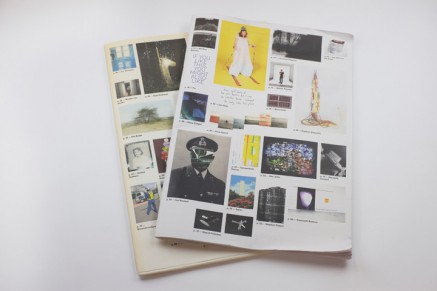
favourite black & white photobooks 2015 Josef Chladek
Mariken Wessels’ Taking Off. Henry my Neighbor is selected by Josef Chladek as one of the black & white photobooks of 2015.
THE BOOK’S SPACE INTERVIEWS: TAKING OFF. HENRY MY NEIGHBOR FOTOGRAFIA | Festival internazionale di Roma
THE BOOK AS A PROJECT
Which are the 5 indispensable pictures for this book?
Photographer: A good book knows no indispensable pictures, as they’re all equally important as integrated parts of the story, which forms a whole.
What is the framed structure of this book?
P: The structure should feel like you’re breathing, everything has to run smoothly, that’s the way it’s meant to be.
How did you choose your book designer?
P: I did the design for all the books I made, laying out the book in InDesign and making a dummy. I showed the dummy for Taking Off to Jurgen Maelfeyt of APE (Art Paper Editions), a graphic designer and publisher, eager to publish this book, whohelped me with the finishing touch.
What was your approach to get into the photographic project?
P: I started doing extensive research, then outlined the whole story. I had all the story lines, layers and scenes tucked to my studio wall, and I did much reading related to the theme, such as about vernacular photography, amateur art, private versus public, and on people leading hermit’s lives (for example Thoreau), etc.
Hence I tried to understand the characters of Henry and Martha as much as I could, then analysed them and worked them into the narrative.How did you develop the work on the book?
P: When I work on a book I try to stay as close as possible to my intuition. I am able to do so because I include the preliminary work, such as the research phase, into the entire process. All the given or found materials as well as the initial research form the basis and make up the framework, serving as parameters in which I have the freedom to create and recreate.
THE BOOK AS A STORY
Which narrative slant did you choose for this book and why?
P: The narrative more or less alternates with the documentary material. Because it’s part documentary story, I wanted to followthe protagonists life stories as close to the truth as you can get with photographs, letters and other documents. But herein one always arrives at a point at which one needs to ask what the truth is after all.
What’s the difference between the book and the photographic project slant?
P: A book necessarily fixes the narrative, it’s compelling but it also intensifies the story if you follow the flow of the narrative. Leafing through a book offers an intimate experience, being perhaps even more voyeuristic than walking past such images in
a gallery. Parts of the book could be in an exhibition for sure, leading to a different experience, but still fitting with what the book is about, because to a large extent it’s about questions of the public and the private and tensions between the two.THE BOOK AS AN OBJECT
How did you choose the materials and the kind of printing?
P: The type of paper and the printer I had chosen together with Jurgen. He proposed a paper, which I immediately felt was the right choice. And he knew a good printer in Bruges (Die Keure) which also worked out really well.
How the materials’ choices are connected to the photographic project?
P: The type of paper had to be in harmony with the project. We were looking for a basic and slightly rough paper. And we wanted to have the part with the contact sheets, totalling about 5,500 photos, printed on a coated paper – more like the papers used in old catalogues: glossy and somewhat outdated. The loose-leafed letter was printed on a thin, semi-translucent US letter-size paper, similar to the one people used for typing in the 1970s and 80s. We had the book bound such that it falls open easily. It proved a bit more expensive than usual binding methods, but because the book is quite heavy, it was important to do so. We strived for everything to become a unity: story, paper, printing and binding quality, lay-out, typography and so on.
Top ten: the best photo books of 2015 1000 Words
Taking Off. Henry my Neighbor has been included in the top 10 photo books of 2015 by Media Space associate curator and 1000 Words editor Tim Clark.
Dutch artist Mariken Wessels has made it her business to tell the story of a real-life husband and wife, their failed marriage, sexual frustration and voyeurism via an extraordinary archive of found photographs, collage and sculpture. Taking Off. Henry My Neighbor allows us to enter into the lives of Henry and Martha, who embarked on a collaborative photographer-muse project together. The result is a corpus of 5500 intimate photographs, creepily categorised, labelled, notated and cross-referenced by Henry, which led to the relationship ending and his self-imposed exile. Edited with scrupulous care to build an incomplete narrative, the book is not simply a biography or catalogue raisonne of amateur nude art but something more compelling, dispassionate and altogether unsettling. At least, it is a complex portrait of obsession and the private secrets of those living next door, constructed through Wessels’ unique brand of storytelling.
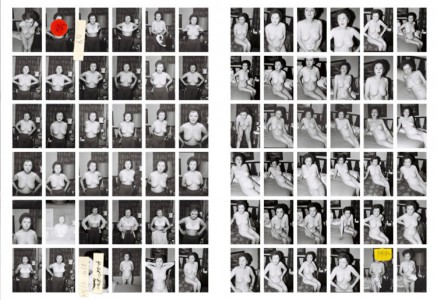
Photobooks Of 2015: Hannes Wanderer PHOTOBOOKSTORE
Mariken Wessels’ Taking Off. Henry my Neighbor is selected by Hannes Wanderer as one of the photobooks of 2015.
The story is quickly told, but the visible legacies that Mariken Wessels has compiled in this book of madness, are strong stuff. Henry and Martha live as a married couple in the suburbs of New York. Henry photographed thousands of nude pictures with his wife and muse as model. One day Martha enters Henry’s ›forbidden room‹. The room is wallpapered with her nude pictures. Confronted with this sight she tears the pictures off the wall, throws them literally out on the street, breaks her relationship with Henry, who stays behind alone. The remains of the photographs he turns into disturbing meat- and skin collages. After the collages he creates clay figures, even further removed from the actual appearance of his wife. Then he disappears, probably into the woods. Neighbors found the pictures and sculptures in the abandoned apartment. Martha lives elsewhere a lonely life since.
It’s a stroke of luck that this material has got into the hands of Mariken Wessels and that she was given permission, also by Martha, to work with it and to make a book, as she found a very smart and sensitive way to deal with the pictures and sculptures. Accompanied by a short intro with family photos and some interior shots of Henry’s studio, which, among others, show the walls decorated with thousands of nude shots before and after Martha’s intervention, she just presents the complete catalog with all photographs, collages and sculptures. A swirl of human obsessions and abysses – fascinating and scary at the same time.
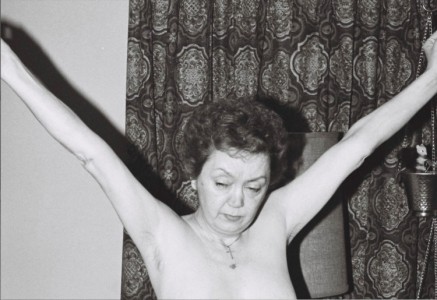
Photobooks Of 2015: Ramón Reverté PHOTOBOOKSTORE
Mariken Wessels’ Taking Off. Henry my Neighbor is selected by Ramón Reverté as one of the photobooks of 2015.
Another nude “typology”. This time with a really unexpected situation that drives to yet another “dadaist typology”. The kind of book only the Dutch can do.
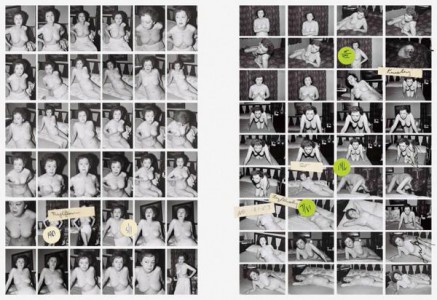
The Best Books of 2015 photo-eye
Taking Off. Henry my Neighbor has been included in no less than 5 of the photo-eye end of the year photobook lists. Selected by Erik Kessels, Hans Gremmen, John Phelan, Little Brown Mushroom (Galen Fletcher, Ethan Jones, Alec Soth and Carrie Thompson) and 10x10 Photobooks.
Beau Livres: Taking Off. Henry my Neighbor Les Inrockuptibles
De beste fotoboeken van 2015 de Volkskrant
De Volkskrant presenteert het jaarlijkse overzicht van Nederlandse fotoboeken. Van de bijna 90 gesignaleerde fotoboeken zijn er 22 samengebracht in de Top 22. Mariken Wessels' Taking Off. Henry my Neighbor is geselecteerd voor de Top 12 van Nederlandse fotoboeken uit 2015.
Beeldverhaal van een obsessie. Anonymus brengt duizenden malen eerbetoon aan verloren liefde, gesignaleerd door Mariken Wessels.


PHOTOBOOKS OF 2015: TIANE DOAN NA CHAMPASSAK PHOTOBOOKSTORE
Mariken Wessels’ Taking Off. Henry my Neighbor is selected by Tiane Doan na Champassak as one of the photobooks of 2015.
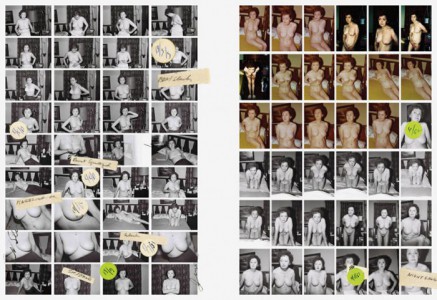
The Crazies Book Fotografisk Tidskrift
From Fotografisk Tidskrift, nr3 / 2015, Swedish Photographers Assosiation
On the photo festivals and seminars around the world photo book bubble is discussed. Are there to many photo books published? Are we feed up with photo books? Will people lose interest in photo literature? Photobook entusiast Tommy Arvidson talks about some strange and engaging books that contradict the theory.
Photographing today is something we do almost without thinking about it. For example, with a 20 gram camera we can put on the shirt, and automatically takes two photos in minutes. Narrative is the camera called that automatically uploads pictures online and the phenomenon is known as lifelogging. The idea is that we shall manufacture our own photographic diaries and create visual stories of our lives.
Or so we capture a moment in our daily lives with mobile camera, a camera which, according to many tests often technically as good as an SLR only a few years old
So we are, all, photographers. We want to make a book that is a complete layout program in Ligthroom sending the book on to a print-on-demand company. A week later you have the book in your hand. So maybe we all also potential photo book writers.
But if you want to create something that may interest anyone but your closest circle of friends, requires a substantial measure of originality and perhaps a bit of whimsy view of the world.
The Internet has fundamentally changed the way we use images. We take a picture, put it on the Internet, and forget about it. Simultaneously monitor different types of cameras more and more of our daily lives and the pictures often end up in the net. Many photographers and artists have recognized that with this picture ocean as base materials are great opportunities to create provocative and interesting works.
Many of today's photographic artists often work with computers than with cameras. The availability of images on the Internet, for example, from Tokyo, New York or Paris is huge. For some it may seem more tempting to create a new story or comment based on the millions of images already than producing even more images.
Berlin-based Joachim Schmid is one of them. He has since 1980 been working with found and collected images. One of his books is about a painted cross. A cross that is located in the middle of the carriageway at Dealey Plaza in the US city of Dallas. Right here met the US President John F Kennedy of the shot that ended his life. On various social media loading people up pictures that show themselves in different poses on that particular site. In the book X Marks the Spot Schmid has gathered the type of images. Most smiles, some waving at the camera. It makes us reflect on the willingness of people to be seen, or believe themselves to be seen, even if it takes place in the middle of a memorial for a tragedy.
Another artist who is totally focused on the infinite picture that are on the Internet is Mishka Henner. He has also been called "Web archaeologist".
Experience around the world is a single image with infinite resolution. Almost every centimeter of the Earth is photographed and made available via the internet, says Henner via Skype from his home in Manchester, England.
-Take For example, the missing, presumed crashed, Malaysian plane, there is the image, we just have not found picture yet! he says.
His subject largest work is a photographic book about the universe, Astronomical. It consists of twelve bands and contains 6000 pages. Each page represents one million kilometers. As he himself says, so it is almost impossible to read. Most of the books consists of black sides. First, on page 155 we see the Earth as a small dot the size of a pinhead. The book was printed by print on demand, but the printer concluded alliance with Henner grounds that it was spent far too much ink.
In the book No Man's Land searched Henner up places where men had told each other that there were prostitutes. He visited the sites through Google Street View. In the book we can see how prostitutes standing by the roadside in the murky industrial areas or along lonely roads. All women's faces is obviously pixelated on googleskt way. Instead of pointing out individuals, so the book becomes a testimony to the extent of exploitation of women. And where we as readers are forced to witness how extremely common phenomenon.
Henner opposes the documentary narration intimacy and instead want to show the major trends in society.
- I think that today's photographers have to innovate. The idea of ​​the lone heroic photographer running around on command similar missions and trying to get that perfect shot, it is outdated, he says.
His position is that the traditional documentary photography is based on a kind of theater or interpersonal games, where the photographer is always the stronger.
But the ability to collect huge image flows and sift out interesting image clutches lasted understood long before we had the Internet and its search engines.
When the German artist Peter Piller in the 1990s had a summer job at an advertising agency that was his task cut out ads from newspapers that would prove to ad buyers that their message had been published.
Piller started to clip news images from the eighties small local newspapers that he worked with. He sorted them under their own imaginary headlines, such as the killer's house, people pointing, People in front of the hole or it's still nothing to see. Compiled in this way, in large amount, were the images, which in its original context is rather uninteresting, a kind of mirror of our society. He has published a number of books and organizes exhibitions from its Peter Piller Archive.
Another subject that always fascinated photographers is the body. Jesper Fabricius has his publishers Space Poetry have issued 26 volumes of a publication called Kunsthæfte. It is convenient for the title of world's smallest photo book with its sixteen pages and format 10.5 x 14 cm. In the books he has collected and cataloged details of old porn magazines under different headings such as watches, tongues, breasts and so on. It will be a somewhat surreal experience to see page after page with tongues trying to lick something.
When in New York accommodation Dane Asger Carlsen in the book Hester shows off the female body is in a kneaded and Photoshopped version that gets some readers feel sick. Self says Carlsen that he works as a sculptor, would not call himself a photographer, but rather collectors. Collectors of naked body parts. It also appears that in some images using his own body.
But collecting can sometimes seem more important than creating. The Swiss Kurt Caviezel has for a number of years collected images from more than 15,000 public webcams. These images he has now compiled in the book The Encyclopedia of KURT Caviezel. The book of 400 pages contains a selection of the millions of images he has collected. We'll see a series of pictures where insects crawling on the lens and the couple kissing. A page consists of pictures of dense fog. The question is what the book wants to tell us? It can be seen as an invitation to think about what it actually means that a large part of the Earth is depicted?
The question is, if not the most prilliga book yet, the Google Dictionary, which was published by Felix Heyes and Ben West a few years ago. It displays the first image that pops up in a Google search. And for all the words in a normal-sized English dictionary (twenty thousand words). Remarkably often it will be wrong. A lexikonord can suddenly represented by a completely irrelevant image.
Often when women artists engaged in this type of searching for images it is done in a more narrative way. We saw in Malmo photographer Anna Strand's Swedish Photobook award-winning Notebook Nagoya how she constructed his own work with the help of anonymous portraits photographs she found during a stay in the Japanese city of Nagoya. Around the anonymous pictures of something that had once been a portrait photographer's archives, she created with text and your own pictures your own fictional story.
Dutch artist Mariken Wessels adamant that she constructed an own story from a box of photos she found at a flea market of Amsterdam. The book Elisabeth, I want to eat is a poignant story about a young woman's way further and further into an anorexic disorder. We follow relatives vanity and sometimes downright desperate letter to be sent to get her to recover.
The very last letter (which is worn as if it has been in a pocket and never been dispatched), the following text: "The last time I saw you it was nice and I felt much better. Are you still in Brussels? I do not know but I liked the house you lived and the streets there. I want to eat."
When studying the pictures and other materials carefully, one finds that the woman if she is or was alive today would be in their sixties. But who is / was she, and what was her destiny? This we do not know. How much is documentary or fabricated would not Wessels tell.
In a recent book Taking off. Henry my neighbor telling her about the man who became obsessed with photographing his wife. During four years of Henry took nude pictures of her Martha. When she finally discovered her husband's secret room with walls papered of photographs, she destroyed parts of the collection and moved away from her husband. Henry began to make collages of pictures and created bizarre images of various body parts. When he begins to translate their collage to lerskulpturer and move out of the forest sounds Wessels story ends in a question mark. We are not told what happened next.
Her way of working is reminiscent really about what is known photojournalists usually claim is what creates a fascinating picture. It is not what is in the picture, but what is outside, as it is interesting. Her refusal, in interviews, tell what is fact and fiction raises questions about photography's role as storyteller and the reality which is true or false.
An avid collector of amateur photography is the Dutch social worker, amateur photo collector and adman Erik Kessels. His book The Attack of the Giant Fingers is number thirteen in a series called In Almost Every Picture. The finger that means of course is that the amateur often place the front of the lens. Other books in the series depicts the loyal family member, the black dog who, thanks too simple camera and wrong lighting only becomes a black spot on the image.
Another series of Kessels photo book called Useful photography. In one of the volumes he has collected images from vendors of dot paintings. Here are both suicide bombers, child abductors and Osama bin Laden.
The Spanish photojournalist Cristina part Middel had long been dissatisfied with the work of photojournalist. On her blog, she published the images did not quite fit into the journalistic assignments, she was sent on to its clients.
When she with the help of a scholarship took a sabbatical from the editorial world, she began to look for interesting stories. On a list of history's wildest experiments she found in first place the Zambian space program. When Zambia became independent in 1964, wanted to show the world what they could achieve. It was decided to send a woman, two cats and a mission into space. When UNESCO refused to inject money and space woman became pregnant was interrupted, however it all. Her grandmother helped her to sew space suits that were a mixture of NASA and African folklore. As space helmets, she used the discarded streetlights.
The book's photos were taken mostly in and around her hometown in Spain. Her friends had to act extras. She had at that time never even visited Zambia.
The book was titled Afronauts and was released on his own publisher. Sales were initially slow. But when she was nominated for Aperture's First Photography Book Award and later the Deutsche Börse Photography Prize selling edition of thousand copies quickly. Today you have luck finding a copy on Amazon for about ten thousand crowns. After the great success of Afronauts she had the opportunity to make a book by a publisher. She chose to do a book of street photography from New York. But she directed the people she met so that the images appeared picked out the name the musical West Side Story.
Stockholm photographers Klara Källström and Thobias Fäldt was a bit on the same track when they gave out Russian Bang / Russian hit. The book is the first in a series about the Swedish myths. It tells of when Stockholm was bombed by Russian aircraft. It took place in February 1944. The book portrays the tree in Eriksdalslunden, which is where the bombs fell. They were actually eyewitnesses to the incident.
Photobook market is diverse and varied. The UK is emerging an interest in something that can be called the homestead photography. Craig Atkinson, a senior lecturer at an art and design school in southern England, publishes a book of documentary photography every Thursday. It is small booklets with 28-36 pages usually printed in black and white. Topics vary but often shown images of now defunct industries or forgotten professions. Here are titles like One day in July near Cable Street, Southport (Ken Grant) or Pig kid 1975-76 (Daniel Meadows) The editions are small, around 200 copies, and most of the volume is sold out. Measure the Martin Parr published in the book series some time ago, the circulation of stock after a few minutes.
The books can be found in such prestigious venues as the MOMA in New York, the Victoria and Albert Museum, Tate Modern and at the big bookshops in London.
East London is a neighborhood that has long been the slum, but now after the Olympics and industrial movements are becoming increasingly popular and gentrifierad. It houses the publishing Hoxton Minipress just give out books about East London. The latest title is about a flower market on Columbia Road.
One who gladly mixes documentary with a kind of systematically collecting the photographers Theo Simpson and Adam Murray. They have gettt the book Road and Rail Links Between Sheffield and Manchester. It is as the title suggests the places where the railway and highway intersect at approximately 50 kilometer route. The two authors want to get the passengers traveling on the route to stop and view the beautiful landscape that is slowly changing without us really noticing it.
A notable subgroup of the photo books are the ones that should clearly cataloged under the topic Photobook but contains no images.
We all know what pictures we took. They are stored in memory in a special way, because they never have to face a critical eye. 62 famous photographers, with names such as Mary Ellen Mark and Roger Ballen tells of the times when one or another reason impossible to take a picture. Nothing surprising there will be no picture when Ballen coincides with a kattfångare who furnishes the cats to a witch doctor. When the two men step into häxdoktorns reception walls are covered in different parts of the cats. Cat Piper gets paid by weight, 22 kg per cat. The two men leave the room. Apparently the sight too much even for Roger Ballen. The book is titled Photographs Not Taken, compiled by Will Steacy.
Apparently this is the photo book world multifaceted and often smågalen. The books I have written about my personal choice. For further reading, I recommend The Photo Book, A History I-III by Gerry Badger and Martin Parr. Read and be amazed by what photographers can find.
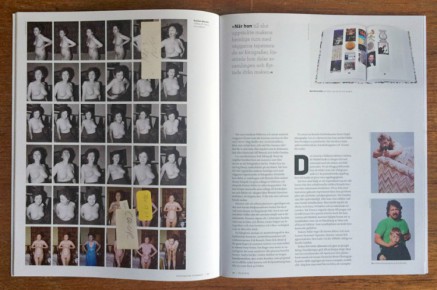
MARIKEN WESSELS /// TAKING OFF 25books
The story is quickly told, but the visible legacies that Mariken Wessels has compiled in this book of madness, are strong stuff.
Henry and Martha live as a married couple in the suburbs of New York. Henry photographed thousands of nude pictures with his wife and muse as model. One day Martha enters Henry´s ›forbidden room‹. The room is wallpapered with her nude pictures. Confronted with this sight she tears the pictures off the wall, throws them literally out on the street, breaks her relationship with Henry, who stays behind alone. The remains of the photographs he turns into disturbing meat- and skin collages. After the collages he creates clay figures, even further removed from the actual appearance of his wife. Then he disappears, probably into the woods. Neighbors found the pictures and sculptures in the abandoned apartment. Martha lives elsewhere a lonely life since.
It´s a stroke of luck that this material has got into the hands of Mariken Wessels and that she was given permission, also by Martha, to work with it and to make a book, as she found a very smart and sensitive way to deal with the pictures and sculptures. Accompanied by a short intro with family photos and some interior shots of Henry´s studio, which, among others, show the walls decorated with thousands of nude shots before and after Martha´s intervention, she just presents the complete catalog with all photographs, collages and sculptures.
A swirl of human obsessions and abysses – fascinating and scary at the same time.
MARIKEN WESSELS - TAKING OFF NEW DAWN
Mariken Wessels woonde begin jaren '90 voor een korte tijd in een buitenwijk van New York. Daar raakte ze bevriend met een stel die haar bijzondere verhalen over een echtpaar, Martha en Henry, vertelden. Henry bleek een amateur kunstenaar te zijn die altijd een camera op zak had en zijn vrouw Martha was zijn muse. Mariken kreeg toegang tot het archief van Henry. Hieruit ontstond het boek 'Taking Off'; een overschot aan beelden dat het verhaal over een mislukt huwelijk, seksuele frustratie en voyeurisme toont.
‘Taking off’ begint met de onbezonnen jeugd en het prille geluk van het huwelijk van Henry en Martha. Henry blijkt in het bezit van een camera te zijn en Martha speelt de hoofdrol in zijn fotografie. Een veelheid aan expliciete foto’s met bijzonder weinig variatie is wat volgt.
Henry schijnt een ware obsessie te hebben ontwikkeld voor fotografie, maar ook voor zijn vrouw. Op een klein kamertje ordend hij alle foto’s op data en houding. Ook vermeerdert hij de beelden. Martha ontdekt zijn manie en vernietigt een groot aantal exemplaren, daarna vertrekt ze uit Henry’s leven.
Ondanks het verlies van zijn grote liefde blijft Henry geobsedeerd door Martha, maar ook door fotografie. Hij moet nu verder fotograferen zonder model en dus verknipt hij de overgebleven foto’s tot surrealistische collages.
Kort daarna bevindt Henry zich in een primitief huisje in een grimmig boslandschap. Hier jaagt hij zelf op wild en maakt kleibeeldjes naar aanleiding van zijn al eerder gemaakte collages. Terwijl ook Martha een teruggetrokken leven is gaan leiden.
‘Taking off’ is een prachtig, op ware gebeurtenissen gebaseerd, verhaal over een ooit mooi begonnen liefde met een, uiteindelijk, dramatisch einde.
Strange and Unfamiliar Once Again: Sophie Wright on Unseen 2015, Amsterdam Photocaptionist
From creating fictions that feel uncannily close to reality to real material that feels like it couldn’t be anything other than fiction, we move to Dutch artist MarikenWessels’ Taking Off. Henrymyneighbour. Pieced together from a mind-blowing archive of images, collages and sculptures that Wessels was given permission to use, she tells the story of Henry, an amateur artist who obsessively made some 5,500 nude photographs of his wife according to a personal classification system. When his muse finally tired of being photographed, she threw his life’s work onto the street and left him. He collected the remaining images and retreated to lead a hermit’s life, where he dismembered the photographs to make collages and clay figurines. Packed with thousands of images, the extraordinarily sequenced book is a delirious journey that tumbles through love into frustration and obsession.
Through this brief snippet of what was on offer at Unseen, we see that when photography is put under scrutiny and its authority challenged, what we think we know is unfixed. We are invited to discover a muddled world of truth and fiction much closer to our own.
Borstenobsessie van echtgenoot SSBA-SALON
Door Abel Minnée
Onlangs verscheen bij Belgische uitgever Art Paper Editions een nieuw boek van Mariken Wessels: Taking Off. Haar vorige boek van een grote uitgever dateert alweer van 5 jaar geleden. Het nieuwe boek – van dezelfde grootte maar met aanzienlijk meer volume – is zoals haar twee eerdere bekende titels (Elisabeth I want to Eat (2008) & Queen Ann (2010)) een beeldverhaal opgebouwd uit een gevonden archief fotografisch materiaal.
Het beeldmateriaal van Taking Off, dat Mariken Wessels ontdekte tijdens een verblijf in Long Island (NYC), laat een gefaald huwelijk zien. Uit een gigantische hoeveelheid foto’s en knipselcollages komt een ontroerend verhaal van seksuele frustratie en voyeurisme naar voren. De door ene ‘Henry’ gemaakte foto’s van zijn vrouw en muze ‘Martha’, overdonderen tijdens het bladeren door het boek.
Henry leed aan een obsessie voor de borsten van zijn vrouw. Niet de artistieke of fotografische mogelijkheden interesseerde hem, maar enkel de herhaling van de activiteit van het fotograferen, het plezier van haar vastleggen. De omslag van het boek kan bij het openen uitgevouwen worden en toont een dame in opengeslagen rode badjas; ze is al op leeftijd en kijkt verveeld in de verte. Op de eerste pagina vinden we de tekst ‘IN DEDICATION TO MARTHA FOR HER COURAGE’. Verder bladerend wordt snel duidelijk waarom voor deze ondertitel is gekozen.Martha zelf wordt geïntroduceerd op vindingrijke wijze door een paginagrote, onherkenbare naaktfoto in een ongemakkelijke pose die uitvouwbaar is; daaronder komt een huis-tuin-en-keukenpasfoto te voorschijn van de jonge Martha. Hierop volgt een gigantische massa naaktfoto’s, vooral geconcentreerd op de borsten van Martha, gepresenteerd in de vorm van contact sheets (noot: dit zijn prints waarop de hele reeks foto’s op een film te zien zijn in het klein naast elkaar). Notities van Henry op post-its die houdingen van Martha beschrijven zijn toegevoegd; “bust laying, bust squeezer, laying, standing taking off, good cocor, sitting, color xxx, laying flat”, enzovoorts.
Na duizenden naaktfoto’s is er zelfs een schema te zien waar Henry de poses met een beoordeling bijhoudt. Deze contact sheets met naaktfoto’s worden zo nu en dan aangevuld door foto’s die verder herkenbare context van het leven van een koppel schetsen, een trouwerij, een diner, et cetera. Iets later in het boek wordt er na een aantal lege pagina’s een nieuw hoofdstuk geïntroduceerd met collages van uitgeknipte foto’s van de nog steeds naakte Martha. Maar deze beelden zijn samengesteld nadat het stel inmiddels uit elkaar is gegaan.De collages zijn op z’n zachtst uitgedrukt bizar. Elk van de collages gaat gepaard met titels die beschrijven wat er te zien valt: “cross crack XX, Split up together busts, grid kneeling forward, arms cigaret, double belly knees up”, enzovoorts.
Het is bijna onmogelijk om adem te halen als je door het boek bent heen gebladerd, de gigantische omvang van dit obsessieve archief is even boeiend als repulsief. Hoe heeft Martha keer op keer kunnen poseren? Hoe ongemakkelijk moet het keer op keer zijn geweest? Wat heeft haar de moed gegeven uiteindelijk te breken met Henry? De foto’s zijn zo intens dat ze dit soort vragen direct oproepen; je voelt je ontzettend ongemakkelijk en voyeuristisch tijdens het kijkproces. Dát het dit soort emoties opwekt, betekent dat Wessels er in is geslaagd om het oeuvre van Henry succesvol in boekvorm te materialiseren.Het laatste hoofdstuk van het boek introduceert foto’s van de sculpturen geïnspireerd op de collages die later in Henry’s woning zijn gevonden. Godzijdank heeft Henry zijn obsessie hierin nog ‘artistiek’ kunnen uitdrukken.
Aan het eind van het boek is een epiloog te vinden waarin staat dat Henry ongeveer 5500 naaktfoto’s, 50 collages en 17 sculpturen van klei naliet voordat hij uiteindelijk de fotografie verlaatte en voorgoed verdween in de bossen van noordwest New Jersey, waar hij ging jagen en dierenvallen uitzette. Hij beoefende de overlevingstechnieken die hij had geleerd uit een collectie handleidingen. De echo van dit verbijsterende beeldverhaal dreunt door tot lang na het sluiten ervan.
Taking Off. Henry My Neighbor – eine Fotoreihe Vice
Aus der Fiction Issue 2015, Jahrgang #11 Ausgabe 7
Henry hinterließ der Welt ein Vermächtnis der Amateurkunst, das gut 5.000 Nacktaufnahmen seiner Frau und Muse Martha umfasste, so wie 50 Collagen und 17 Tonfiguren. Nachdem Martha ihre anfängliche Scham überwunden hatte, entdeckte sie Henrys überwältigende Welt, in der sie sich selbst unendlich multipliziert sah. Sie warf tausende Fotografien aus dem Fenster, bevor sie aus seinem Leben verschwand.
Henry begann das Leben eines Einsiedlers zu führen. Er schnitt die Fotos, die er retten konnte und die, die er noch besaß, in Stücke und setzte sie zu Collagen zusammen, die er danach als Vorlage für seine Tonfiguren nutzte. Irgendwann zog sich Henry komplett aus der Fotografie zurück und verschwand in den Wäldern des nordwestlichen New Jersey, um ein Leben in Einsamkeit zu führen, in dem er jagte, Fallen aufstellte und verschiedene Überlebenstechniken einsetzte, die er vorher aus Ratgebern zusammengesammelt hatte.
Nachdem auch Henry aus dem Heim, das er sich mit Martha teilte, ausgezogen war, fanden Freunde, denen sie die Schlüssel überlassen hatten eine Serie von Collagen in ihrem verlassenen Haus in einem Vorort von New York. Nach Henrys Verschwinden in den späten 80ern wurden 17 Tonfiguren, von denen einige unvollendet waren, in seinem zweitletzten bekannten Wohnsitz gefunden: einer selbst gebauten Hütte in den Wäldern. Sie wurden in die Obhut des Hackettstown Heritage Center for Arts & Crafts in New Jersey übergeben. Alle diese Fotos mit freundlicher Genehmigung von Gary Alsdorf, Hackettstown, NJ, 1990. Alle Bilder stammen aus dem Buch Taking Off. Henry My Neighbor (Art Paper Editions, 2015) von Mariken Wessels.
Schat met dubbele bodem De Volkskrant
Mariken Wessels en de intimiteit van het boek kunstenaarsboek.blogspot.nl
Het begrip "found footage" is verbonden met de werken van Mariken Wessels. Het begrip is vanuit het cinemagenre ontstaan. Het wordt gehanteerd waarbij de film zich voordoet als een samenraapsel van 'gevonden' materiaal. Ook binnen de fotografie heeft dit genre nu een plaats gekregen. Hierbij verandert de fotograaf van iemand die foto’s maakt naar iemand die selecteert en ordent. Hierdoor wordt het bestaande beeld uit zijn oorspronkelijke context gehaald en het in een nieuwe context en beeldvorm geplaatst.
Het manipuleren van beelden vormt ook een belangrijk deel in het oeuvre van Wessels. Deze beelden komt ze tegen na een zoektocht of worden door haar gemaakt. De beelden worden later gerangschikt en zo komt er een vaste volgorde in. Het komt vanzelf bij elkaar en er wordt niet sterk aan een verhaal gehouden. De beelden maken het verhaal en het verhaal de beelden, waarbij alles om haar heen een inspiratiebron is. In feite is zij niet in de eerste plaats in het materiaal geïnteresseerd maar in de perceptie ervan. Het proces van het verwerven, interpreteren, selecteren en organiseren van zintuiglijke informatie. Centraal staat bij haar de gedachte dat de interpretatie van beelden een creatieve daad op zichzelf is......
Klik de link voor de volledige tekst van Henk Woudsma.
Taking Off. Henry My Neighbor Collector Daily
JTF (just the facts): Published in 2015 by Art Paper Editions. Softcover, 330 pages, with hundreds of black and white and color reproductions. Aside from a short epilogue by the artist, there are no essays or texts included. In an edition of 1000. A special edition of the book (in an edition of 25) includes posters, prints, and other ephemera in a custom-printed cardboard box.
Comments/Context: As archival investigation and reuse become increasingly popular strategies for contemporary photographers, the diversity of approaches being employed is starting to spread out. While many artists are simply using found imagery (either analog or digital) as available raw material for their own unrelated projects, others are staying much closer to the archive itself, attempting to piece together incomplete narratives or to reengage with lost stories that are buried amid the pictures. Reconstructions like these are built with the framework of the actual archival material, but then sequenced and presented in ways that highlight the artist’s vision – since we can never know the truth of the matter, we see the artist’s particular work as a kind of interpretative history, as one of many possible versions of what actually happened.
Mariken Wessels’ challenging new photobook gets inside the married lives of a seemingly ordinary middle aged couple (Martha and Henry), only to discover a rotting core of obsession that drives them apart and ultimately leads the husband further downward into his own convoluted compulsions. As organized by Wessels, their disturbing story probes our worst imaginings of the private secrets of our neighbors, those who seemed so normal in public but who were actually leading double lives.
After a handful of ominous scene-setting family photos, Henry takes out his camera and starts to make a few pictures of Martha in the bedroom. Martha isn’t noticeably beautiful, so these images (displayed in contact sheet like grids) initially feel like the intimate photos of supportive willing participants – she takes off her top, poses gamely, holds up her breasts, and lies back seductively while Henry snaps away incessantly. As the session goes on, her face betrays a sense of boredom and weariness; whatever anticipatory sexiness filled the air at the beginning has long ago disappeared.
Wessels masterfully uses successive page turns to make this playful private nudity into something much more unsettling. Turn the page, and there are two more spreads of Martha posing. And then two more. And then two more. And then two more. Suddenly, this doesn’t seem so much like a shared game as a something weirdly scientific. And then two more. And then two more. And then two more. Now this repeated scene is looking like a predatory trap, an obsession. And then two more. And then two more. And then two more. For a total of 147 astonishing pages. The piece de resistance is Henry’s meticulously creepy tracking spreadsheet, laid out monthly for four complete years, with typed image descriptions like standing taking off, squeezing, laying flat, bust close ups, kneeling, blouse/bra, night gown, cover over bust and the like matched against ratings like good, XX, XXX, and ok. It’s a Muybridge-like study of female movement, but weighed down by leeringly cold objectification, and Wessels’ arrangement of the archive makes the depth of his compulsion hit like a ton of bricks.
The struggle on Martha’s face in these pictures betrays her knowledge that this posing wasn’t at all normal, but it clearly wasn’t easy for her to say no. The story turns even darker when Henry’s hidey hole office is discovered, filled floor to ceiling with images of Martha, just exactly like a serial killer lair from the movies. This is the proverbial last straw and Martha walks out, tossing the loose pictures out through the open window of the house like a tragically cathartic ticker tape parade. Wessels celebrates this moment of freedom with an image of Martha with her arms spread triumphantly, followed by a glowing white peacock with a similar wingspan.
With Martha now gone (and no more photographs to be taken), Henry was left to stew in his own juices, and he turned inward to his remaining prints of Martha for solace. Slicing and dicing the pictures into angular, layered collages of fragmented, largely anonymous body parts, he channeled his obsession in a new direction. What’s both fascinating and surprising is that if these works weren’t so freighted with the ugliness of the preceding episodes, we might actually find them artistically intriguing – arms, legs, breasts, and torsos jitter and stutter across the page in Cubist-like planes, multiplying, mirroring, and disintegrating into agglomerations of sculptural forms. They still pulse with authentically disturbing fascinations, but Martha has become more of an abstraction, her body reduced to lines and curves that feed into a new kind of precision calculus.
As the years passed, Henry retreated further from society, and the collages became maquettes for a series of three-dimensional sculptures in white clay. Undulating and sinuous, they twist the flattened shapes into bulbous forms, like ancient fetish figurines with too many breasts and legs. The best of these are lusciously curved, simultaneously seductive and agonizing, and yet unknowable. But it’s impossible to forget the relentless pounding of those endless contact sheets of Martha – are we to see these artworks with utter (and/or extreme) revulsion or unlikely appreciation? That’s the thorny question that Wessels leaves us pondering. The story ends with Henry living off the grid in the deep woods of New Jersey, making hand crafted snares and traps out of sticks and string, seemingly already across the line of paranoid delusional derangement.
The fact that our impression of Henry’s personality oscillates back and forth between psychopath and tortured artist is due largely to Wessels’ open ended brand of storytelling. She lays out the competing evidence dispassionately and allows us to see alternate perspectives without stepping in to overtly guide us. This uncertainty is what gives the photobook its enduring resonance. That we feel sympathy for Martha is undeniable – she was caught in a suffocating situation that required real courage to overcome; that we might feel even the tiniest glimmer of sympathy for Henry as well is entirely unexpected and largely counterintuitive. But it’s that unsettled emotional dissonance that keeps us thinking, and Wessels has smartly left us hanging, with both sides of the tragedy still echoing in our heads.
Taking Off. Henry my neighbor De Witte Raaf
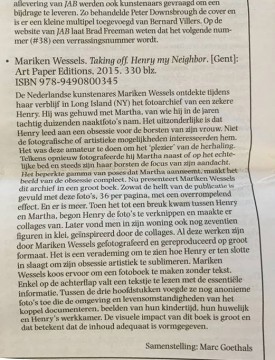
Virtuoos eigen verhaal verteld met foto's van anderen Het Parool
Het Parool, 21-07-2015, p8,11
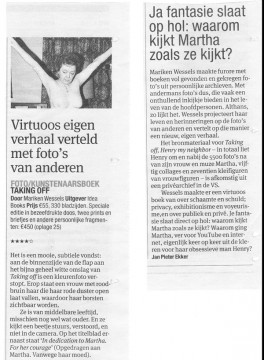
The most exciting new photography books Dazed
Art Paper Editions recently released this strange photo story of sexual frustration and failed marriage, compiled by Dutch artist Mariken Wessels. On a trip through the US, Wessels encountered amateur photographer Henry, who had amassed a huge (and slightly pervy) collection of pictures of his former wife and lifelong muse, Martha. Granting her full access, Wessels has combined Henry’s photographs and collages into this indefinable edition that sits somewhere between family album and shadowy nude portraiture.
Nieuw fotoboek Taking Off, Henry my neighbor We Like Art!
Mariken Wessels is bekend van haar eigenaardige – inmiddels internationaal bejubelde – fotoboeken. Haar boeken hebben foto’s uit verschillende persoonlijke archieven als vertrekpunt en bieden een zowel fantastisch als beklemmend zicht op de hoofdpersonen. Is het fictie of zijn het ego-documenten? Waar is de hand van de kunstenaar te zien? Welk stuk is eigenlijk authentiek? Wessels laat graag in het midden wat wel en niet van de kunstenaar afkomstig is.
Haar boeken spoken na ‘lezing’ nog dagen in je hoofd. De raadselachtige collages van oude zwart-wit familiefoto’s, bewerkte portretfoto’s, bewerkte contactafdrukken, stills uit Kodak 8 mm films, foto’s van foto’s. De boeken zijn elk een verontrustend, meerduidig en aangrijpend verhaal waarin Wessels de virtuoze verteller is.
Kort geleden verscheen haar nieuwste boek: Taking Off, Henry my neighbor. Het is thematisch verwant aan de eerdere boeken van Wessels – qua visuele biografie, privacy, exhibitionisme, voyeurisme, maar ook wat betreft de gelaagde vertelstructuur. De kijker wordt uitgedaagd om zich te verplaatsen in de personages. Door de rol van voyeur die je als kijker toegespeeld krijgt, kan er zelfs een gevoel van medeplichtigheid ontstaan. Mariken vertelde ons eerder dat als dat gebeurt, dat ze dan haar werk geslaagd vindt.
Het wonderlijke verhaal van Taking Off, Henry my neighbor gaat over een gedoemd huwelijk, seksueel obsessief gedrag en creatieve gekte. Een buitengewone verzameling foto’s en geknipte collages monden uit in een “vertigo of amateur nude art”.
Lees verder...
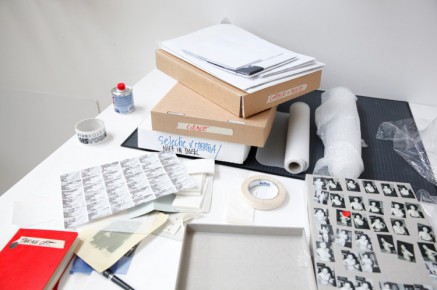
(fotografie: Maarten Tromp)Taking Off. Henry My Neighbor 1000 Words Photography Magazine / Jeffrey Ladd
Mariken Wessels’ new book Taking Off. Henry My Neighbor from APE Editions weaves a semi-plausible tale of husband and wife, a failed marriage, sexual frustration and voyeurism told through an archive of photographs, collage and sculpture.
Henry, an amateur artist, photographed his spouse and muse Martha in various states of undress, amassing more than 5,500 photographs, which he carefully catalogued, labelled, notated and cross-indexed. Feeling shame and regret over the pictures, Martha eventually worked up the courage to destroy many of the prints and leave the relationship. After the failure of the marriage, Henry became a recluse, piecing together what was left of his repository into collages used as sketches for clay models he in turn sculpted. Eventually Henry retreated from art and life altogether, disappearing into the wooded areas of Northwestern New Jersey never to be heard from again.
Wessels ‘translates’ the archive and other unconnected material into a retelling of events, which, as she states, “contains constructed elements, since no collection of facts can ever be a story in itself.”
The photographs we encounter first, inherently refer to the medium’s ‘cheesecake’ photographs and camera clubs which photographed nude models quite explicitly and tried to hide their lusty gaze under the term of ‘figure studies.’ Presented in Wessels’ book as grids like contact sheets, they describe an obsessive taxonomy with little variation between frame composition, situation, or rolls of film – duplicating the wife into thousands of prints. The feeling of detachment, as if a stranger made them, is compounded by his labels and notes on which are written descriptions of basic poses; Kneeling, Bust together, Standing forward, Taking off.
In the book’s second chapter, Martha has left and we are faced with a collection of forty-six collages made by Henry from the remnants of material. Here Martha’s image is diced and spliced into wild compositions that veer quickly into the grotesque. Martha is surreally transformed into folds of thighs and breasts, mounds of flesh and patterns of the bedsheets. The work appears disturbed and controlling, angry even, as do their titles: Double belly knees up; Wrap Kneeling X; Triangle Busts XX; Hang Squeeze Busts; Bra Special X.
This sensation is offset once one sees the subsequent clay models attributed to Henry. They strip away the collage into cleaner forms – white and pure. Odd but somehow delicate and feeling elegantly constructed from a surprisingly loving hand, they complicate our former feelings towards Henry’s implied behaviour. Lastly, we encounter Henry’s withdrawal from society through a series of animal hunting traps attributed to his making that were found and photographed near Henry’s last known home, a self built cabin in New Jersey.
Taking Off. Henry My Neighbor adequately serves as a ‘catalogue raisonne’ of sorts of Henry’s artistic pursuit. His photography eventually cost him his muse and normalcy of life but the sculptures hint at something else – a creative vision that few would mistake for madness.
—Jeffrey Ladd
Interview on Taking Off. Henry My Neighbor theloggingroad
I’m OK, You’re OK. Filtering the Intensity of Life: A conversation with Mariken Wessels on Taking Off. Henry My Neighbor, in the presence of Taco Hidde Bakker. Abstract of the interview shown below. Read the full interview here.
Mirelle Thijsen:
Taking off. Henry my neighbor, your recently published book – launched at Offprint in London (in Tate Modern‘s Turbine Hall) and at Amsterdam Art Fair with Johan Deumens Gallery – was published five years after Queen Ann. P.S. Belly cut off (2010) and seven years after Elisabeth – I want to Eat (2008). The three artist’s books, of the same size and format, together form an ‘open trilogy’. Trilogy is an interesting term, knowing it from the world of theater and literature, and in a way coming from your background in acting. A first question: to what extent are the publications thematically linked as a group of three ‘dramatic or literary’ works?
Mariken Wessels:
A common thread is that all protagonists wrestled with shame. You wonder how it’s possible that someone is interested in exhibiting their privacy like Ann did. Her story stands in stark contrast, for example, to today’s reality shows. All three narratives touch upon the edges of privacy.
In terms of similarities: in all three stories, there are one or two protagonists. Elisabeth communicates with her aunt who tells her via postcards that she is crazy and has to face life. Eventually one wonders who the crazy one is. It’s an interaction between two people, like with Henry and Martha too. Martha took off her clothes before Henry’s camera. She chose to do it but could have said no. Queen Ann tells a different story: Ann is self-destructive and in conflict with the outside world, she decided to cut away her fat belly.
In case information lacks I add to it, so to answer questions, like ‘where does he live and what is he like?’ Each time I write a script and gradually shape characters from notes, memos and sketches. Failing items are drawn from other sources, because I consider the material valuable for making up a partly fictional though credible character. This doesn’t apply to my other books. He was there (2012), for example, is a photobook for which I took pictures myself. At other times I collect pictures online. But Taking Off starts from the dramatic principle, that in creating a full-grown character everything has to match.
I designated it a ‘trilogy’ because my approach relates to theater insofar I work with characters like Elisabeth or Ann, or Henry and Martha for the new book, based on archival materials I received. Like a performer creates an environment, you build credibility by responding to questions as: who am I, where do I come from, why am I here, where do I go & what do I want? Being able to answer these one makes an analysis of how characters develop and mature.
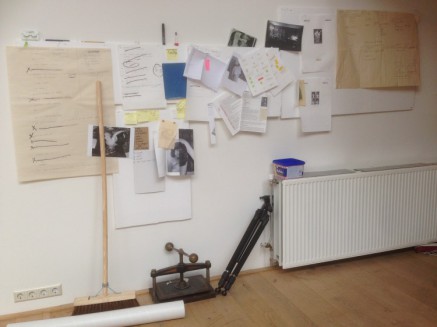
Zee van waanzin / Ocean Of Madness KnackFocus (B), Stefan Vanthuyne
[English translation, Dutch original text in photo below]
[KnackFocus (B), 3 June 2015, p46.]OCEAN OF MADNESS
With a disquieting picture story, Mariken Wessels sheds light on Martha and Henry's dysfunctional marriage which was permeated by perversity.
By Stefan Vanthuyne
"To photograph people is to violate them," wrote Susan Sontag in On Photography. "It turns people into objects that can be symbolically possessed." This troubling idea spreads like a pungent odor throughout Taking Off. Henry my Neighbor, the latest artist's book by Mariken Wessels. With this book she tells the story about Martha, who had been thoroughly objectified by her husband Henry, in a series of about 5,500 apathic looking nude photographs.
Friends of the couple gave Wessels unrestricted access to the archive as well as the study of Henry, who happened to have been Wessels' former neighbor. Furthermore, she gained permission for the free reuse of the materials, among which she also found forty cut-up and twisted (in every sense of the word) collages made by Henry after Martha had teared up many of the pictures and thrown them out the window, before disappearing from his life. Reshaping his wife's image even more to his own perverse taste, Henry made seventeen distorted clay figurines before he moved on, living in the woods for good.
Wessels calls the book "a true picture story about a failed marriage, sexual frustration and voyeurism." The latter in particular raises questions, because it's not just Henry being guilty of that, but Wessels and ultimately the audience too. Then why release it? Paradoxically it was done for Martha, because Taking Off doesn't refer only to the uncountable times Martha took off her clothes, but could also be understood as the courageous act of leaving Henry behind. It takes up barely four images within an ocean of madness, but they're notable through their dramatic quality. Wessels uses them as a small catharsis, the white peacock being the apogee, symbol for a redeemed dignity. Even though Taking Off may tell an alarming story, it's a damn well-made book.
Translated from the Dutch by Taco Hidde Bakker
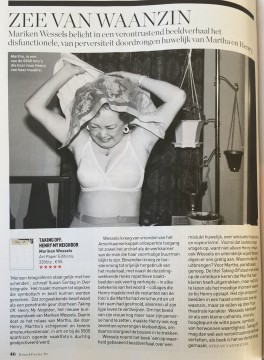
Taking Off, Henry My Neighbor lelitteraire.com
Le voisin américain
Ce livre est le “making off” autant que le “taking off” d’un mariage raté, de la frustration sexuelle et du voyeurisme. Il est constitué de photographies et de collages tirés et conçus à partir d’un immense dossier de nus amateurs. Grâce aux gens qu’elle a rencontrés lors d’un voyage aux Etats-Unis, l’artiste a eu accès à l’atelier et aux archives d’Henry qui lui a accordé la pleine utilisation de son corpus photographique. Elle a créé à partir de là un livre-artiste qui devient un véritable voyage dans la vie d’Henry à travers entre autre la vision de son ex-femme et muse Martha.
Celle-ci semble parfois réduite à un « ustensile » érotique et voyeuriste. Mais, à travers cette vision, Henry voulait créer — au-delà d’un avènement possiblement frelaté — une sorte de nouvelle religion athée et inconsciente qui laisse l’artiste plus que son « modèle » en position de victime d’un genre très particulier : celui de bourreau gentil ou ce que disait Baudelaire : « Je suis la plaie et le couteau / Et la victime et le bourreau ».Mariken Wessels « remonte » l’ensemble des documents iconographiques non sans humour et poésie. Elle met en évidence le Janus à deux faces qu’est Henry : grand prêtre, sacrificateur maladroit et victime sacrifiée. L’artiste prend dans ce face à face un rôle aussi ambigu qu’astucieux : elle n’est pas sans lever des ambiguïtés tout en en laissant d’autres ouvertes.
La créatrice y affirme sa « différAnce » (Derrida) qui lui permet de prendre une place de choix au sein de ce duo infernal. L’artiste par ses recompositions vampirise Henry et sa muse au sein de diverses coupures. Elle est capable d’assumer un rôle particulier et d’affirmer un féminin de l’être qui échappe à la schizophrénie et à la vision idolâtre. Celle qui croit en l’art devient son « apostat» en cultivant une équivoque drôle et subtile. Par la masse des travaux et des mises en scène d’Henry et de victimes consentantes, elle produit le livre-action qui démonte toute une vision « basique » de l’érotisme tout en préservant certains de ses stigmates et de ses traces.
Passionnant et incisif.Jean-Paul Gavard-Perret
Mariken Wessels: Le su et l’insu Salon Littéraire
La photographie semble un art "facile", qui plus est - numérique aidant - chacun peut se prétendre photographe. C’est pourquoi souvent sont considérés comme « photographes » des faiseurs qui ne nous offrent que des « clichés » sortes d’assignats inutilisables parce ces preneurs d’images ne savent pas qui ou quoi ils regardent. Ils ne saisissent rien sinon du pittoresque ou de l’anecdotique qu’ils estiment immortel. Loin de ces fausses archéologies du fugace Mariken Wessels, à l’inverse, a compris qu’il ne faut jamais rechercher le prétendu marbre de l’identité supposée d’un portrait mais sa « terre » friable à coup d’images qui lui échappe. Elle prouve que la photographie, la “ vraie ”, ne mène pas où l’on pense accoster.
Mariken Wessels ne reste jamais à la surface d’une naïveté surfaite. Elle aime explorer des réalités « irréelles » : à savoir celles d’absences qu’il s’agit de recomposer à travers la traque photographique. « He was there” traque la présence d’un homme de manière anthropologique à travers ses lieux et ses indices. Il y à la tout un travail de voyeurisme. Mais il se renverse au sein d’un matériau iconographique comme étranger à lui-même. Les photos sont assez énigmatiques pour laisser le doute sur savoir qui regarde qui… On ne sait plus si le lieu d’exploration est le véritable jardin de l’homme ou s’il se transforme en zoo dans lequel cages et allées des visiteurs sont interchangeables.
Avec « Don't forget » l’artiste néerlandaise crée une manière de remonter les archives de « notre » passé. Celles présentées ici sont montées comme des traces de notre expérience et de notre identité devenues interchangeables. Elles se coagulent et s’enregistrent pas forcément selon un simple principe chronologique. La mémoire ne cesse de s’altérer et l’artiste le prouve par son montage. Elle présente des images enfouies qui certes ne sont pas nôtres mais permettent de faire comprendre les tourments et les accidents de mémoire. Il n’y a plus de bouée de l’identité mais plutôt son aliénation proposée par des images oubliées que l’inconscient aurait caviardées.
Pour son projet « He was here » l’artiste est allée chercher sur Internet un homme qui appartenait à son propre passé. L’ensemble recrée son environnement. L’homme est convoqué. Mais jamais par sa présence directe. Là encore la bouée de l’identité est donc percée. Reste le travail de la mémoire et de l’imagination de la photographe. Elle inscrit avec cet être une étrange dialectique qui transforme le passé en un incessant devenir. Le tout crée une nouvelle mémoire voire un paradoxal futur antérieur. Preuve qu’en grattant sous la surface identitaire se découvre une masse de connotations et de significations et ce jusque dans la vision de l’éros blanc que l’artiste métamorphose en noir.
Jean-Paul Gavard-Perret
Stories behind favourite photographs romka #8
Sneak peak new publication Easter Trouble Press
Sneak peak at another new publication: Easter Trouble Press Cafe, 2012. A collection of interviews with some of today’s most respected photographers and photobook makers: Rafal Milach & Ania Nalecka, Calin Kruse, Christian Patterson, and Mariken Wessels; also included is a special edition print by photographer Fette Sans. It will be released in a couple days at Offprint Paris.
Boekbespreking Don't forget Cadoc.nl
Na Queen Ann. P.S. Belly cut off had ik een idee van hetgeen ik kon verwachten van het volgende boek van Mariken Wessels: het onverwachte. Wat dat betreft stelt Don't forget niet teleur. Zelfs na meerdere malen het boekje aandachtig te hebben bestudeerd, blijf je met knagende vragen achter. Wat heb ik net gezien, wat betekent het, wat is het verhaal, IS er überhaupt een verhaal? En last but not least: wat mogen we volgens de titel niet vergeten?
Om te beginnen de fysieke feiten. Voor me ligt een boekje, een leporello om precies te zijn dat gesloten 18 centimeter hoog en 13 centimeter breed is. Uitgevouwen is de breedte vertienvoudigd tot ongeveer 1.30 meter. Op iedere bedrukte zijde staan één of meerdere reproducties van polaroidopnamen. De polaroids zijn op een uiterst bescheiden formaat afgedrukt. Mét witrand meet de polaroid ongeveer 4 bij 4 centimeter en het daadwerkelijke beeld is niet veel meer dan 3 bij 3 centimeter.
Afgaande op de strandscènes, de korte broeken en het mooie weer, gok ik dat het vakantiekiekjes zijn. Maar anders dan bij karakteristieke vakantiefoto's zie je hier geen vrolijkheid of vertier. Een man alleen wandelt in het bos, staat in tropenoutfit(?) voor de zee of zit gehurkt in de branding. Op één foto lijken drie personen te staan: twee vrouwen die een derde persoon uit zee het strand op trekken. Maar op een afbeelding van drie bij drie centimeter is dat meer gissen dan zeker weten. Sommige opnamen zijn helemaal van figuranten ontdaan en zie je alleen een beboste heuvel of een fontein in een stadspark. Ook de kleuren hebben hun sprankelijkheid verloren en ademen dezelfde somberheid als de voorstellingen.
Op de eerste bedrukte zijde van het gevouwen boekje zien we een op het eerste gezicht ongeordende stapel foto's liggen. Een negental ongeveer. Op de bladzijden daarna komt er systeem in de foto's. Ze worden met elkaar gecombineerd en in een enkel geval zelfs bewerkt door middel van een uitsnede of krabbel met een viltstift. Onduidelijk is wat de overwegingen zijn geweest bij deze combinaties. Gaat het hier om een chronologische volgorde? Of is er slechts gespeeld met compositie?
En dan begint de zoektocht naar betekenis. Een zoektocht die begint met een groot aantal vragen waar je geen antwoord op zult krijgen. Wie maakte deze foto's? Was het Mariken Wessels zelf of heeft ze deze ergens gevonden? Horen de foto's wel bij elkaar? Wie is de man die telkens wat verloren op de foto staat? Wat voor betekenis hebben de bewerkingen die enkele foto's hebben ondergaan?
De hamvraag is natuurlijk wat we niet mogen vergeten. De foto's bieden weinig aanknopingspunten. Ze zijn tegelijkertijd te algemeen en te persoonlijk. Het is het lot dat de meeste foto's in onze eigen privéalbums ondergaan: het zegt alleen onszelf en een hele kleine kring om ons heen iets. Voor anderen zijn het betekenisloze foto's. Voor jezelf zijn het de kostbaarste bezittingen. De dingen die je redt uit een brandend huis. Je vreest dat met het verlies van de foto's ook je herinneringen worden weggevaagd. In die zin zijn de foto's visuele ankers die er voor zorgen dat het verleden niet wegdrijft. Maar wat als je geheugen je in de steek laat? Dan ben je net als iedere onbekende die geen enkele betekenis kan verbinden aan de foto's. Het worden contextloze afbeeldingen die door hun strikt persoonlijke waarde, inhoudsloos zijn geworden. Je ziet wat ieder ander ziet: strand, mens, bos, huis.
Deze geslaagde publicatie smaakt naar meer en we worden op onze wenken bediend: Don't forget is namelijk het eerste deel van een vijfdelige serie. Met dit eerste deel maakt Mariken Wessels een enigmatische (en aantrekkelijke!) start van een verkenningstocht in de waarde en betekenis van venaculaire fotografie.
De intimiteit van het boek kunstenaarsboek.blogspot.nl
Het begrip "found footage" is verbonden met de werken van Mariken Wessels. Het begrip is vanuit het cinemagenre ontstaan. Het wordt gehanteerd waarbij de film zich voordoet als een samenraapsel van 'gevonden' materiaal. Ook binnen de fotografie heeft dit genre nu een plaats gekregen. Hierbij verandert de fotograaf van iemand die foto’s maakt naar iemand die selecteert en ordent. Hierdoor wordt het bestaande beeld uit zijn oorspronkelijke context gehaald en het in een nieuwe context en beeldvorm geplaatst.
Het manipuleren van beelden vormt ook een belangrijk deel in het oeuvre van Wessels. Deze beelden komt ze tegen na een zoektocht of worden door haar gemaakt. De beelden worden later gerangschikt en zo komt er een vaste volgorde in. Het komt vanzelf bij elkaar en er wordt niet sterk aan een verhaal gehouden. De beelden maken het verhaal en het verhaal de beelden, waarbij alles om haar heen een inspiratiebron is. In feite is zij niet in de eerste plaats in het materiaal geïnteresseerd maar in de perceptie ervan. Het proces van het verwerven, interpreteren, selecteren en organiseren van zintuiglijke informatie. Centraal staat bij haar de gedachte dat de interpretatie van beelden een creatieve daad op zichzelf is.
De wereld om haar heen is een belangrijke inspiratiebron. Ook de schrijvers Margaritte Duras en Georges Perec zijn voor haar grote inspiratiebronnen. Hiermee heeft Wessels een verbondenheid. Beide schrijvers beschrijven met veel gevoel hun nauwkeurige observaties, opsommingen van de mens en zijn omgeving. Bij Wessels komen deze beschrijvingen als een rode draad terug in haar werken.
Wessels heeft in 2008 de Rietveld Academie in Amsterdam afgerond. Kunstenaar is eigenlijk haar tweede beroep, zegt ze. Haar eerste beroep is actrice. Eind jaren tachtig heeft ze de toneelschool gedaan. Op de Rietveld Academie heeft ze de vrije richting gedaan, ofwel 'autonoom'. Wessels gebruikt vaak het boek als representatievorm voor haar werken. Dit vanwege de intimiteit van het boek. De intimiteit wordt door haar opgezocht. Zij ziet het boek als een object. De beweging van het omslaan van de pagina's maakt dat het object dichtbij bij de persoon is. Een boek geeft een ritme en een beweging aan die zij wilt uitdragen. Alles telt mee in de aanraking. Zwaarte, dikte en de structuur van het papier van het boek. Sommige delen/series uit haar boeken kunnen ook aan een muur deze werking hebben. De serie werkt dan autonoom. Een heel boek aan de muur mist de intimiteit en het object maar kan wel werken als representatie van het boek.
Wessels maakt ook foto's, ruimtelijke installaties, sculpturen, video's of een cross-over van deze media. Het boek is daarnaast ook een manier om haar creatieve ideeën uit te drukken. Boeken geven voor haar een juiste vertaalslag voor de beelden. De opeenvolging van beelden, seriematig is een belangrijk aspect. Een boek ziet zij ook als een soort van opslag/geheugen van gebeurtenissen/systemen etc. Dit spreekt haar aan. Een boek kan voortbestaan en verlengt een mensen leven. Het maken van een boek heeft vele aspecten waarin zij haar kan uitdrukken. De vormgeving, papierkeuze etc. doet zij zelf en draagt bij tot hetgeen wat zij wilt vertellen. Haar karakteristieke stijl in relatie met het boek wordt zo goed uitgelegd en getoond.
Een prachtig voorbeeld is het kunstenaarsboek Elisabeth - I want to eat - (Alauda Publications, 2010). Het boek werd in 2008 door de kunstenaar zelf uitgegeven in kleine oplage van 150 en is in 2010 herdrukt. 'Elisabeth - I want to eat - ' is gebaseerd op een collectie anonieme foto s, brieven en kaarten van een jonge vrouw, die de kunstenaar in een winkel in de Hendrik Jacobszstraat in Amsterdam vond. Wessels eigende zichzelf het materiaal toe door het opnieuw te fotograferen, bewerken, rangschikken of soms zelfs aan te vullen met eigen materiaal. Het is overigens wel heel moeilijk te beoordelen waar de hand van de kunstenaar te zien is. Welk stuk is eigenlijk authentiek? Ze tonen een jonge vrouw die uitdagend voor de camera poseert en zichzelf letterlijk en figuurlijk blootgeeft. Het zijn doorleefde, door talloze krassen en stofjes aangevreten zwart-witfoto s, waarin exaltatie en melancholie samen lijken te gaan. Naast de foto's toont het boek een serie aan Elisabeth gerichte prentbriefkaarten en brieven, waaruit de lezer geleidelijk opmaakt dat haar leven is ontspoord. Religie, orde, regelmaat, het loslaten van de fixatie op ambitie; dat zijn kortweg de ingrediënten waarmee een familielid haar wil 'genezen'. Maar ook het leven van de raadgever zelf kent nogal bizarre wendingen: wie is er eigenlijk gekker? De met zoete aquarelkleuren ingekleurde, idyllische landschappen op de kaarten, staan lijnrecht tegenover de ontwapenende directheid van Elisabeth's blik in de camera. In het boek zijn losse, dunne vellen gekleurd papier ingelegd, waarop de brieven en kaarten aan Elisabeth bijna een appel aan de lezer zelf worden. Het boek dankt echter haar titel aan de enige opgenomen brief van Elisabeth zelf, gericht aan een onbekende vriend: '(...) The last time I saw you it was nice and I felt much better. Are you still in Brussels? I don t know but I liked the house you lived and the streets there. I want to eat' (bron: Volskrant 2010).
Een ander treffend en vergelijkbaar voorbeeld is het kunstenaarsboek Queen Ann. P.S. Belly cut off (Alauda Publications, 2010, vormgeving samen met Esther Krop). Ook hier wordt gebruik gemaakt van een gevonden privéarchief van foto’s, kaarten en brieven. Het resultaat is een beklemmende fotoroman van een verstoord vrouwenleven met agressieve collages en krampachtige pogingen om via foto’s het zelfbeeld te verbeteren (bron: Zefir7). De suggestieve, intieme, associatieve kracht van 'de gevonden' historische foto’s en andere persoonlijke documenten, maar ook de beeldsequentie als geheel, worden door Wessels met uiterste precisie geregisseerd. Daarbij zet zij het boek op bijzondere wijze in als autonoom medium. In 'Queen Ann. P.S. Belly cut off' ontspint zich een melancholisch verhaal over een vrouw wiens leven beheerst lijkt te worden door haar zwaarlijvigheid. Toch wordt de kijker nooit een voyeur. 'Queen Anns' vreemde en aandoenlijke fotocollages van zichzelf, die het verlangen naar 'een ander zijn' uitdrukken, versmelten met het beeld dat het boek van haar oproept. In het contrast van de foto’s wordt een pijnlijke onverenigbaarheid zichtbaar tussen heden en verleden in het leven van Ann en de status van schoonheid. Wessels geeft haar protagonist als het ware een nieuw leven, waarbij de scheiding tussen feit en fictie wordt opgeheven en er sprake is van een 'hogere' werkelijkheid (bron: Alauda Publications).
Beide boeken hebben foto's uit twee verschillende persoonlijke archieven als vertrekpunt. Hier wordt de onderlinge verhouding van de personen blootgelegd. Wessels registreert de persoonlijke documenten met uiterste precisie waarbij de scheiding tussen feit en fictie vervaagt. In een kruising tussen beeldroman en autonoom fotoboek geeft zij een intieme blik in het raadselachtige leven van haar anonieme personages. Met beide boeken creëert Wessels een nieuwe spanning tussen het kijken en bekeken worden. Het idee van een familieportret benadrukt ook het concept. De interpretaties van beelden verschillen van persoon tot persoon en ook speelt de context een belangrijke rol. De boeken zijn in een mooi groot formaat uitgegeven en maakt de verbondenheid tussen de kunstenaar en het lezerspubliek daardoor nog intenser.
Wessels is gefascineerd over de werking van het geheugen en wat herinneringen zijn. Kun je ze zo manipuleren en zijn ze zo waar? Ons geheugen kan worden gezien als het archief van ons verleden. Het is het centrum van onze identiteit, onze persoonlijkheid en onze ervaringen. Ons geheugen is minder controleerbaar dan we misschien willen. Wat zouden we moeten doen als we dingen juist willen vergeten? Waar bevinden zich de onderdrukte en verdrongen herinneringen? Als we niet meer in staat zijn om deze herinneringen naar boven te halen, zijn deze gebeurtenissen dan wel echt gebeurd? Deze vragen vormen het uitgangspunt voor het boek Don't forget (Eigen publicatie 2012, beperkte oplage, gen./ges).
Herinneringen spelen ook een belangrijke rol in het kunstenaarsboek Who (Eigen publicatie 2012, oplage 150). Het boek is een reconstructie van een dierbare die is overleden. Wessels had geen foto's meer van hem. Alleen haar eigen herinneringen. Om deze herinneringen te laten bestaan heeft zij een boek van gemaakt. Hierdoor ontstaat voor haar een klein beetje grip op het leven. Zij is op zoek gegaan naar foto's op internet die passen bij de juiste beelden die zij in haar hoofd had. De foto's die het meest bij haar werkelijkheid kwamen zijn in dit boek verwerkt. Het boek is zo opgebouwd dat je bij de persoon steeds dichterbij komt. Eerst buiten dan langzaam naar binnen. Wessels veroorzaakt hiermee een aanhoudende dialectiek tussen het geheugen en de verbeelding. Het uiteindelijke resultaat is een weergave van nieuwe herinneringen waardoor een nieuw verleden wordt gecreëerd.
Hiermee bereikt Wessels op een intieme manier een werk dat een één-op-één relatie schept tussen de kunstenaar en haar publiek. Zij kiest er voor om een kunstenaarsboek te maken. Een bewust besluit dat het werk niet aan een muur in een museum komt te hangen. Er kunnen niet meerdere mensen tegelijk er naar kijken. Door het kunstenaarsboek vast te houden en door te bladeren, door te lezen, ontstaat er zo een bijzondere relatie tussen kunstenaar en publiek, waar beide partijen door worden beïnvloed in de manier waarop ze het werk benaderen. Een eigenschap die ervoor zorgt dat het kunstenaarsboek op de grens komt te staan van twee disciplines: beeldende kunst en boeken. Daarmee kan het terecht als object worden gekenmerkt. Een object van schoonheid en troost.
Limited-Edition Images Washington Post Express
The books on display in the Indie Photobook Library include limited-edition works by both professionals and amateurs.
It’s not exactly the Library of Congress, but the Indie Photobook Library is fast becoming one of Washington’s more interesting small collections. Founded just last year by Larissa Leclair, the archive has already grown to more than 600 photography-related books issued by the tiniest of small publishers.
“These kinds of books are really challenging the traditional publishing paradigms,” says Leclair, a locally based independent curator and photographer. “Even for me, who’s trying to follow everything, there’s just too many to keep track of.” Some highlights from the library are on display through Nov. 20 at the Corcoran Gallery’s free exhibition space, Gallery 31, where a public reception will be held Thursday from 6 to 8 p.m.
Selections range from simple magazines to opulent volumes complete with slipcovers and creamy paper. Some showcase images by students, notably from the Netherlands, a hotbed of indie photobooks. Others feature the work of professionals, such as well-known Australian Magnum photographer Trent Parke. His collection of street shots, published in a 1,000-copy edition, sold out in one day.
The show’s rarer and more delicate books are in a glass exhibition case, but others can be taken off the wall and handled. Each work also has a QR code that can be scanned with a mobile phone to access more information about it. And the space has been outfitted with chairs for the show so people can settle in and inspect a volume page by page.
One thing Leclair appreciates about the show is that “it wasn’t curated by me. I like the opportunity to see which books resonate with other people.” Curators Muriel Hasbun and Susan Sterner (both Corcoran staffers) and Pablo Ortiz Monasterio, a visiting artist from Mexico, chose what Leclair calls “books that have a sense of place.”
Most of the works on view are limited editions or were produced by print-on-demand services. To rate a place in her collection, Leclair says, “There has to be more than one. But even if there are just five copies out there, I’m interested in that book.”
Elisabeth-I want to eat- omfotoboken
Jag blir förbryllad redan av omslaget. Ett svartvitt porträtt. Klippt i två delar rätt över näsryggen och sen ihoptejpat igen. Det föreställer en ung kvinna. Hon heter Elisabeth och hon mår inte bra. Det framgår av de vykort och brev som några släktingar har skickat till henne.
We got on each other´s nerves but instead of just quietly leaving the room you start to swear, throw things and kick. What do you achieve by it?? It´s a breach of the peace. The police have to be called, who usually know what to do to calm things down, cell, hospital, injections.
Elisabeth bodde antagligen någonstans på den holländska landsbygden.Troligen tycker hon om att fotografera. Bilder på hus, kanaler och landskap. Två kvinnor står i blåsten och tar adjö av någon. Fotografierna är repiga, dammiga och har framkallningsfläckar. Trots att motiven i sig är neutrala så infinner sig en stämning av något hotande, något som inte står rätt till.
I mitten av 60-talet är Elisabeth i tonåren, hon fotograferar sin familj och sig själv. Hon är i den åldern när man undersöker vem man är. Hon fotograferar sig själv naken, betraktar förvånat sina bröst i en spegel. Målar porträttbilderna med röd tuchpenna.
Sedan, på sjuttiotalet, inga mer fotografier. Bara oroliga brev från släktingarna; …with exercise and frech air we see that irritations and sadnesss disappear. Talk to Doctor E, take his advice.
Make your mouth into a spout, whistle and try some little tune.
Mariken Vessels har hittat fotografier och ett antal brev på en loppmarknad på Hendrik Jacobszstraat i Amsterdam. Hon delger oss Elisabeths historia i redigerad form. De holländska släktingarnas tafatta försök att hjälpa den då trettioåriga kvinnan är översatta till engelska.
Bokens sista brev är skrivet av Elisabeth själv. Det verkar som om det legat undanstoppat i en väska eller plånbok och aldrig blivit avsänt.Papperet är slitet. Det avslutas med orden I want to eat.
Vad hände med Elisabeth sedan? Hon borde vara i sextioårsåldern nu. Är hon i livet?
Vi får inte veta så mycket om den holländska kvinnan, men de brottsycken av hennes liv vi får se är uppskakande.
Den fråga jag tycker är mest problematisk är den etiska aspekten. Kan man göra så här? Jag känner mig som om jag smygtittar in i en annan människas hemligheter. Skändar vi Elisabeths integritet genom att vi blickar in i hennes liv? Found photos är förvisso en hel egen genre inom fotoboksvärlden men i händerna på t.ex Eric Kessels blir historierna en slags skrattspeglar, den här historien är tragisk.
Eller finns det ingen anledning till upprördhet i en värld där vi alla kan googla fram det mesta om våra medmänniskor?
När jag söker uppgifter om bokens upphovsman Mariken Vessels, hittar jag ett uttalande som gör mig än mer frågande; - I construct my own story with found material. Their past receives a fresh layer. I borrow their memories. This work is also about communication, or the lack of it, time, and the effort of people to get a grip on life and hold on to time.
Är historien om Elisabeth verklighet eller dikt? En bok som väcker så mycket frågor är naturligtvis väldigt intressant.
Boken vann en Silver Medal Book Award på Fotofestival di Roma 2009.
Tommy Arvidson, fotograf och skribent i Malmö.
Vecka 45 på dagensbok.com
Tommy recenserar Mariken Wessels Elisabeth - I want to eat. Hur mår Elisabeth egentligen? Varför är hon på sjukhus? Mariken Wessels berättar en gripande och tragisk historia. Det är en bok som består av bilder och vykort från 70 talet som hittats på en loppmarknad, som redigerats ihop till en berättelse, sann eller påhittad.
De vijf betaalbare kunstwerken van de maand nrc.next
We Like Art wil graag de naar binnen gerichte kunstwereld een beetje opschudden. Ze signaleren en bespreken kunst van € 0 tot € 1.500 en geven aan waar je het voor welke prijs kunt kopen (eventueel met deKunstkoopregeling). Op de nextblog selecteert gastblogger Michiel Hogenboom maandelijks een favoriete top vijf, vandaag de beste werken van de maand augustus...
4. Mariken Wessels
In het nieuwe ‘bloemenwerk’ van Mariken Wessels, raakt zij een actuele en gevoelige snaar, en gaat zij in op de terugkerende en opvallende trend om, bij een daad van geweld met te betreuren verliezen, een plek te zoeken voor bezinning, voor bloemen, kaarsjes en knuffels.In Diepenheim laat Wessels de sculptuur Keepsake (2011) zien, een stapeling van 16 lichtboxen met bloemenprints, in totaal zo’n 3.70 meter hoog, en 2 meter breed en diep. Ze gebruikte hiervoor oude, gevonden foto’s van bloemen, die ze met de hand bewerkte en verwerkte in deze installatie. Wessels geeft de bloemen, die na het afsnijden natuurlijk al afsterven, een tweede leven, de oude foto’s krijgen een nieuwe laag en een nieuwe betekenis.
Op zondag 4 september is er een gesprek met Mariken Wessels en de andere kunstenaars uit ‘Wat zijn mij wolken nog en wegen’ bij Diepenheim. De gespreksleider is journalist en documentairemaker Michiel van Nieuwkerk, start 15.00 uur.
"Elisabeth - I Want to Eat." American Suburb X
Mariken Wessel's stunning book, Elisabeth - I want to eat. (2010, Alauda Publications), is a tour inside the mind - relentless and dark, heart wrenching, beautiful and complex. Made with a box of found photographs from a shop in Amsterdam and put together with sophistication and maturity, a lesson is here. "Material" is out there in the world to be used, one can go inside or outside, the possibilities now are endless. A "world" can be created out of a box, limits are not really present... if they are, the only limit is you.
Uit de serie Keepsake, 2011 we like art!
Al vaker bespraken we hier werk van Mariken Wessels (1963, Vlaardingen). Momenteel is zij met splinternieuw werk te zien in een groepstentoonstelling bij Kunstvereniging Diepenheim en in een solo-tentoonstelling met eerder door ons besproken series bij Kominek Gallery in Berlijn! De tentoonstelling bij Diepenheim met de titel, Wat zijn mij wolken nog en wegenloopt tot 18 september. In de tentoonstelling ook werk van Antoinette Nausikaa, Femmy Otten, Ulrike Rehm en van de hier recent uitgelichte Linda Nieuwstad.
In het nieuwe ‘bloemenwerk’ van Mariken Wessels, raakt zij een actuele en gevoelige snaar, en gaat zij in op de terugkerende en opvallende trend om, bij een daad van geweld met te betreuren verliezen, een plek te zoeken voor bezinning, voor bloemen, kaarsjes en knuffels. De beelden van de bloemenzee in Oslo maken indruk. Het lijkt een volksritueel te zijn geworden. Gevoel van onmacht wordt getoond en de woede over het onrecht wordt omgezet in acceptatie door het leggen van bloemen.
In Diepenheim laat Wessels de sculptuur Keepsake (2011) zien, een stapeling van 16 lichtboxen met bloemenprints, in totaal zo’n 3.70 meter hoog, en 2 meter breed en diep. Ze gebruikte hiervoor oude, gevonden foto’s van bloemen, die ze met de hand bewerkte en verwerkte in deze installatie. Wessels geeft de bloemen, die na het afsnijden natuurlijk al afsterven, een tweede leven, de oude foto’s krijgen een nieuwe laag en een nieuwe betekenis. Basje Boer verwoordt het als volgt in de prachtige nieuw verschenen Keepsake-publicatie: “Deze sculptuur herbergt niet alleen de dood, maar schenkt ook licht en hoop. De installatie is gelijktijdig theatraal en abstract. Wessels vertaalt menselijke gevoelens in afstandelijke symbolen; zij zet haar verbazing om een ogenschijnlijk nieuw cultureel fenomeen om naar een grootse sculptuur dat sentiment vervangt door beeld, zonder te verworden tot kitsch. Zij confronteert en stelt vragen, maar veroordeelt niet.”
De veertien verschillende bloemenfoto’s uit de Keepsake-sculptuur, zijn te verkrijgen in een oplage 5, op de mooie maat 50 x 70 cm. Eventueel zijn de foto’s ook op lichtbox te koop, dus als afzonderlijke onderdelen van de sculptuur.
Op zondag 4 september is er een gesprek met onder andere Mariken Wessels (en de andere kunstenaars uit ‘Wat zijn mij wolken nog en wegen’) bij Diepenheim. De gespreksleider is Michiel van Nieuwkerk (fotograaf en documentairemaker), het begint om 15.00 uur.Dear Edward, I am much better now posterous
Only one letter is written by Elisabeth herself, it appears a few pages from the end of the book, it begins, ‘Dear Edward, I am much better now. I am in hospital, but I think I can go out soon, maybe,’ the last line of this short hand written note reads, ‘I want to eat,’ the three photographs that follow this poignant note, and on which the book closes show an expanse of block paving bathed in sunlight, whilst in the shadow we see it is surrounded by a high wall and and thick vegetation. This closing chapter of Elisabeth’s life suggests it ends in suicide, but Wessels emotive work raises more questions than it answers, and it is for each viewer to draw their own conclusion in this complex construct.
In September 1972, Aunt Hans writes again, ‘I’m sure will get better in the most beautiful and peaceful surroundings surrounded by caring and clever people,’ she continues, ‘You’ve worked hard all your short life and had a lot to deal with, no wonder you couldn’t cope with any more,’ suggesting Elisabeth’s life had entered another dark period, that the viewer of this emotionally powerful work can interpret in may different and possible ways.
As we interpret the photographs, a narrative begins to form in the minds eye, with the letters offering occasional glimpses into Elisabeth’s life, a life that clearly took an unexpected turn at some point, with periods of turmoil, and its share emotional baggage. In a letter dated 20 February 1972, Aunt Hans writes, ‘Darling, as you can imagine M. and I were often thinking of you. Tonight I wondered why its is you feel so lonely... Everything will be all right, provided you can restrain your feelings, your harsh opinions and witty remarks; the medicines that were prescribed for you can help.’
The early images slowly give way to reveal a young woman posing in front of the camera, the portraits shifting between both formal, and candid poses — in some she appears bare breasted — which are juxtaposed with various letters and postcards addressed to Elisabeth. The constructed sequencing presents an interpretation of Elisabeth’s life, with the narrative gently unfolding, we are introduced to a young woman whose childhood was largely dark and gloomy, with only the occasional glint of happiness.
Opening with a series of rural landscapes, theatre and family snapshots, the black-and-white images are marked and layered with the passage of time; scratches, dust marks, rips and folds, proliferate in this work, ‘blending together both the exaltation and melancholy recorded in them.’
Discovering a collection of photographs, letters and postcards belonging to an anonymous young woman in a store on Amsterdam’s Hendrik Jacobszstraat, artist Mariken Wessels appropriated the material, sequencing the images and letters to form, Elisabeth — I want to eat, a small edition artists book which she self-published in 2008 to great critical acclaim, and is now included in the Museum of Modern Art, New York's permanent collection.Only one letter is written by Elisabeth herself, it appears a few pages from the end of the book, it begins, ‘Dear Edward, I am much better now. I am in hospital, but I think I can go out soon, maybe,’ the last line of this short hand written note reads, ‘I want to eat,’ the three photographs that follow this poignant note, and on which the book closes show an expanse of block paving bathed in sunlight, whilst in the shadow we see it is surrounded by a high wall and and thick vegetation. This closing chapter of Elisabeth’s life suggests it ends in suicide, but Wessels emotive work raises more questions than it answers, and it is for each viewer to draw their own conclusion in this complex construct.
In September 1972, Aunt Hans writes again, ‘I’m sure will get better in the most beautiful and peaceful surroundings surrounded by caring and clever people,’ she continues, ‘You’ve worked hard all your short life and had a lot to deal with, no wonder you couldn’t cope with any more,’ suggesting Elisabeth’s life had entered another dark period, that the viewer of this emotionally powerful work can interpret in may different and possible ways.
As we interpret the photographs, a narrative begins to form in the minds eye, with the letters offering occasional glimpses into Elisabeth’s life, a life that clearly took an unexpected turn at some point, with periods of turmoil, and its share emotional baggage. In a letter dated 20 February 1972, Aunt Hans writes, ‘Darling, as you can imagine M. and I were often thinking of you. Tonight I wondered why its is you feel so lonely... Everything will be all right, provided you can restrain your feelings, your harsh opinions and witty remarks; the medicines that were prescribed for you can help.’
Queen Ann. P.S. Belly cut off The PhotoBook Journal
Mariken Wessels has again created another interesting and complex narrative based on found photographs in conjunction with borrowed memories for her photobook Queen Ann. P.S. Belly cut off. Wessels’s earlier book, which was re-published by Alauda Publications, Elisabeth – I want to eat, was an investigation into the dichotomy between a normal external appearance and internal downward spiral and chaos. In Queen Ann, the discourse has been reversed, where the subject of this narrative is in denial with her external reality as to who she has become.
Wessels, who orchestrates this semi-fictional story about Anne, (Dutch name is Anika), combines found photographs to mesh with those appropriated from Anne. It is implied that Anne is responsible for defacing, decorating or otherwise attempting to alter the obvious reality of who she is at the moment. Wessels investigates how a person will choose denial; avoiding accountability and dealing with the consequences of personal choices.
As with her earlier book Elisabeth, this story unfolds sequentially, focusing on the attractiveness of her mother when she was younger. The earlier portrait of her mother has subsequently been marked over with dark lines and scribbles as marks of rejection. The there is a transition to Anne when she was young, a pudgy young girl standing next to her attractive mother, but who now is decorated to resemble a clown, while Anne has an additional hand-colored garment, what Anne describes as a sailor suite, but effectively to conceal her size even at that age.
When Anne becomes older, there appears to be a dark episode, perhaps a dream or even a nightmare, narrated by a set of blurry black and white images. The borders have thick black edges, almost engulfing the image, adding an ominous and mysterious element. Anne is running nude with her mouth gaping open, perhaps mid-scream? It is a traumatic event, perhaps even life altering, an event that is so traumatic as to be suppressed, and has subsequently emotionally scared her for life. In one frame, Anne appears to a willing participant in this sexual event, that this might have been an extra-marital fling, and now her hidden scarlet letter? Wessels opens a question about repressed and unspoken events that have lasting consequences but are difficult to deal with when concealed, dark secrets that can not be mentioned, to anyone.
It is after this dark event, that we witness the rapidly increasing size of Anne, who appears to have little or no control over her situation. Now in these subsequent photographs, Anne has been hand-coloring hats, scarves or altering her make-up to clownish proportions as well as attempting to conceal her overweight girth. The act of altering these photographs introduces an underlying tension and friction between Anne and the viewer, as the viewer becomes engulfed with the obvious subterfuge.
Wessels increases the complexity of this book with the inclusion of a sealed glassine envelope, which the translucency is sufficient to be able to discern that there are five individual photographs enclosed. The question; is it necessary to open the envelope and examine the additional photographs? And what consequence would that act have in providing clues and understanding to this narrative? The alternative is keep the envelope sealed; only to examine the photographs through the glassine envelope to attempt to gain further information?
Metaphorically, the photographs in the glassine envelope are similar to photographs that are not in a glassine envelope, only that with the photographs in the glassine envelope; there is a realization that only part of the information can be obtained. When looking at an unencumbered photograph, we suppose that all of the information is readily available, which in reality it is not. The photographs in the glassine envelope provides the same limited information as one that is out of the glassine envelop, we just are not aware of that condition, much as we are not aware of what Anne is concealing and not fully divulging.
As Wessels narrative evolves towards the conclusion, she includes another decorated photograph by Anna (Anika), who pens within the margins a very rhetorical question; Ben ik nog te redden? (Is there any hope for me?) As with any rhetorical question, this and the questions raised by this book proceed unanswered.
Identical in size to Alauda Publications edition of Wessels’s Elisabeth – I want to eat, the book has stiff covers with perfect binding, with all of Anne’s handwritten notes translated from Dutch into English, accompanied by a sealed glassine envelope containing what appears to be five photographs. Douglas Stockdale
Elisabeth – I want to eat The PhotoBook Journal
In 2008 Mariken Wessels self-published her small print edition photobook Elisabeth – I want to eat. This book then went on to win the Silver Medal For Books at the 2009 FotoFrafia, The Festival Internazionale di Roma. Last year, Esther Krop and Alauda Publications re-issued Elisabeth – I want to eat, which is the book that I am discussing here. I have not seen Wessels original book, so I will not attempt to provide a comparison of the two editions.
Firstly I can state, this is an interesting artists book. Wessels is transparent about the fact that she is an accumulator, collector, director and creative spirit behind this book of found photographs, postcards, and other assorted written narratives. The orignal found text is written in Dutch and Wessels has gone on to translate and layer English translations on semi transparent pages that are laid in loose, not bound, within the related book spreads. The loose translation pages provides this book with a nice artistic touch, perhaps keeping in line and spirit with her earlier hand crafted self-published edition.
Second, I found the book to have a quirky cadence and sequencing of the photographs and textual narrative. I have found this semi-fictious story to be very strange and vague, which allows numerous alternative readings. The photographs, cards and letters are possible objects that occurred from real events, but the resulting mash-up that Wessels is creating to frame this narrative is all fiction.
Using found photographs, Wessels does not take any actions to clean up these black and white photographs, e.g. change the contrast, improve the sharpness or clean the negatives of lint and debris. I belive that the poor and grimy condition of the photographs builds on and further supports the underlying sense of darkness and despair that afflicts Elisabeth, the main character of this story.
This book appears to be the diary of Elisabeth, the subject of this story. To read into these photographs and construct one possible narrative, I found Elisabeth’s up-bringing indistinct and marginal. Her childhood is dark and gloomy with small glimpses of happiness, but then key family members disappear (literally cut out). Her mother was a saint, but her father, who has separated from the family, was stern and disciplinary, perhaps abusive. There was a brief time where Elisabeth found happiness, as the theater photographs are perhaps the most clear and best rendered. What follows appears to be some really mixed emotional baggage with the mash-up of photographs of Elisabeth in the mix of topless and dressed portraits. While appearing to smile and appear happily animated, the photographic quality of the images is poor; dark, low contrast (low self-esteem?), dirty and gritty, implying an underlying dislike of the apparent conditions. In one photograph, she stands topless facing the camera, coly smiling with her hands apparently on her hips, but the features of a clown face have been awkwardly added, creating an awkward tension and seemingly contradictory narrative.
Then there is a shift to a more formal series of portraits with the third photograph of the short series in which her face is concealed. The letters and post-cards from well-meaning Aunt Hans are attempting to be uplifting and supportive to Elisabeth, but with an odd structure and rambling narrative, perhaps old Aunt Hans is more of an issue than her well-meaning letters portray? Finally a close, with a strange things seemingly suspended in a darkly closed in space, perhaps a back yard. In Jeffery Ladd’s review of this book, his take away is that Wessels ending implies a suicide and the passing of Elisabeth or her spirit.
All in all, this book is ripe for multiple interpretations, with more questions than answers. The book has stiff covers with a glued in binding. The text is Dutch, with English translations loosely laid in. Douglas Stockdale
Hedendaagse kunst / Contemporay Art Metropolis M
In the April/Mei issue of Metropolis M an article appeared on the Dutch photo book. Read the full article in PDF here.
Larissa Leclair's Words & Picks

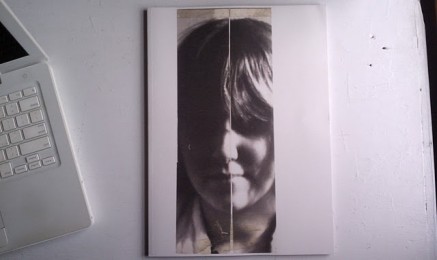
Grapehouse is so pleased and honored to announce this guest post by Larissa Leclair, founder of the Indie Photobook Library:
I remember reading the grapehouse blog post that commented on the number of "best of" lists for photography books that focused primarily on work by male photographers. It prompted me to take a look back at my own "best of" list, on photo-eye and my extended list, to see how it compared. I have to admit, on the surface, my list was not much better - highlighting only one book from a female photographer, Andrea Stultiens, out of ten on the photo-eye list and two female photographers, Andrea and Isa Leshko, on the extended list out of twenty or so. However, women are represented in all of the collaborative publications chosen - Get Off My Lawn, Tell Mum Everything is ok, and 10. Four out of ten is better. So what does this say?
In the context of my own list, the books selected for photo-eye drew specifically from the permanent collection of the Indie Photobook Library. The iPL has an open submission policy, where obviously both men and women are equally free to be part of the library. So with the pool of books to choose from already predetermined by what had been sent to the Indie Photobook Library, I visited the master list of photographers for the iPL to survey the breakdown of titles and realized a few things. Women are represented in the iPL by far fewer titles than men. And a large number of those women are represented as part of collaborative publications rather than singular titles. How does this microcosm of study in the iPL reflect the larger pool of self-publishing?
Phaedra and I exchanged emails and she asked many insightful questions on the topic of women and their role in the self-publishing revolution. Many to which I don't have an answer. What I do know is that self-publishing has made it a level playing field for everyone. One of her questions I can speak to is that of highlighting some amazing recent titles by women photographers that are now part of the Indie Photobook Library. I am pleased to do so. - Larissa Leclair'Self-image' - Review of 'Queen Ann..' Hippolyte Bayard
The cover shows the image of a woman, her dress suggesting we might be in the mid-60’s, the light and the grain of the photograph feel like it emerged from a long-forgotten drawer in somebody’s house. But what we notice most of all is the smile of this woman, the quiet amusement she shows below the fake thin moustache drawn over her lips. Inside the book, a private album unfolds in front of us: recurrent faces, places, memories from different times intertwine. We begin to connect imaginary dots among the different people, relationships, mothers and fathers, married couples - and her. A day at the beach, a birthday party, a walk in the woods: the woman in the cover keeps reappearing over and over. The title of the book reads Queen Ann. P. S. Belly cut off, by Dutch artist Mariken Wessels
Is Ann the name of the woman on the cover? Probably so, and after a few pages she is wearing a wedding dress; then she is holding a glass for a toast, in love. Pages (and years) go by, and we see her face and her body change, gaining weight, losing beauty, the light in her eyes changing. The growing weight of her body is reflected by the weight of a mask of make up on her eyes, by the line of her mouth losing any grace. What happened to her? What was her suffering, who was responsible? Throughout the whole book, we see some photos altered by drawings, childish decorations added on top of her clothes and her face; earlier on, other pictures have details cut off: erased faces, scratches on the surface, a silent and constant struggle with the past and with its memories.
The found photos are reproduced often on a full page or a double spread - overblown, with no borders, enhancing details hidden in those private images now turned into an art object. An envelope concealed between two pages of the book contains a few small prints, bringing us back to what all the content of the book probably used to be, little pieces of paper to hold in the hands. The beauty and the cruelty of photography find in this book the perfect expression of how the can merge into each other: nailing somebody’s image to the factual loss of her past beauty and yet suggesting the inner struggle for some vitality, and the fantasy that, despite everything, can still inhabit somebody’s heart and mind.
After having seen her face so many times in the book, in this last photo we are finally free to imagine her, as she is maybe imagining herself as a different person, while staring at the sun.Wessels managed to create a fascinating subtext which flows through every single image, like a distant music sweetening even the hardest moments. Through the end, the photographs become increasingly blurred, showing Ann outside, perhaps in a beautiful park, in one photo she seems to smile. The back cover of the book shows her from behind, standing next to a tree, while looking at the bright sky. After all photography can show the invisible, and appearances can often be deceitful.
BOOKSHELF: Ten from 2010 Shane Lavalette
THE BEST BOOKS OF 2010 photo-eye
Mariken Wessels’ second art book is titled Queen Ann. P.S. Belly cut off. Here again, the photographs are sourced from an existing person, a middle-aged woman wringing with her self-image in an endless stream of manipulated photographs of herself, making them into a true cabinet of curiosities. The authentic arrangement of the discovered material, with its strange mixture of old and new photographs, film material and collages is strikingly deceptive. In fact, both in Elisabeth - I want to eat - as well as in Queen Ann. P.S. Belly cut off, it is the hand of the fine craftswoman Mariken Wessels at work. The suggestive, intimate force of the ‘found’ photographic material and other personal documents, as well as the sequencing of the images as a whole, are both deliberately arranged with great precision. Wessels sensitively appropriates the photo and film material by newly photographing, editing, and re-organizing them, often incorporating other material in a complementary gesture. In doing so, she constructs a narrative, weaving together images in the medium of the book. In Queen Ann. P.S. Belly cut off it is the unfolding of a melancholic narrative of a woman, whose life seems to be dominated by her obesity. Yet the reader is never turned into a voyeur. ‘Queen Ann’s’ peculiar and touching photo collages of herself, expressing a longing for another ‘being’, are fused with the image that the book evokes around her persona. In the contrast which the arrangement of the photos make all too evident, an uncomfortable incompatibility emerges between the present and the past life of Ann and the status of being beautiful. Wessels breathes new life into her protagonist, blurring the lines between fiction and reality, giving way in the process to a seemingly ‘higher’ reality.
The genre of the art book, in particular the picture novel, is currently witnessing a huge emergence in the contemporary art scene. Mariken Wessels lends her unique interpretation to this form through a skillful combination of picture novel and independent photo book. It is thus not without reason that her first book has already turned into a collector’s item.SELECTED BY Jörg M. Colberg
Elisabeh.. Highly recommended Carpaccio magazine
Last November we met Alauda Publications at Offprint Paris photobook fair. Alauda Publications was there selling twolovely books by Mariken Wessels. We immediately fell in love with the books. We finally bought one of them: Elisabeth – I want to eat – . We can say that it’s our 2010 favorite photographic book.
De vijf betaalbare kunstwerken van december nrc.next
We Like Art wil graag de naar binnen gerichte kunstwereld een beetje opschudden. Ze signaleren en bespreken kunst van € 0 tot € 1.500 en geven aan waar je het voor welke prijs kunt kopen (eventueel met de Kunstkoopregeling). Op de nextblog selecteert gastblogger Michiel Hogenboom elke laatste woensdag van de maand de favorieten.
We doen niet mee aan de alomtegenwoordige jaarlijstjes vloedgolf en tonen hier 5 likkebaardend lekkere tips van december. Er is gewoon teveel fraai werk te zien geweest afgelopen maand … voor sympathieke prijzen. Prijzen die vanaf zaterdag helaas iets minder sympathiek gaan worden. De btw-verhoging op beeldende kunst gaat nu definitief door. Zelfs ondanks onze vlammende protest-tentoonstelling We Like 6%! Een al of niet geleidelijke verhoging van de prijzen is nu onvermijdelijk. Het blijft bizar hoe vlot deze maatregelen zijn doorgevoerd – de beeldende kunst sector heeft niet echt een vuist kunnen maken. Het blijkt toch vooral een wereld van eenpitters en onzichtbare bobo’s.......
3. Mariken Wessels
Mariken Wessels maakte de afgelopen 2 jaar internationaal naam met haar fotoboeken. Het zijn het soort boeken dat dagenlang door je hoofd spookt. Raadselachtige collages van oude zwart-wit familiefoto’s, bewerkte portretfoto’s, stills uit Kodak 8 mm films, foto’s van foto’s. De boeken vertellen een verontrustend, meerduidig en aangrijpend verhaal waarin Wessels de virtuoze verteller is. Informatie doserend en analoog fotoshoppend.
Haar eerste boek Elisabeth -I want to eat bezorgde haar in korte tijd mooie prijzen en faam in de internationale wereld van boekfestivals en liefhebbers. Inmiddels is het ook opgenomen in de collectie van het MoMA. Een collectie anonieme foto’s, brieven en kaarten van een jonge vrouw, die de kunstenaar in een winkel in de Hendrik Jacobszstraat in Amsterdam vond, vormen het bronmateriaal. Wessels eigende zichzelf het materiaal toe door het opnieuw te fotograferen, bewerken, rangschikken of soms zelfs aan te vullen met eigen materiaal.
Wessels laat nog t/m 9 januari op We Like 6%! bij Nieuw Dakota twee grote foto’s zien uit de serie Black Flashback. Fantastisch werk in de traditie van Gerard Fieret. Het lijken stills uit een erotisch zelfportret op film, of zijn de beelden geschoten door een minnaar? De intieme beelden zijn omkaderd door een zwarte zweem alsof ze opflakkeren uit een droom. Grofkorrelige herinneringen met een vreemde mix tussen onbezonnenheid, opwinding en melancholie.
Top 10 Books of 2010 Humble Arts Foundation
Continuing from last year, here is my list of 10 of my favorite books of 2010....
Queen Ann. P.S. Belly cut off
Mariken WesselsMariken’s previous book was on my list last year, and considering her new book is such a great follow up I had to include it on this year’s list, too. Its the type of work that functions best in book form, and she really takes that into consideration with the editing and presentation of imagery.
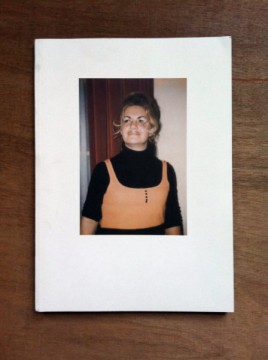
Top vijf fotoboeken 2010 Cadoc.nl
Aan het einde van het jaar is het traditiegetrouw weer tijd voor lijstjes. Zo ook op cadoc.nl. Ik heb mezelf afgevraagd wat zijn de vijf mooiste, boeiendste dan wel indrukwekkendste fotoboeken van 2010? Met een licht gekanteld hoofd ben ik een uurtje langs mijn boekenkast gelopen om die selectie te maken. Een aantal titels stond buiten kijf. Andere titels waren ietwat weggezakt maar brachten weer warme herinneringen boven. Het was niet eenvoudig om het lijstje tot slechts een vijftal te beperken, maar dit zijn ze, in alfabetische volgorde, geworden.
Mariken Wessels. Queen Ann. P.S. Belly cut off. Op het boekomslag prijkt een jonge vrouw van ergens tussen de twintig en dertig jaar. Onder haar neus heeft ze een snorretje getekend en op haar wangen heeft ze zwarte sproeten aangebracht. Ze kijkt zelfbewust en met een zweem van tevredenheid. Op de kleuren van de foto en de kledingstijl afgaande, is de foto ergens in de zeventiger jaren gemaakt. Wie het boek vervolgens opent, ziet een reeks zwart-wit foto's en stilstaande filmbeelden van (waarschijnlijk) dezelfde vrouw maar dan vele jaren jonger, gevolgd door een reeks kleurenfoto's van een latere datum. Ogenschijnlijk zijn ze in chronologische volgorde geplaatst. Gezamenlijk vertellen de beelden een verhaal. Maar welk verhaal wordt verteld, wie het verhaal verteld of waarom het verhaal wordt verteld, wordt ook na meerdere keren het boek te hebben doorgenomen, niet helemaal duidelijk. Queen Ann. P.S. Belly cut off van kunstenares Mariken Wessels is een raadselachtig, fascinerend boek waar je niet in één oogopslag kunt zien waar de kunstenares welke ingreep heeft gepleegd om een (levens)verhaal te vertellen. Fictie en werkelijkheid vloeien onmerkbaar in elkaar over.
De beste fotografieboeken van 2010 Athenaeum
De beste fotoboeken van 2010 volgens Athenaeum Boekhandel? Terezin van Daniel Blaufuks, maar ook Phantom City van Kim Bouvy en Perceel 235. Encyclopedie van een volkstuin door Anne Geene, en nog een zevental.
Daniel Blaufuks, Terezin
Gerry Badger, Yutaka Takanashi: Toshi-E (Towards The City)
Kim Bouvy, Phantom City
Anne Geene, Perceel 235. Encyclopedie van een Volkstuin
Mariken Wessels, Elisabeth
Andrea Stultiens, The Kaddu Wasswa Archive
Collier Schorr, Blumen
Petra Stavast, Libero
Craigie Horsfield, Schering en inslag
Yu Ogata, HouseAlternatief exposeren doe je met een fotoboek NRC
Wat moet een fotograaf doen als hij zijn werk niet in het museum kan ophangen? Een boek maken.
De laatste jaren verschijnen er steeds meer eigenzinnige fotoboeken op de markt. De drukbezochte Offprint, de nieuwe fotoboekenbeurs in Parijs, opgezet door de in Nederland wonende Fransman Yannick Bouillis, stond afgelopen maand vol stands waar allerlei autonome en low budget producten werden verkocht. Zo kon je er de 'picture novel' bekijken van de Nederlandse Mariken Wessels, getiteld Queen Ann. P.S. Belly cut off. Een boek met oud en nieuw fotomateriaal dat de fotografe heeft bewerkt en omgevormd tot een intrigerend verhaal over een vrouw die lijdt aan obesitas. Een ander vreemdsoortig boek werd gepresenteerd door de onafhankelijke Amerikaanse uitgever Jason Fulford. Shut up truth van fotograaf Michael Schmelling vertelt het verhaal van filmoperateur James Holloway uit El Paso die lijdt aan een milde vorm van het syndroom van Gilles de la Tourette. Schmelling fotografeerde hem thuis: lachend aan de keukentafel, zittend met een kop koffie en slapend in bed.
De avant-garde is op dit moment te vinden in het fotoboek, zegt Bouillis. Musea in de Verenigde Staten en Europa, met als uitzondering Nederland, zijn nogal conservatief als het fotografie betreft. In Londen of Berlijn krijg je in grote musea werken te zien van Henri Cartier-Bresson of Irving Penn. In Frankrijk moet je dood zijn wil je als fotograaf werk exposeren. Het museum biedt geen plek voor nieuwkomers.
Om foto's toch te kunnen delen met anderen, verwerken veel jonge fotografen hun beelden in een boek. Dankzij softwareprogramma InDesign, lagere drukkosten en distributie via internet is bovendien het productieproces aanzienlijk vereenvoudigd. In feite kunnen deze boeken worden gezien als 'een alternatieve vorm van exposeren', meent Bouillis. Het fotoboek biedt meer vrijheid, er zit geen curator meer tussen. Het beeldverhaal komt nu regelrecht uit het hart van de fotograaf.
Opvallend is dat de verhalen die verteld worden, steeds vaker voortkomen uit de specifieke belevingswereld van de fotograaf zelf. Dat bleek ook uit een aantal boeken die werden afgelopen week werden gepresenteerd op de Fotoboekenmarathon in Huis Marseille in Amsterdam. Daar lag bijvoorbeeld The Kaddu Wasswa Archive, een 'visuele biografie' over een bejaarde Oegandees, gemaakt door fotograaf Andrea Stultiens. Stultiens ontmoette de man in 2008, raakte gefascineerd door zijn levensverhaal en besloot de documenten en foto's uit zijn leven te fotograferen en af te wisselen met haar eigen beelden. Een fotoboek is er niet meer om mooie foto's te presenteren, beelden moeten nuttig zijn, zegt Edie Peters, medeorganisator van de Fotoboekenmarathon en uitgever van internetsite Photo Q. Toen Geert van Kesteren Baghdad Calling maakte, wilde hij laten zien wat er in Irak aan de hand is. Hij gebruikte daarvoor eigen materiaal maar ook foto's van de Irakezen zelf. Brede maatschappelijke kwesties vastleggen op een journalistiek afstandelijke manier is niet meer interessant, meent Peters. Vanaf nu is het uitgangspunt de fotograaf zelf. Verandert de documentairefotograaf langzamerhand in een kunstenaar?
The best Photobooks 2010 Conscientious
Earlier this year, Photo-Eye asked me for my favourite ten photobooks this year. Compiling such lists at the end of a year is always fun and dreadful at the same time. There was a deadline, long expired at the time of this writing, and I sent in a selection. Needless to say, the year has twelve months, and I ended up finding more books, some of which I added to my list. Plus, I picked my favourite photobooks this year. At some stage, you just have commit to something........
Speaking of Golden Age, there are lots and lots of cutting-edge photobooks being produced in The Netherlands right now, Mariken Wessels’ Queen Ann P.S. Belly Cut Off being another one particularly good example. Founds photographs, remixed, recycled, re-edited. Brilliant.
Review: Queen Ann. P.S. Belly Cut Off eyecurious
From the moment you hear its title, it becomes clear that Queen Ann. P.S. Belly cut off is not going to be an ‘easy’ photobook. By ‘easy’ I mean a book that gives itself to you on first viewing, immediately hitting all the right buttons. To use one of my favoured musical analogies, in the case of LPs (when people still used to listen to those) people often talked about growers, records that required several listens before your ears became accustomed to their particular register or sonic world.
The first time I went through Mariken Wessels‘ new book, I couldn’t really make head or tail of it. This is a book that raises more questions and narrative possibilities than it gives information or makes statements. The experience of going throughQueen Ann is akin to finding an old shoebox full of snapshots of a stranger’s life. Why are some of the images scratched, cut, defaced or painted on in a childlike way? Who scribbled these few messages and to whom were they destined? The book even contains a little piece of this shoebox in the form of a sealed translucent envelope containing a few small prints. Why is the envelope sealed? Are we expected to open it or to peer at the prints it contains through the translucent paper?
The book follows the life of a woman named Anneke from childhood to her troubled later life. Through Anneke’s “personal materials” Wessels draws us into this (fictional?) woman’s inner world. She appears as a tragic figure, but one who is capable of joy, love, humour and her fair share of craziness too. As the title suggests, she appears to have struggled with obesity throughout her life and the book is infused with a sense of looking back to the past and of what might have been. Many of the images have been written, scratched, drawn or painted on, as if this woman was desperately trying to change her past by refashioning these photographic memories.
This is not a photobook in the conventional sense, but rather an artist book that makes use of photography to create a character. For me the book’s greatest strength is that in the process of bringing ‘Queen Ann’ to life, Wessels also plays on our understanding of the nature of photographs and how we relate to them as personal documents. She succeeds not only in creating a complex character through a handful of snapshots, but also in making us question the unreliable role of the photograph as a memory.
The book is extremely artfully composed and sequences different elements successfully, from smaller snapshots, to sequences of hazy blow-ups and collages giving the book a rhythm, but also several distinct changes of pace. Queen Ann is a fine example of the benefits of the current independent photobook publishing boom: no mainstream publisher would ever dare to produce a book like this. It is both difficult and confusing and, for these very reasons, extremely rewarding.
Rating: Recommended
Livres de photo : NOTRE SÉLECTION 2010 Le Monde
Voici la liste de nos livres favoris publiés au cours de l’année écoulée. Comme nous le revendiquions déjà en 2009, pas de classement : l’édition n’est pas le PMU. Les ouvrages sont présentés par ordre alphabétique d’auteurs. Les titres qui n’ont pas encore été chroniqué, le seront dans les semaines à venir.
Elisabeth… & Queen Ann. P.S. Belly cut off, Mariken Wessels, Alauda Publications — En deux livres (2008-2010), Mariken Wessels pervertit la qualité de document généralement attribuée à la photo trouvée pour créer d’improbables fictions.
Review Black Flashback We Like Art!
Wessels laat op We Like 6%! bij Nieuw Dakota twee grote foto’s zien uit de serie Black Flashback. Fantastisch werk in de traditie van Gerard Fieret. Het lijken stills uit een erotisch zelfportret op film, of zijn de beelden geschoten door een minnaar? De intieme beelden zijn omkaderd door een zwarte zweem als of ze opflakkeren uit een droom. Grofkorrelige herinneringen. Met een vreemde mix tussen onbezonnenheid, opwinding en melancholie. Het zijn foto’s die deel uitmaken van een indrukwekkend 8-luik dat te zien was bij de Zwarte Ruyter in Rotterdam in juni 2010. Hier zie je goed hoe Wessels werkt, als een virtuoze editor: informatie doserend en analoog fotoshoppend. Deze foto’s spelen ook een voorname rol in Wessels fotoboek Queen Ann. P.S. Belly cut off.
Haar eerste boek Elisabeth -I want to eat bezorgde haar in korte tijd mooie prijzen en faam in de internationale wereld van boekfestivals en liefhebbers. Inmiddels is het ook opgenomen in de collectie van het MoMA. Een collectie anonieme foto’s, brieven en kaarten van een jonge vrouw, die de kunstenaar in een winkel in de Hendrik Jacobszstraat in Amsterdam vond vormen het bronmateriaal. Wessels eigende zichzelf het materiaal toe door het opnieuw te fotograferen, bewerken, rangschikken of soms zelfs aan te vullen met eigen materiaal.
Het werk van Mariken Wessels is nog zeldzaam sympathiek geprijsd, een buitenkans! Ook bij We Like 6%! de beide door Alauda Publications uitgegeven fotoboeken in een limited edition. Dat wil zeggen het boek in een handgemaakte kartonnen doos inclusief 2 ongepubliceerde foto’s op Hahnemühle Photo Rag, oplage 75 (elk € 149,-). N.B. geen weerstand aan te bieden als je het eenmaal doorgebladerd hebt.
We Recommend: Queen Ann book ahorn magazine
The book Queen Ann. P.S. Belly cut off by Mariken Wessels, is a special book printed by Alauda Publications. For Mariken Wessel, visual artist from The Netherlands, this is the second artist book. Both works, the first Elisabeth - I want to eat and this book Queen Ann. P.S. Belly cut of, collect frames, stills from video and old photographs, rearranged in a sentimental and poetical composition. This kind of poetry is also full of sadness, and this is not so strange when we talk about memory and things fading out into the past. Everything seems to vanish.
At the beginning of Queen Ann. P.S. Belly cut of we are faced with the portrait of a beautiful young woman. Old black and white photographs describe her clean and honest face. But those simple photographs become fragments of memory as long as the time passes. Those pieces from the past construct an ideal image of youthfulness, but in front of our eyes there is also an enigma, with the shape of a vortical nightmare, full of color and grained pictures. Who was and who is this woman right now? The book is structured in a way that the viewer gets completely lost in images, having good and bad sensations at the same time. But the question is: shall we solve the puzzle?
Many interpretations are equally plausible. Maybe the book is not exactly a nightmare, but just a story, more similar to a stream of conscio usness. Ann is thinking about herself and we are luckily involved in her life. The book itself is very well designed and composed. Mariken Wessels, by creating this enigmatic narrative book, makes it possible to live profoundly Ann’s story.
ELISABETH – I WANT TO EAT - Ilovethatphoto.net
Elisabeth. What’s wrong? Your photos tell something. There’s something not right. Are you happy?
“Your harsh opinions and witty remarks; the medicines that were prescribed for you can help. Everything will be all right.”
Mariken Wessels constructs her own story. With postcards, photographs and letters of a young woman founded in a little shop in Amsterdam.
“Talk to doctor E, take his advice.”
All the postcards and letters together with the photos in the book form a beautiful story. Elisabeth is ill. Mentally ill. She gets postcards from Aunt Hans who maybe is even crazier. The picture on the cover of the book says everthing. It is a portrait of Elisabeth cut in half. In my opinion it represents the personality of Elisabeth beautifully.
This book combines art and photography. The more you look in the book, the more you see in it. The story of Elisabeth grabs you.
“I feel very much better. I want to see you but you’re not in Holland. Can you come please. I want to eat. “
After reading the book, I truly want to know: ‘What happened to Elisabeth?’
QUEEN ANN… & ELISABETH… Le Monde
La photo trouvée s’est imposée, en trois décennies, comme un genre photographique à part entière. Si elle sert toujours le propos de l’artiste – la remémoration chez Christian Boltanski, le goût de la collection et le sens de l’absurde chez Hans-Peter Feldmann par exemple – sa qualité de matériau photographique se fonde toujours sur son caractère de pur document nullement “pollué” par une intention artistique. Ce qui permet donc de l’intégrer de manière seconde dans le champ de l’art. Comme pour tout genre établi, il est dans la logique de l’art contemporain que celui-ci soit remis en cause. C’est ce que fait Mariken Wessels avec une subtilité et un sens du beau fort étonnants. Elle y parvient en faisant basculer le document dans la fiction.
Queen Ann. P.S. Belly cut off narre l’histoire d’une femme d’âge moyen de sa jeunesse à ce milieu de vie. Le pitch est le suivant : “Mariken Wessels a trouvé ces photos où l’on voit une femme tentant de négocier entre aspiration à l’idéal et réalité de son obésité.” Pourtant rapidement le trouble s’installe. Le spectateur en vient douter de ce qu’il voit. À suspecter la manipulation : ces petits coloriages sur les images sont-ils bien le fait de la personne représentée ? Ces photos ne sont-elles pas trop floues pour être “honnêtes” ? Qui est l’auteur des textes manuscrits qui fleurissent ici ou là ? Et l’enveloppe de papier cristal jointe au livre qui contient quelques “vrais” tirages photo au lieu de jouer son rôle de “preuve” ne semble alors qu’un leurre de plus. Mariken Wessels joue de ces images anciennes et se joue du spectateur.
Ainsi nous confiait-elle récemment l’une de ses techniques : “Je fais des photos sur des arrêts de films Super 8 à travers deux plaques de verre légèrement teintées de miel retrouvant ainsi la patine d’un temps passé que j’adapte au temps présent (mon temps).” Et l’on peut penser que d’autres traces du temps, rayures et poussières par exemple, sont tout aussi fabriquées. Mariken Wessels ajoute encore que ce qu’elle donne à voir est “peu fiable et incertains comme les souvenirs“. L’ambition du projet éclate alors : passer par le détour de la fiction et de la manipulation de documents pour tenter de donner une matérialité au processus mouvant de la mémoire.
Alauda Publications réédite également le premier livre de Mariken Wessels, Elisabeth, I want to eat que l’artiste avait auto-édité en 2008. Wessels mettait déjà en place la grammaire qu’elle développe dans Queen Ann. On y découvre la vie d’une jeune femme des années 1970 traitée dans un style qui évoque Gerard Fieret ou Miroslav Tichý. Une place importante est accordée au texte avec un échange de cartes postales, bizarrement dactylographiées (soupçons !). Ces textes sont traduits du néerlandais à l’anglais sur des feuilles de papier pelure glissées entre les pages du livre. Comme pour Queen Ann, si la véracité des images est des plus douteuse, la finesse de la réalisation et la beauté du résultat sont imparables.
®© & MKB
Mariken Wessels, Queen Ann. P.S. Belly cut off, Alauda Publications, broché, 80 pages, accompagné d’une enveloppe cristal de tirages photographiques. Elisabeth, I want to eat, Alauda Publications, broché, 80 pages.
Allez voir ailleurs !
Queen Ann artist book review GUP Magazine #026
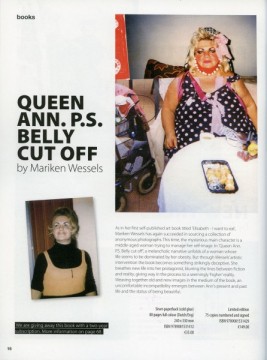
Review Queen Ann. P.S. Belly cut off We Like Art!
Mariken Wessels (1963, Vlaardingen) presenteert en signeert komende donderdag 2 september om 17.00 uur haar boeken Elisabeth -I want to eat - en Queen Ann. P.S. Belly cut off. Tijdens deze sessie in het Foam_café gaat de fotograaf in gesprek met collega en beroepsduider Hans Aarsman. Een aanrader want we zijn benieuwd naar wat Wessels bereid is los te laten over haar eigenaardige – inmiddels internationaal bejubelde – fotoboeken. Beide boeken hebben foto’s uit twee verschillende persoonlijke archieven als vertrekpunt en bieden een zowel fantastisch als beklemmend zicht op de hoofdpersonen. Is het fictie of zijn het ego-documenten? Waar is de hand van de kunstenaar te zien? Welk stuk is eigenlijk authentiek? Wessels zal vermoedelijk graag in het midden laten wat wel en niet van de kunstenaar afkomstig is.
De hier getoonde foto’s zijn onderdeel van een speciale editie van het boek Queen Ann. P.S. Belly cut off. “P.S. Buikje afgeknipt!” staat er bij twee foto’s op driekwart van het boek, we zien een oudere vrouw die een kind vasthoudt op een kinderboerderij, eenmaal met een kloeke buik en eenmaal zonder, want cru met de schaar ‘gefotoshopt’. Al bladerend en terugbladerend in het boek is het dan al duidelijk geworden dat het gaat over Anneke een voormalige beauty (type Romy Schneider) uit Venlo, die maar moeilijk kan omgaan met haar verloren jeugd en zwaarlijvigheid. Toch is dit veel te kort door de bocht – het gaat over meer dan een vrouw die met haar zelfbeeld worstelt en haar foto’s bewerkt met stiften, schaar en typex. Het is het soort boek dat dagen lang door je hoofd spookt. Een raadselachtige collage van oude zwart-wit familiefoto’s, bewerkte portretfoto’s, stills uit Kodak 8 mm films, foto’s van foto’s. Het vertelt een verontrustend, meerduidig en aangrijpend verhaal waarin Wessels de virtuoze verteller is.
De precieze en zorgvuldige vormgeving is van Wessels in samenwerking met Esther Krop van Alauda Publications, een nieuwe uitgeverij op het gebied van kunst, cultuur en theorie. Ook de net verschenen herdruk van ‘Elisabeth – I want to eat -’ is met een speciale editie (incl. 2 foto’s) verkrijgbaar. Het zijn beide absolute pareltjes.Two books by Mariken Wessels 5B4 Photography & Books
The last artist book Mariken Wessels published was a narrative of found material she discovered in an Amsterdam shop. Elisabeth - I Want To Eat is an assemblage of old photographs, postcards and letters that describe a young woman's life budding and then, rather shockingly, leading towards depression and, what I read as, an implied suicide. It is a reconstruction which blends some fact with loads of interpretation.
In one of the letters translated from Dutch, Elisabeth's aunt, in an attempt to help Elisabeth think differently about her life writes, "But unpicking yourself, that can be done, why am I doing this, couldn't I do it better (for me and for everyone else) in a slightly different way? Each little thing builds the whole. In accordance with the same system as all matter is built up from molecules and atoms." This suggestion of parsing and twisting the events of her life is also the strategy Wessels employs in these works. We grapple with trying to understand this life presented to us through only a few pieces of ephemera which insists that our own twist of psychology intervene.
Wessels' newest artist book, Queen Ann. P.S. Belly Cut Off from Alauda Publications is a look into a life of a woman named Anneka.
Anneka appears to be a woman haunted by loneliness and obesity yet she puts forth a fun-loving and warm, if at times slightly demented, demeanor. When we are shown recent images of her, she (or the artist) has painted their surfaces with adornments such as brightly colored hats or veils or cut out parts of herself in the pictures with shears. In some, she adds a second coat of lipstick or nail-polish that transforms her into an over-the-top eccentric where we might question her sanity.
In one image from which the title refers, she writes, "In a way I really do feel like a "Queen." I think that fits. Although lacking the wealth but perhaps like our image of famous queens, Ann is also slightly lonely, unsatisfied, and displays vengeful violent streaks which in this case, she plays out on her own image rather than others. She seems to mock even her own ideas of beauty in how she "improves" the picture makes herself presentable - all ribbons and bows with make-up dripping from her eyes.
In both Queen Ann and Elisabeth, sexuality is an overt presence. In Elisabeth a suite of scratched nude photos (think G.P. Fieret) is presented, perhaps made as self-portraits or by a lover. In Queen Ann, photography as a somewhat transgressive act is also included - that of what appears to be a middle interlude of stills from a sex film (with Ann as the star?). This is followed by a more recent image of Ann holding an image of herself as a young attractive teenager - the weight of wishing for the past is felt.
Although melancholy in overall tone, Ann's unique character and playfulness outshine her underlying problems with aging and self image. The last images, shot on super-8 film, show her running and twirling, arms outspread, in a forest. A smile is sensed through the grainy and blurred image just before she disappears behind a stand of trees.
As with many contemporary books from The Netherlands, both of these are beautiful objects. The care and attentiveness to "the book" is felt but never trumps the content. In Elisabeth, English translations from Dutch type-written on green tissue paper are loosely laid in are a wonderful touch, and Queen Ann includes a sealed glassine envelope of 4x6 inch snapshots. It isn't clear if this last element, the glassine, is meant to be torn open or whether the images are meant to be viewed through the translucent paper (the metaphoric haze of memory?). You decide. Maybe in that case, collectors should buy two.
Recent Arrival: Queen Ann Little Brown Mushroom
Photo Book of the Week Humble Arts
I got Mariken Wessel’s new book a couple of weeks ago and have been looking through it quite a bit since then. It is a great follow up to her last book, Elisabeth – I want to eat. It is a similar format in that is consists of found images mostly depicting the same subject, laid out in a way that produces a subtle narrative. Also reminiscent of the loose vellum sheets in her last book, this one comes with a glassine envelope of a few photographs. The photographs are reproductions of found images, but it is still a nice experience to have the comparison of a more physical object paired with the work in book. After seeing both of these books by Mariken, I’m really excited to see what will come next. -Grant Willing
BOOKSHELF: July 2010 Shane Lavalette
Queen Ann Independent Photo Book
Queen Ann. P.S. Belly cut off is based on photographs sourced from an existing person; a middle-aged woman wringing with her self-image in an endless stream of manipulated photo graphs of herself, making them into a true cabinet of curiosities. The suggestive, intimate force of the ‘found’ photographic material and other personal documents, as well as the sequencing of the images as a whole, are both deliberately arranged with great pre cision. Wessels sensitively appropriates and edits the photo and film material, constructing a narrative, weaving together images in the medium of the book.
linkBen ik nog te redden? Mister Motley
De reeks bizarre foto’s zijn in handen van kunstenaar Mariken Wessels (1963) beland. Met deze foto’s heeft zij, rondom de belangrijke momenten in het leven van Queen Ann, zorgvuldig en chronologisch haar levensverhaal gecomponeerd in de vorm van een kunstenaarsroman. We zien Queen Ann in haar eerste schooltoneelstuk, spelend met haar broers en zussen, poserend op vakantie. Op bijna alle foto’s heeft ze zichzelf bewerkt. Ze lijkt wel een parodie van zichzelf te maken. Dit wordt nog eens aangezet door teksten in de kantlijn, als: Ben ik nog te redden?
Al bladerend bekruipt je het ongemakkelijke gevoel met de verspilling van een kostbaar mensenleven te worden geconfronteerd. Het boek laat namelijk de constante wens naar een ander leven zien. Dit verlangen van Queen Ann om een ander te zijn, houdt aan tot bijna het einde van het boek.
linkReview: Queen Ann P.S. Belly Cut Off Joerg Colberg
Queen Ann was produced by Mariken Wessels, a Dutch artist. If you’ve followed this blog over the past few months, this fact will not come as a surprise to you: The Netherlands are the world’s innovative center of independent photo book publishing. Queen Ann features a lot of found/appropriated photographs, centered on a single woman, with time progressing. The artist’s hand is not as obvious as it would seem: It is not clear whether the various modifications of the photographs were already present in the sources or whether they were added after the fact. What is more, the source imagery is also not presented like a simple album; instead, there seem to be many details - or are those stills from movies? It’s never quite clear what one should make of what there is - for the viewer, there is a space to fill, the story is not clear, it almost seems there might be more than one story.
This is what makes a good photo book: A body of work that allows space for interpretation, that can live, no: that has to exist with uncertainty, with not everything being well-defined, a body of work that knows that a narrative that does not involve the viewer’s imagination is little more than a comic strip.
linkQueen Ann. P.S. Belly cut off days fall like leaves
This is a great publication from a new Dutch imprint Alauda Publications. Today I was lucky enough to receive the deluxe version, limited to 75 copies it comes with signed original prints, and a thing of beauty it is too! The standard version looks to be a bargain at €35, get one before they are all gone.
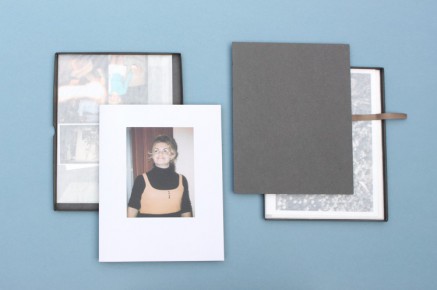


Boekbespreking Queen Ann Cadoc.nl
Op het boekomslag prijkt een jonge vrouw van ergens tussen de twintig en dertig jaar. Onder haar neus heeft ze een snorretje getekend en op haar wangen heeft ze zwarte sproeten aangebracht. Ze kijkt zelfbewust en met een zweem van tevredenheid. Op de kleuren van de foto en de kledingstijl afgaande, is de foto ergens in de zeventiger jaren gemaakt. Wie het boek vervolgens opent, ziet een reeks zwart-wit foto’s en stilstaande filmbeelden van (waarschijnlijk) dezelfde vrouw maar dan vele jaren jonger, gevolgd door een reeks kleurenfoto’s van een latere datum. Ogenschijnlijk zijn ze in chronologische volgorde geplaatst. Gezamenlijk vertellen de beelden een verhaal. Maar welk verhaal wordt verteld, wie het verhaal verteld of waarom het verhaal wordt verteld, wordt ook na meerdere keren het boek te hebben doorgenomen, niet helemaal duidelijk. Queen Ann. P.S. Belly cut off van kunstenares Mariken Wessels is een raadselachtig, fascinerend boek waar je niet in één oogopslag kunt zien waar de kunstenares welke ingreep heeft gepleegd om een (levens)verhaal te vertellen. Fictie en werkelijkheid vloeien onmerkbaar in elkaar over.
De foto op de kaft staat ook ergens halverwege het boek en vormt daar als het ware een omslagpunt. Zowel visueel als in het beeldverhaal. Het vormt de scheiding tussen zwart-wit en kleurenfotografie en is voor mij tegelijkertijd de scheiding tussen (gevoelsmatig) authentiek en fictie. Op de foto’s tot dat punt zie je een meisje zich ontwikkelen tot een jonge, aantrekkelijke vrouw. De laatste foto’s tot het omslagpunt zie je de vrouw in wat niets anders kan zijn dan haar trouwjurk en daarna volgen enkele schimmige, stilstaande beelden uit een zwart-film waaruit je zou kunnen afleiden dat ze de liefde bedrijft. Op de met verf, stift en collage toegetakelde foto’s die daarna volgen, zien we een wat oudere, vollere vrouw. Haar uiterlijk neemt door de bewerkingen af en toe clowneske vormen aan.
Vanaf dit punt slaat ook de twijfel toe over wat ‘echt’ is en wat niet. Op één van de foto’s zien we dat de corpulente vrouw plotsklaps van haar omvangrijke buik af is terwijl ze met een kereltje in haar armen geitjes aan het voeren is. Bij nadere bestudering en aan de hand van de foto die er onder is afgedrukt zien we dat het buikje er afgeknipt is en dat de bovenste foto een wenscollage is. De tekst onder de foto maakt het ten overvloede nog maar eens duidelijk: “P.S. Buikje afgeknipt!”. Is dit het werk van kunstenares Wessels die door een ingreep in het beeldmateriaal een verhaal wil suggereren van een vrouw die doodongelukkig is met haar uiterlijk? Of is dit daadwerkelijk een ingreep van de gefotografeerde vrouw zelf in een wanhopige poging haar zelfbeeld met het betere knip- en plakwerk op te vijzelen? Beide mogelijkheden roepen vragen op.
Bij mij riep het in ieder geval de vraag op in hoeverre het gevonden fotografische materiaal op zichzelf al sterk genoeg was om een levensverhaal te vertellen. Was de worsteling met een (negatief) zelfbeeld zonder de ingrepen van Mariken Wessels ook niet naar voren gekomen? Het meest eerlijke antwoord is dat je dat niet weet maar dat het feitelijk ook niet uitmaakt. Feit is dat het boek dat nu voor me ligt me uren heeft bezig gehouden met de vraag wat werkelijkheid is en wat fictie is. Feit is ook dat de bewerkingen (van wie ze ook mogen zijn) en het arrangeren van de foto’s zó is gebeurd dat zich een verhaal ontrold. Een verhaal met vraagtekens en tegelijkertijd een verhaal dat gevoelens van medeleven en fascinatie oproept.
De vergelijking met een historische roman dringt zich op. De feiten liggen er maar hoe het verhaal wordt verteld, is geheel in handen van de schrijver. Bij dit beeldverhaal is het uiteraard niet anders. Voor Mariken Wessels is Queen Ann. P.S. Belly cut off het tweede kunstenaarsboek waarbij ze werkt met bestaande foto’s van een niet-fictieve persoon. Net als bij haar vorige kunstenaarsboek heeft ze ook hier de al aanwezige beelden deels gemanipuleerd. Doordat je als kijker niet weet welk materiaal Wessels tot haar beschikking heeft gehad en ook niet weet in hoeverre ze het materiaal heeft bewerkt, blijf je in een constante twijfel over wat authentiek is en wat niet. Je vraagt je voortdurend af of het verhaal dat zich in je gedachte heeft gevormd over de hoofdrolspeelster van het boek, is gebaseerd op de fotografische feiten of de ingrepen van Mariken Wessels.
Elisabeth on BOOKSHELF April Shane Lavalette
Elisabeth – I Want to Eat, a book of found material assembled by Mariken Wessels. The publication was awarded the “Silver Medal Award” at the Fotofestival di Roma Book Prize… well deserved. Edition of 150, available for .
Queen Ann. P.S. Belly cut off Ingrid Commandeur
[English]
In 2008 Mariken Wessels self-published her first art book titled Elisabeth - I want to eat. The book consists of a collection of anonymous photographs, letters and postcards of a young woman, which the artist found in a store in Amsterdam. The photographs retain their liveliness in the scratches and traces of dust on them, reminding one of the work of master photographers such as Gerard Firet and Miroslav Tichy in their intensity, sensuality and force. The art book, which has been referred to as “a little gem” by several art critics, has won the Silver Medal Book Award at Fotofestival di Roma and was recently acquired by the book collection of the MoMA in New York.
Mariken Wessels’ second art book is titled Queen Ann. P.S. Belly cut off. Here again, the photographs are sourced from an existing person, a middle-aged woman wringing with her self-image in an endless stream of manipulated photographs of herself, making them into a true cabinet of curiosities. The authentic arrangement of the discovered material, with its strange mixture of old and new photographs, film material and collages is strikingly deceptive. In fact, both in Elisabeth - I want to eat- as well as in Queen Ann. P.S. Belly cut off, it is the hand of the fine craftswoman Mariken Wessels at work. The suggestive, intimate force of the ‘found’ photographic material and other personal documents, as well as the sequencing of the images as a whole, are both deliberately arranged with great precision. Wessels sensitively appropriates the photo and film material by newly photographing, editing, and re-organizing them, often incorporating other material in a complementary gesture. In doing so, she constructs a narrative, weaving together images in the medium of the book.
In Queen Ann. P.S. Belly cut off it is the unfolding of a melancholic narrative of a woman, whose life seems to be dominated by her obesity. Yet the reader is never turned into a voyeur. ‘Queen Ann’s’ peculiar and touching photo collages of herself, expressing a longing for another ‘being’, are fused with the image that the book evokes around her persona. In the contrast which the arrangement of the photos make all too evident, an uncomfortable incompatibility emerges between the present and the past life of Ann and the status of being beautiful. Wessels breathes new life into her protagonist, blurring the lines between fiction and reality, giving way in the process to a seemingly ‘higher’ reality.
The genre of the art book, in particular the picture novel, is currently witnessing a huge emergence in the contemporary art scene. Mariken Wessels lends her unique interpretation to this form through a skillful combination of picture novel and independent photo book. It is thus not without reason that her first book has already turned into a collector’s item.
[Dutch]
In 2008 gaf Mariken Wessels (1963) voor het eerst in eigen beheer een kunstenaarsboek uit getiteld Elisabeth – I want to eat – . Het boek werd samengesteld uit een collectie anonieme foto’s, brieven en kaarten van een jonge vrouw, die de kunstenaar in een winkel in Amsterdam vond. De foto’s laten hun doorleefdheid zien in de sporen van krassen en stofjes die erop achter zijn gebleven en doen in hun intensiteit, sensualiteit en kracht denken aan het werk van meesterfotografen als Gerard Firet en Miroslaw Tichý. Het fotoboek, dat door meerdere critici ‘een juweeltje’ werd genoemd, won the Silver Medal Book Award op het Fotofestival di Roma Book Prize Award en is opgenomen in de collectie van het MoMa in New York.
Het tweede kunstenaarsboek van Mariken Wessels heet Queen Ann. P.S. Belly cut off. Ook dit boek is gebaseerd op fotomateriaal afkomstig van de protagonist van het verhaal zelf: een vrouw van middelbare leeftijd die met haar zelfbeeld worstelt en dit uit in een oeverloze stroom van bewerkingen van foto’s van zichzelf, als een waar rariteitenkabinet. De bijzondere vondst van dit verhaal en het beeldmateriaal, dat in dit geval zowel om oude, als meer recente foto’s, films en collages gaat, lijkt een curiosum. Maar schijn bedriegt. In feite is in beide fotoboeken meesterverteller Mariken Wessels aan het woord. De suggestieve, intieme, associatieve kracht van ‘de gevonden’ historische foto’s en andere persoonlijke documenten, maar ook de beeldsequentie als geheel, worden door haar met uiterste precisie geregisseerd. Wessels eigent zichzelf de foto- en filmbeelden toe door ze opnieuw te fotograferen, te bewerken en te rangschikken. Ze construeert daarmee ‘een verhaal’ waarin het medium van het boek en de foto’s samensmelten tot een totaalkunstwerk.
In Queen Ann. P.S. Belly cut off ontspint zich een melancholisch verhaal over een vrouw wiens leven beheerst lijkt te worden door haar zwaarlijvigheid. Toch wordt de kijker nooit een voyeur. ‘Queen Anns’ vreemde en aandoenlijke fotocollages van zichzelf, die het verlangen naar ‘een ander zijn’ uitdrukken, versmelten met het beeld dat het boek van haar oproept. Wessels geeft haar protagonist daarmee als het ware een nieuw leven, waarbij de scheiding tussen tussen feit en fictie wordt opgeheven. Er lijkt sprake te zijn van ‘een andere, hogere werkelijkheid’.
Het boek als medium voor de kunstenaar en de kunstenaarsroman in het bijzonder, is in de hedendaagse kunst bezig aan een ware opmars. Mariken Wessels geeft hier op eigenzinnige wijze invulling aan met een meesterlijke kruising van ‘kunstenaarsroman’ en autonoom fotoboek. Niets voor niets is haar eerste fotoboek al een collectors item.
Queen Ann. P.S. Belly cut off wordt uitgegeven door Alauda Publications, een nieuwe Nederlandse uitgeverij op het gebied van hedendaagse kunst, cultuur en theorie.
'Elisabeth' photo book included in collection of MoMA
The photo book 'Elisabeth - I want to eat -' has been included in the collection of the Museum of Modern Art (MoMA) New York. The book, made up of found material from a thrift store, examines the world of inanimate things. A world constructed from signs of a real lived life that can only be imagined now. The book has won the Silver Medal Book Award on the Fotofestival di Roma and can be order by mail or via Johan Deumens Gallery, Haarlem, BookCase, Rotterdam, Photo Eye, Santa Fe USA, Dashwood Books and Printed Matter, New York, Schaden.com, Buchhandlung Walther König, Köln.
Elisabeth SHASHIN
One of the very great book of 2008. Second edition (1st edition was never for sale, distributed for free to friends. Hereby the second edition, signed). Also available the special edition (x/5), including a print, for 350 euros. Beautiful artist work on found footage.
Top 9 Books of 2009 Grant Willing, Humble Arts
'Elisabeth – I want to eat' was another surprise for me, also acquired from Dashwood. The entire publication is made up of found material from a thrift store in Amsterdam. Wessels creates a very nice narrative with the found imagery and the postcards. One of the most striking aspects of this publication is the inclusion of English translations to the Dutch texts printed on loose blue vellum sheets interspersed throughout the book.
I want to eat - die Foam-Liste Nr. 7 fotokritik.de
Es waren in den letzten Jahren hauptsächlich weibliche Fotografen, die in kleinen Publikation die Bandbreite des Fotobuches, vor allem mit Erzählungen aus dem privaten Umfeld erweiterten. Fotografien und Dokumente wurden unterschiedlich genutzt, um dem Zweck der Künstler zu dienen. Ich denke an Wiebke Loeper genauso wie Liza Nguyen, Wytske van Keulen, Bertien van Manen und Rinku Kawauchi. Mariken Wessels hat mit ihrer im Eigenverlag erschienen Publikation ein kleines Juwel geschaffen, von dem Jeff Ladd mir vor ein paar Monaten ganz begeistert berichtete. Eine Sammlung von anonymen Fotos, die hauptsächlich eine Haupdarstellerin umkreisen (aber auch aus verschiedenen Alben stammen mögen) wird mit einer Sammlung von Briefen kontrastiert, und eine eigentümliche, herzerreissende, seltsam melancholische Geschichte gespinnt, die wahr sein kann oder falsch, eingebildet oder nachempfunden. Die Bilder stammen wohl aus den siebziger Jahren, sie werden vergrößert wiedergegeben und bekommen so einen Tichy oder Fieret-Look, und doch wird eben eine Familiengeschichte erzählt, oder Fragmente aus dem Leben einer jungen Frau, und nur durch Empathie und Interesse werden diese Bilder lesbar.
I want to eat Foam - 2009/#21 - Sebastian Hau
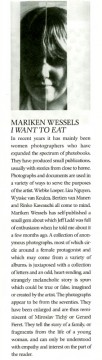
Elisabeth Andrew Phelps, Buffet
The highlight for me is the way the letters and texts are treated. They are translated onto tipped-in light-weight blue paper, simply overlapping the original postcards and letters. A nice way to help us get at texts which are not only in foreign language (to some of us anyway) but are often written with a handwriting almost impossible to decipher.
We don't know what came of Elisabeth, but the fact that these images ended up for sale, she probably fell victim to her ailments. Mariken helps us say it out loud.
4 Weeks of Work Aruba Today
Speciale vermelding PhotoQ
De Amsterdamse kunstenares Mariken Wessels heeft voor haar boek Elisabeth - I want to eat - een speciale vermelding gekregen van de jury van de FotoGrafia Book Award, die tijdens het Fotofestival di Roma uit 180 boeken een keuze maakte.
Als winnaar kwam Deformer van Ed Templeton naar voren. Daarnaast waren er nog twee speciale vermeldingen, naast het boek van Wessels gaat het om Open See van Jim Goldberg. Inzenden stond open voor boeken die zijn verschenen tussen 1 maart 2008 en 1 maart dit jaar. De winnaar krijgt een tentoonstelling tijdens het volgende festival in Rome.
UIt het Engelstalige persbericht over de jury: The jury was composed by Melanie McWorther (Book Division Manager Photo Eye, U.S.A.), Benedetta Cestelli Guidi (Curator, Italy), Erik Kessels (Editor, The Netherland), Michele Smargiassi (Journalist and Critic, La Repubblica, Italy) and Marta Daho (Latent Talent, Spain). The jury valued the books according to criteria that privileged: novelty and originality of the project, concept, design, experimentation, balance and coherence between the photographic and the editorial project.
Eindexamenwerk DOGTIME Mister Motley
Mariken Wessels heeft een groots werk 'Permastore 1-11' gemaakt: buiten staat een container die af en toe en op onverwachte momenten beweegt. Deze container heeft een tegenhanger die binnen staat en een onverwachte mix is van kwetsbaar papier en een framewerk van ijzer. daarnaast presenteert ze een boekje Elisabeth dat ze maakte naar aanleiding van een gevonden envelop met foto's brieven en documenten. 'Het zijn de onbezielde tekens van een echt geleefd leven dat slechts voorgesteld kan worden’ zegt Mariken. Het boekje maakt nieuwsgierig naar het leven van deze Elisabeth en starend naar de lieve foto's en lezend in een brief verlies je je in een ander. Hoe zou het afgelopen zijn?
Fotofestival di Roma Book Prize Photo-eye
... the final list of six books for the second place winner: Episode Books' Baghdad Calling, Postcart's Non si avrà ragione di me: Poeti del Novecento per Dino Campana, Contrasto's Oltrenero, Hysteric Glamour's Hokkaido, plus the self-published books 101 Billionaires by Rob Hornstra and Elisabeth- I want to eat by Mariken Wessels. Each judge was allowed as much time as needed to decide on the Silver Award winner for the International Prize. After a brief time of deliberation the jury came to a consensus on young Dutch photographer Mariken Wessel's book Elisabeth.
Fotofestival di Roma Book Prize FotoGrafia
In May 2009, FotoGrafia- Fotofestival Internazionale di Roma celebrated its fifth year under the direction of photographer and publisher Marco Delogu of Punctum Books. The festival hosted a mix of lectures and exhibitions by photographers such as Nan Goldin, Rinko Kawauchi and Don McCullin. Other special events included a slide exhibition featuring the work of Gus Powell and Juliana Beasley, and the Premio FotoGrafia Libro Award for the best Italian and International photobooks.
The jury for this year's Premio FotoGrafia Libro Award was comprised of myself; Benedetta Cestelli Guidi of S.T. Foto Libreria Galleria; curator Marta Dahó; Erik Kessels of KesselsKramer; and Michele Smargiassi of la Repubblica. We judged over 180 books in the second Italian and first International book award of Fotofestival di Roma. Each judge selected 5 to 10 books from the books on display and all the votes were tallied. The Damiani book Deformer by Ed Templeton was unanimously selected for the Italian Book Award. Steidl's book Open See by Jim Goldberg was selected in the first round of voting for the International Gold Metal Award. Then the jury had to revisit all books with 2 or 3 votes.
After some espresso, pastries and a vigorious hand-washing, the jury was ready to tackle the final list of six books for the second place winner: Episode Books' Baghdad Calling, Postcart's Non si avrà ragione di me: Poeti del Novecento per Dino Campana, Contrasto's Oltrenero, Hysteric Glamour's Hokkaido, plus the self-published books 101 Billionaires by Rob Hornstra and Elisabeth- I want to eat by Mariken Wessels. Each judge was allowed as much time as needed to decide on the Silver Award winner for the International Prize. After a brief time of deliberation the jury came to a consensus on young Dutch photographer Mariken Wessel's book Elisabeth.
Benedetta Cestelli Guidi questioned whether the books were too similar in content to be on the final list. After some thought on the topic all of the judges agreed that "all the books selected by the jury are finished works in their own right, greater than an exhibition of their parts. The narrative characteristics normally associated with the nature of a journal are present in all the final selections."
The judging of the book prize was a wonderful and rewarding experience. Italian printing, and particularly photobook printing, has a reputation for being the best in the world while Rome is a mecca for many photographers to shoot and study at higher schools of learning such as the American Academy, British School, Academie de France or Czech Cultural Institute, all located in the city. The festival's motivation is to establish Italian photography's place in the world by showcasing Italian-made works and bringing international photographers to Roman audiences. It was a world-class festival and I was honored to be involved in their first International Book Prize.Elisabeth Bint photoBooks on INTernet
Mariken Wessels Elisabeth I want to eat Fotofestival di Roma book Prize Award Photography
Silver Medal Book Award Fotofestival di Roma
Last week, photo-eye Book Division Manager Melanie McWhorter lead the jury of Benedetta Cestelli Guidi, Marta Daho, Erik Kessels, and Michele Smargiassi judging over 180 books in the second Italian and first International book award of Fotofestival di Roma. This year's winner for the Italian Book Award was the Damiani book Deformer by Ed Templeton. The International Gold Metal Award was given to Steidl's upcoming titled by Jim Goldberg Open See and the Silver Medal Award was given to young photographer Mariken Wessels for her book, Elisabeth. I want to eat.
"All books selected by the jury are finished works in their own right, greater than an exhibition of their parts. The narrative characteristics normally associated with the nature of a journal are present in all the final selections."—Melanie McWhorter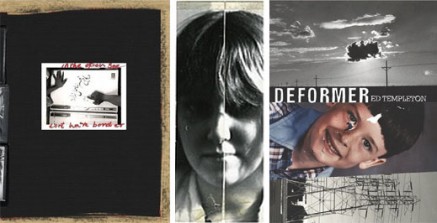
Spoils from Germany and Holland Jeffrey Ladd
One great thing about traveling for me is the discovery of many books that are hard to find in the States. This trip was particularly fruitful and by the time I arrived back home I had two large boxes waiting for me. Here are a few things that caught my attention in no order of importance.
When in Germany, look for German books. I found a great copy of a book I passed on buying twenty years ago and have regretted it for the past ten. Michael Schmidt's Waffenruhe has now made its way onto my shelf. I paid a bit for it but a very good price considering thanks to getting it from a friend of a friend. Thanks Egbert and Sebastian.
I also found a small catalog from the Kunsthalle Bremen, Michael Schmidt Fotografien. Published in 1999, it is a good selection that seems to be a mini-retrospective but the printing suffers a bit. Solely for Schmidt obsessives and in Germany they can be found for just a few euros.
I found three super cheap Christian Boltanski books: Zeit, Les Suisses Morts, and Sterblich.
I have always wanted a copy of Fischli and Weiss's Visible World and found the German edition readily available at regular prices. There is no text so it reading Sichtbare Welt as the title is something I can live with.
I met Krass Clement at the Fotobook Festival so I bought his new book Novemberrejse (November Journey). This is a really good one which I will spend more words about soon. Highly recommended. Krass also gave me one of his older titles Hvor Ingen Talte which is another fine book of photos he made at a state funeral in Moscow. This will also be covered here at a later date.
My fascination with Russian works was sated by the discovery of a reprint/study of Mayakovsky and Rodchenko's Pro Eto which was published in 1994 by Ars Nicolai. This starts with a facsimile edition in the front (black and white illustrations of the Rodchenko collages) followed by essays and additional plates that show the same collages in full color. The texts luckily are in Russian, German AND English.
Following closely in excitement was finding the reprint/facsimile of El Lissitzky's About Two Squares which was released as a two book set by MIT. Now out of print, these facsimiles themselves command some expense. What I found is only one of the books but it was only around 10 euros.
In the "books on books" department I found 'remainder' copies of Russian Book Art 1904-2005 available for 14 euros. This is a book I saw first through Ursus in New York with a large price-tag of .00 dollars. Funny how that happens right?
John Baldessari: National City from the Museum of Contemporary Art, San Diego is now a remainder in Germany of all places so I picked up a very cheap copy.
For rarities, my other discovery besides Waffenruhe was Ed van der Elsken's Sweet Life (German edition) for a mere 75 euros. That is a very good price but this same book can be found in varying conditions actually starting fairly cheaply at around 140 dollars plus shipping. This copy is virtually unread interior with only very slight chipping on the dustjacket at the edges. My luck was in force as this copy had literally just been bought from a person selling books to the store and the bookseller had just started to clean the cover when he asked me, "Do you know this book by Ed van der Elsken?"
Eva Leitof's Rostock Ritz published in 2005 made it back to NYC. I reviewed her book Deutsche Bilder eine Spurensuche 1992-2008 last year. This book is one title I couldn't buy at PhotoLA just because I had no way of actually getting it home.
Raimond Wouda - who's book School from Nazraeli is going to get full treatment here soon because it is a new favorite of mine - made two other books that made their way home with me, Sandien and A'dam Doc.k. Sandien is a brilliant book which was recommended to me by no less than 6 people within a week so it was imperative that I get a hold of one while in Amsterdam.
Ever since the inaugural issue of PA magazine from David Campany that featured Patrick Faigenbaum along with Jeff Wall, I was compelled to get a copy of Faigenbaum's Tulle. I may tackle that book at some point.
One of the most exciting discoveries was a book by the Russian artist Ilya Kabakov, My Mother's Album published in 1995. My initial impression was that this book has a similar seductive quality as Boris Mikhailov's Unfinished Dissertation with its ephemeral quality. I can't wait to spend some time with this one and see what its all about. This will get some space featured here soon as well.
I found two books by Koen Wessing the author of Chili September 1973. O Mundo de Koen Wessing is a good hardcover exhibition retrospective from Portugal on this fine Dutch photojournalist. The second is a copy of Koen Wessing's Flashes from South Africa an oversized 36 page booklet published in 1993.
An interesting artist book made from found images called I Want to Eat by Mariken Wessels was irresistible and will get some coverage too.
Marijaana Kella's book which was in Parr/Badger Vol. II has a body of work I like very much, the Reversed portraits. This was the sole deciding force to bring this one home.
I was able to get home safely a copy of Jens Liebchen's oversized Playing Fields published in 2005 by J.J. Heckenhauer. I hope Jens gets to work on a new book because he has a habit of challenging perception.
Vija Celmens' intricately detailed drawings are a favorite of mine but few books published of her work do it justice. A hardcover catalog from the Museum of Modern Art, Frankfurt features larger illustrations and the best I have seen so far, so it has found a new home.
In the "who the hell is that" department, Jutka Rona's 1975 conceptual artist book Wolvenstraat was a great suggestion from Yannick Bouillis of Shashin Art Books in Amsterdam. This book will be covered further later.
And lastly, one book that I was extremely critical of but did not have has finally broken my resistance will power. Empty Bottles by Wassinklundgren is now in my house. I am tempted to write a re-evaluation of this book to more clearly express my views.
I think that's all...any more would just be the work of madness.Verdienen met kunst valt niet mee NRC Handelsblad
Mariken Wessels (45) heeft de Rietveld Academie in Amsterdam vorig jaar afgerond. Kunstenaar is eigenlijk haar tweede beroep, zegt ze. Haar eerste beroep is actrice. Eind jaren tachtig heeft ze de toneelschool gedaan. Op de Rietveld Academie heeft ze de vrije richting gedaan, ofwel ‘autonoom’.
Wat ze tijdens die opleiding leerde over het leven ná de kunstacademie, is in ieder geval meer dan destijds op de toneelschool. Toen was ze vrijwel niet op buitenwereld voorbereid. „Op de Rietveld moet je over je werk leren praten, wat ik wel lastig vind. Je moet je werk kunnen formuleren. Zo moet je een statement opschrijven. Het leert je harder denken.” Al tijdens haar opleiding exposeerde ze haar werk. „Ik was dus al bezig met de praktijk en met de buitenwereld.”
Meteen na haar afstuderen heeft de Vlaamse kunstverzamelaar Verbeke Foundation haar werk geëxposeerd en aangekocht. „Een fijn opstapje”. Afgelopen november kreeg Wessels een startstipendium, een subsidie voor kunstenaars, van het Fonds voor beeldende kunsten, vormgeving en bouwkunst. Daarmee gaat ze haar atelier inrichten en wil ze een boek over gevonden foto’s uitgeven.Permastore I-II Willem van Weelden
[English]
Imagine you are standing on top of a mountain and you can see how random lines in the landscape draw the valley you are looking at. And imagine that the valley below is your memory. Not as a symbol, but as a machine that produces images. The valley as a mnemonic apparatus, as a catalogue of images, a memory machine. As a sculpture of eventualities and of disorders, because where the landscape folds and curls the imbalance of its potential is created; it distorts the image of recollection into an inflexion. Memories are enfolded, roll in on themselves like a baroque scroll in white stucco. Memory proves unstable. The valley becomes a cinematographic life of remembered images that reveals the discontinuity of its identity by entwining itself in its own capricious course.
[Dutch]
Beeld je in je staat op een berg en ziet hoe willekeurige lijnen in het landschap het dal waar je op uit kijkt tekenen. En beeld je dan in dat het dal daar beneden je geheugen is. Niet als zinnebeeld, maar als machine die beelden produceert.
Het dal als mnemotechnisch apparaat, als catalogus van beelden, een herinneringsmachine. Als een sculptuur van mogelijkheden en van ontregelingen, want daar waar het landschap zich plooit en krult onstaat de inbalans van haar potentie; zij buigt het herinneringsbeeld af (inflexie). Herinneringen buigen af, plooien zich in zichzelf als een barokke krul in het witte stucco. Het geheugen blijkt instabiel. Dat dal wordt dan een cinematografisch leven van herinneringsbeelden dat de discontinuiteit van haar identiteit toont door zich te wikkelen in haar eigen grillige verloop.
Elisabeth Willem van Weelden
[English]
The world of inanimate things is overpowering; every day these objects attract attention without revealing their origins. They are signs that have often been divorced from their referential alibi—life itself. Yet in spite of this they colour the interpretative framework through which the world is named.
‘Elisabeth’ is the living proof of this mechanism. The biographical material on which it is based was discovered in a junk shop. These are the inanimate signs of a life really lived—a life that can only be imagined. There is no direct access to the referential key that could provide an insight into its origin. A meticulously constructed work, ‘Elisabeth’ weaves a narrative structure that utilizes the workings of proximity to make this lack palpable. For the drama that lurks in inanimate things lies not in what they display, but in what they touch upon.
[Dutch]
De wereld van de onbezielde dingen is overweldigend; dagelijks trekken deze objecten zonder zicht te gunnen op hun origine de aandacht. Het zijn tekens die vaak afgesneden zijn van hun referentiële alibi : het leven zelf. Toch kleuren zij desondanks de interpretatieve kaders waarmee de wereld op naam wordt gebracht.
‘Elisabeth’ is het levende bewijs van dat mechanisme. Het biografische materiaal waarop het is gebaseerd werd gevonden in een winkel. Het zijn de onbezielde tekens van een echt geleefd leven dat alleen voorgesteld kan worden. Er is geen directe toegang tot de referentiële sleutel die zicht zou kunnen bieden op haar origine.
Als een werk weeft ‘Elisabeth’ door haar zorgvuldige opbouw een narratieve structuur die bij gratie van een benadering dit gemis ervaarbaar maakt. Want het drama dat in onbezielde dingen schuilt, zit niet in dat wat die tonen, maar dat wat ze aanraken.